storage
Does Coffee Go Bad? Shelf Life and Storage
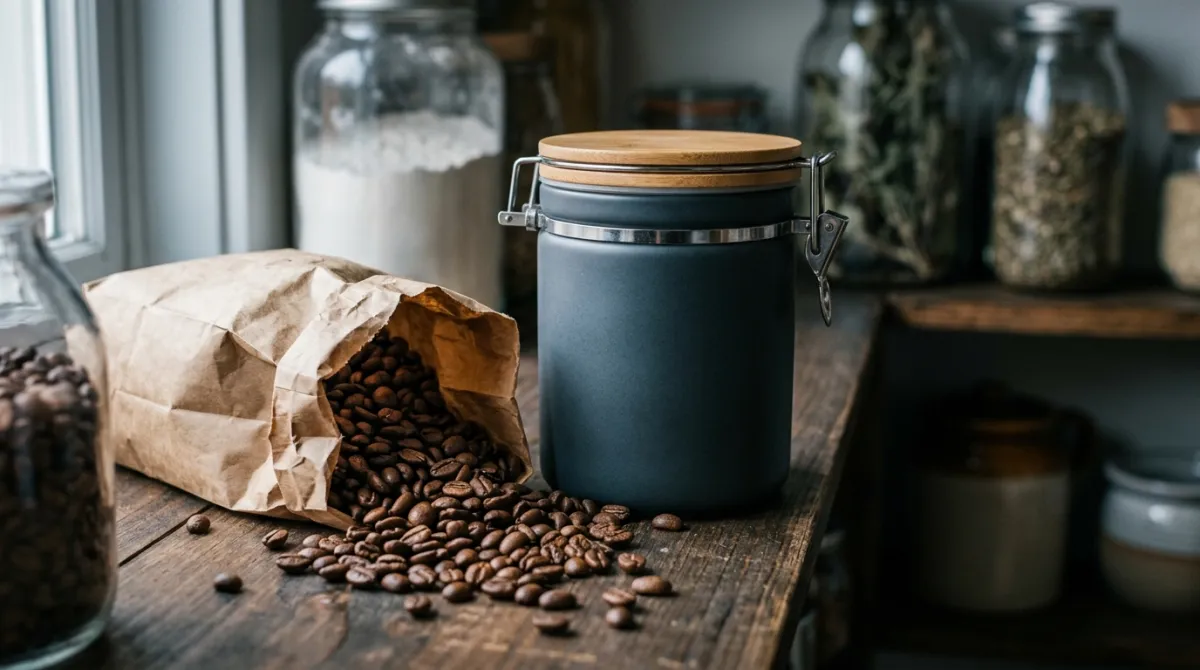
So, does coffee go bad? Not really, at least not in the way milk or eggs do. Coffee almost never becomes unsafe to drink. What it does do is go stale, and after ten-plus years of brewing a pot every single morning, I can tell you stale coffee is its own small tragedy: flat, dull, and missing the brightness that made you buy those beans in the first place.
The honest answer to “does coffee expire” is that freshness fades long before safety does. Whole beans hold their flavor for weeks to a few months. Ground coffee fades within a couple of weeks once the bag is open. Brewed coffee is best within hours, though cold brew buys you more time in the fridge.
Key Takeaways
- Coffee rarely becomes unsafe, but it loses flavor as it stales through oxidation.
- Whole beans stay good for weeks to a few months; ground coffee fades within about two weeks of opening.
- Brewed hot coffee is best within hours, while refrigerated cold brew keeps for roughly a week.
- Store beans in an airtight container somewhere cool, dark, and dry, not in the fridge.
- A sour, rancid, or moldy smell is your signal to toss it.
Does coffee go bad?
Coffee goes stale far more often than it goes truly bad. In everyday terms, “bad” means unsafe, and dry coffee, whether whole bean or ground, is a low-moisture product that resists spoilage for a long time. What actually happens is staling: oxygen slowly strips away the aromatic compounds that give each roast its character.
Here is the distinction I use at home. Stale coffee tastes muted and cardboardy, but it will not hurt you. Genuinely spoiled coffee, the kind touched by moisture and mold, is a different story, and that only happens when water gets into the mix.
So when someone asks me if their forgotten bag is ruined, I ask one question first: has it stayed dry? If yes, it is probably just tired, not dangerous. If it got damp, that changes everything.
Think of coffee freshness like a slow fade rather than a hard cliff. There is no single midnight when good coffee turns bad. Instead, quality drifts downward day by day after roasting, and the clock speeds up dramatically once you grind.
Shelf life: whole beans vs ground vs brewed
How long does coffee last? It depends entirely on the form it is in. Whole beans protect their flavor best because less surface area is exposed to air. Grinding shatters that protection, exposing far more surface to oxygen, so ground coffee stales quickly. Brewed coffee, now full of water, is the most perishable of all.
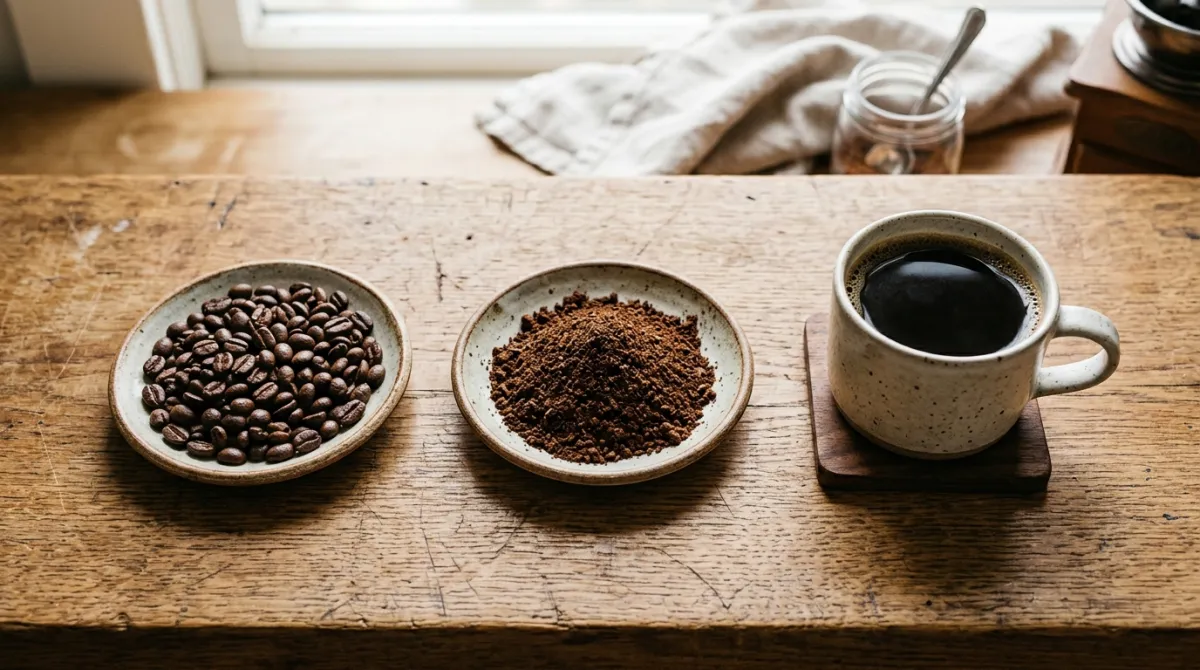
Here is how I mentally sort the freshness windows in my own kitchen:
| Form | Freshness window (general guidance) |
|---|---|
| Whole beans (opened) | A few weeks to a couple of months at peak flavor |
| Whole beans (sealed) | Several months, though best used sooner after roast date |
| Ground coffee (opened) | Roughly one to two weeks at peak flavor |
| Brewed hot coffee | Best within hours; noticeably flat by the next day |
| Cold brew (refrigerated) | Around a week when kept cold and sealed |
These are guidelines, not hard expiration dates. A vacuum-sealed bag of beans can taste fine well past these ranges, while a bag left open on a sunny counter fades faster. The “best by” date printed on a package speaks to quality, not safety.
One thing worth flagging: brewed coffee’s timeline shrinks the moment you add milk. Black coffee left out gets stale and unpleasant, but a latte left on the counter can spoil like any dairy product. For a deeper look at the chilled side, I broke down the details in how long does cold brew last.
How to tell if your coffee has gone bad
Your nose is the best tool you own. Fresh coffee smells rich, sweet, and inviting. Stale coffee smells like almost nothing, a faint, dusty flatness. Truly spoiled coffee announces itself with a sour, sharp, or rancid odor, and that is your cue to throw it out without a second thought.
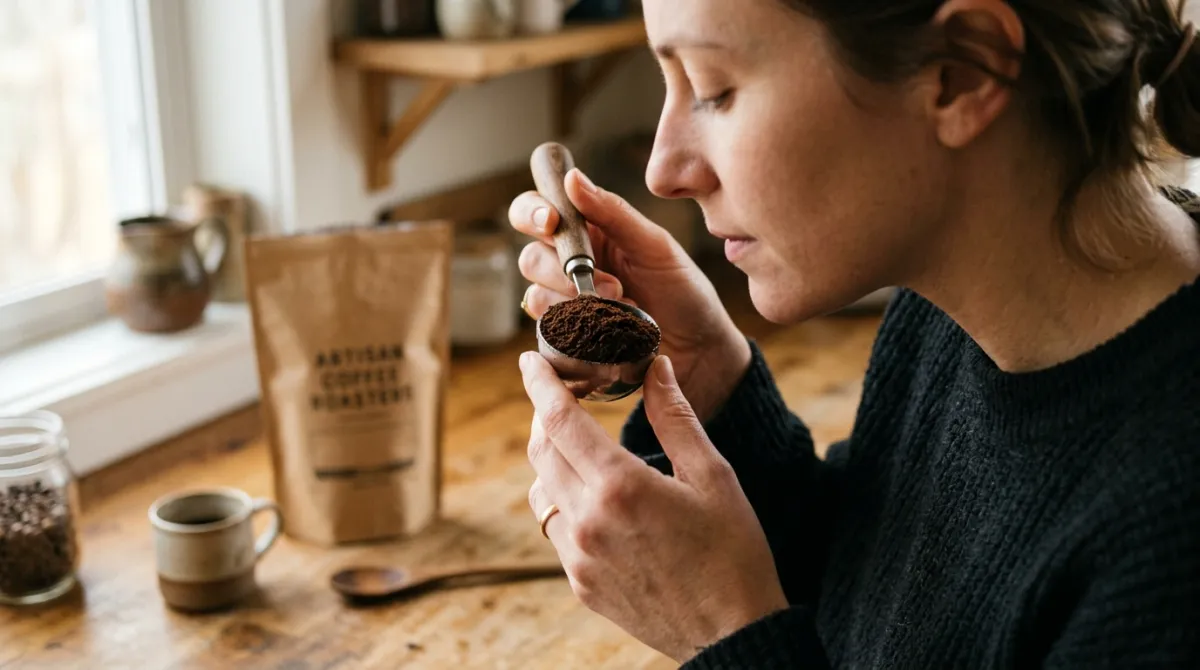
Run through this quick checklist before you brew:
- Smell it. Faint and flat means stale but fine. Sour or rancid means discard.
- Look at it. Any fuzzy growth, discoloration, or clumping in the grounds points to moisture and possible mold.
- Check the oils. Dark roasts carry more surface oil, and oils eventually go rancid, taking on a paint-like or greasy-off smell.
- Taste a small sip of the brew. If it tastes flat, it is just stale. If it tastes genuinely off or sour, pour it out.
In my experience, dark, oily roasts turn first. The very oils that make an espresso blend glisten are also the parts most prone to going rancid over time. Lighter roasts, being drier on the surface, tend to hold their character a little longer in the bag.
If you ever spot mold, do not try to salvage the good part. Moisture has clearly reached the coffee, and the whole batch goes in the trash.
How to store coffee to keep it fresh
Good storage is simple: keep coffee away from its four enemies, which are air, heat, light, and moisture. An airtight container kept somewhere cool, dark, and dry does most of the work. A sealed ceramic or opaque canister in a pantry cupboard beats a clear jar on the counter every time.
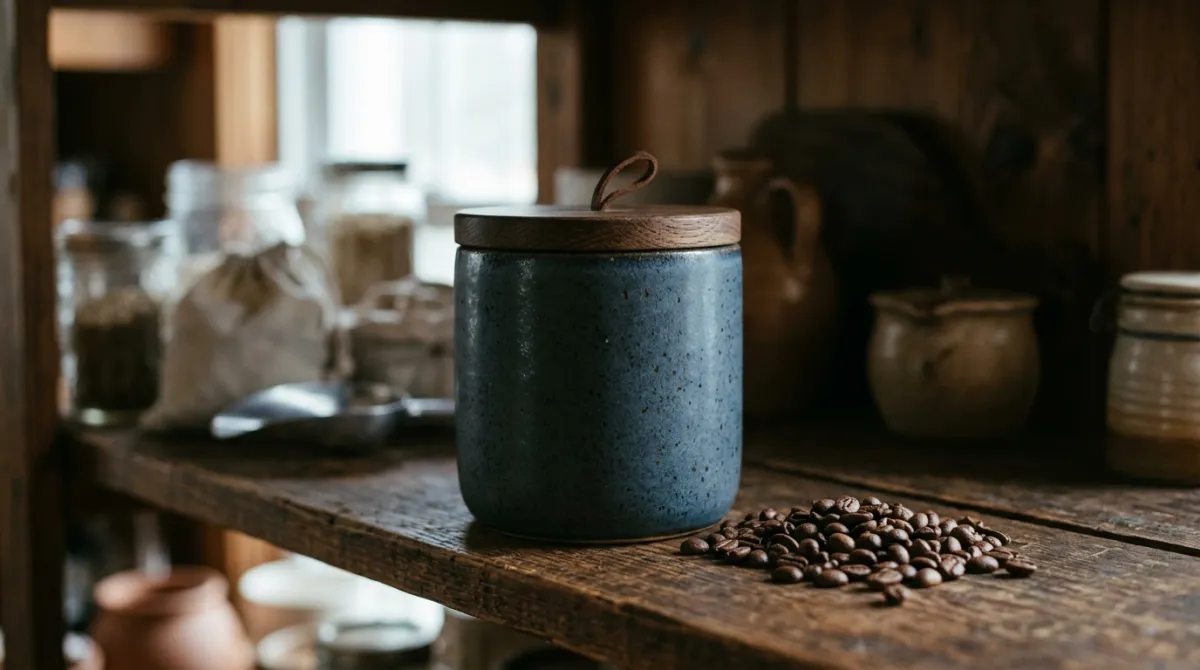
A few habits have made the biggest difference for me over the years:
Keep beans out of the fridge
This one surprises people. The fridge seems logical, but it is a trap. Refrigerators are humid, and that moisture is exactly what dry coffee should avoid. Coffee also acts like a sponge for odors, so your beans can pick up whatever last night’s leftovers left behind. I keep mine in a pantry, never the fridge.
Freezing is a judgment call
Freezing long-term is genuinely debated among coffee folks. Done carefully, in small, truly airtight, single-dose portions you never refreeze, it can preserve beans you cannot use quickly. Done casually, with repeated thawing, condensation ruins them. If you are unsure, skip it and just buy less coffee more often.
Buy smaller, grind fresh
The single best trick is not a gadget, it is a shopping habit. Buy the amount you will drink in a couple of weeks, keep the beans whole, and grind right before brewing. Grinding fresh each morning has done more for my daily cup than any expensive canister ever could.
Does coffee expire or just go stale?
Coffee mostly goes stale rather than expires. Staling is oxidation, a chemical process where oxygen breaks down the volatile aromatic compounds responsible for flavor and smell. That is why a month-old open bag still brews safely but tastes hollow. The coffee has not spoiled; it has simply lost the qualities that made it enjoyable.
True expiration, in the spoilage sense, only kicks in when moisture enters the picture. Add water, either by brewing or by letting a bag get damp, and now you have created conditions where mold and bacteria can grow. That is the line between stale and unsafe.
There is one more wrinkle worth knowing. Oils in dark roasts can go rancid over long stretches, which is a form of chemical breakdown separate from ordinary staling. Rancidity produces that unpleasant, off smell and is a legitimate reason to toss coffee, even though it still is not the same as dangerous spoilage.
So the printed date on your bag is really a freshness suggestion. Past it, your coffee likely will not taste its best, but it is not automatically unsafe. Trust your senses over the calendar.
Frequently asked questions
Can you drink expired coffee?
Usually, yes. Coffee that is past its printed date is almost always safe to drink if it has stayed dry and smells normal. That date reflects peak quality, not safety. Expect a flatter, duller cup rather than a health risk. The exception is coffee showing mold, dampness, or a sour, rancid smell, which you should discard.
How long do coffee beans last after opening?
Whole beans hold their best flavor for roughly a few weeks to a couple of months after you open the bag, assuming airtight, cool, dark storage. They stay safe to brew well beyond that, but the flavor keeps fading. To taste the difference for yourself, buy smaller quantities and finish a bag before opening the next one.
Does ground coffee go bad?
Ground coffee goes stale faster than whole beans, typically losing its peak flavor within one to two weeks of opening. Grinding exposes far more surface area to oxygen, which speeds oxidation. It rarely becomes unsafe when kept dry, but it turns flat quickly. If you can, grind fresh right before brewing for a noticeably better cup.
Can old coffee make you sick?
Dry, stale coffee is very unlikely to make you sick; it just tastes dull. The real risk comes from moisture and mold, or from brewed coffee with milk left sitting out too long. If your coffee smells sour or rancid, shows fuzzy growth, or contains spoiled dairy, throw it out rather than risk it.
Freshness is the easiest upgrade in your whole coffee routine, and it costs nothing but a little attention to how you buy and store. Keep beans whole, keep them dry, grind before you brew, and trust your nose. Want to keep improving your daily cup? Explore more brewing guides for the next small tweak that makes a real difference.
Keep brewing
Dial in your next cup with Brew Better Co.
Tested ratios, methods, and gear notes from a real home kitchen. New guides added regularly.
Explore all guides