gear
How to Clean a Coffee Maker With Vinegar (Step by Step)
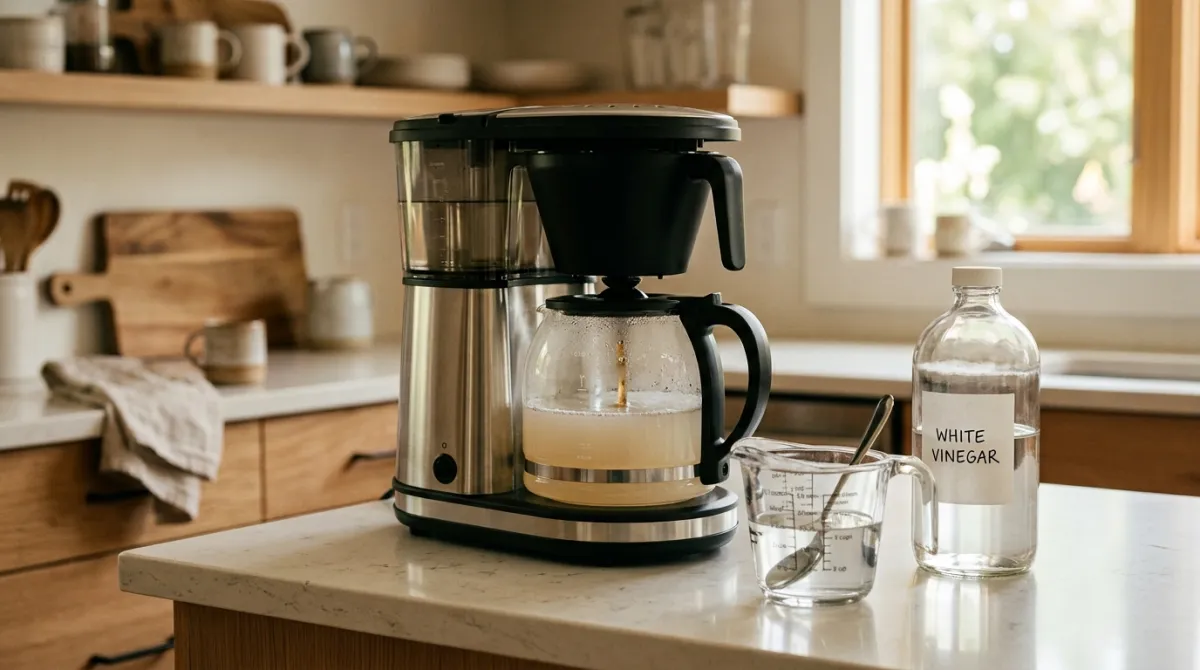
Does your coffee taste flat and a little sour lately? The fix is usually cleaning, not new beans. Learning how to clean a coffee maker with vinegar is the cheapest, most reliable way I know to bring back a clean cup. I have brewed daily for over ten years, and vinegar is still what I reach for.
Mineral scale and old coffee oils build up inside the machine faster than most people think. Left alone, they slow the brew, muddy the flavor, and can even shorten your machine’s life. Below is the exact routine I run on my own drip maker, plus the ratios and rinse steps that keep any vinegar taste out of your morning cup.
Key Takeaways
- Fill the reservoir with equal parts white vinegar and water, then run a half cycle.
- Pause 30 to 60 minutes so the solution can dissolve mineral scale.
- Finish the cycle, then run 2 to 3 full cycles of plain water to rinse.
- Use ordinary 5 percent white vinegar, and clean about once a month.
- Rinse thoroughly so no vinegar smell or taste lingers in your coffee.
How do you clean a coffee maker with vinegar?
You clean a coffee maker with vinegar by filling the reservoir with equal parts white vinegar and water, running a half brew cycle, then pausing for 30 to 60 minutes. Finish the cycle, dump the solution, and run 2 to 3 full cycles of plain water to rinse everything out.
That pause is the part most guides skip. Letting the warm vinegar solution sit inside the machine gives the acid time to break down hardened mineral scale, the same chalky buildup you see on a kettle. When I stopped rushing this step, my brew times got noticeably shorter.
Vinegar works because it is a mild acid. It dissolves the calcium and magnesium deposits that hard water leaves behind, and it cuts through the stale coffee oils that coat the reservoir and tubes over time.
If you own a single-serve pod machine instead of a drip maker, the process is a little different. See how to descale a Keurig for that setup.
What you need and how often to clean
You need three things: plain white distilled vinegar (5 percent acidity), fresh water, and a clean cloth. That is it. No special descaling powder required for a routine clean, though commercial descalers are a fine alternative if you dislike the smell of vinegar.
Here is my simple checklist:
- White distilled vinegar, 5 percent (the standard grocery-store kind)
- Fresh, cool water
- A soft cloth or sponge
- Dish soap for the carafe and basket
- Your coffee maker, emptied of grounds and old coffee
How often should you do this? About once a month for most homes. If you have hard water, or you brew several pots a day, bump it up to every two or three weeks. I live with fairly hard tap water, and I have found that stretching past a month always shows up as slower dripping and a duller taste.
Signs it is overdue include longer brew times, extra sputtering or steam, visible white flakes, and coffee that tastes off even with good beans.
Step by step: cleaning a coffee maker with vinegar
The whole process takes about an hour, and only a few minutes of that is hands-on. Empty the carafe and remove any old grounds or paper filters first. A clean, empty machine is the starting point every time.
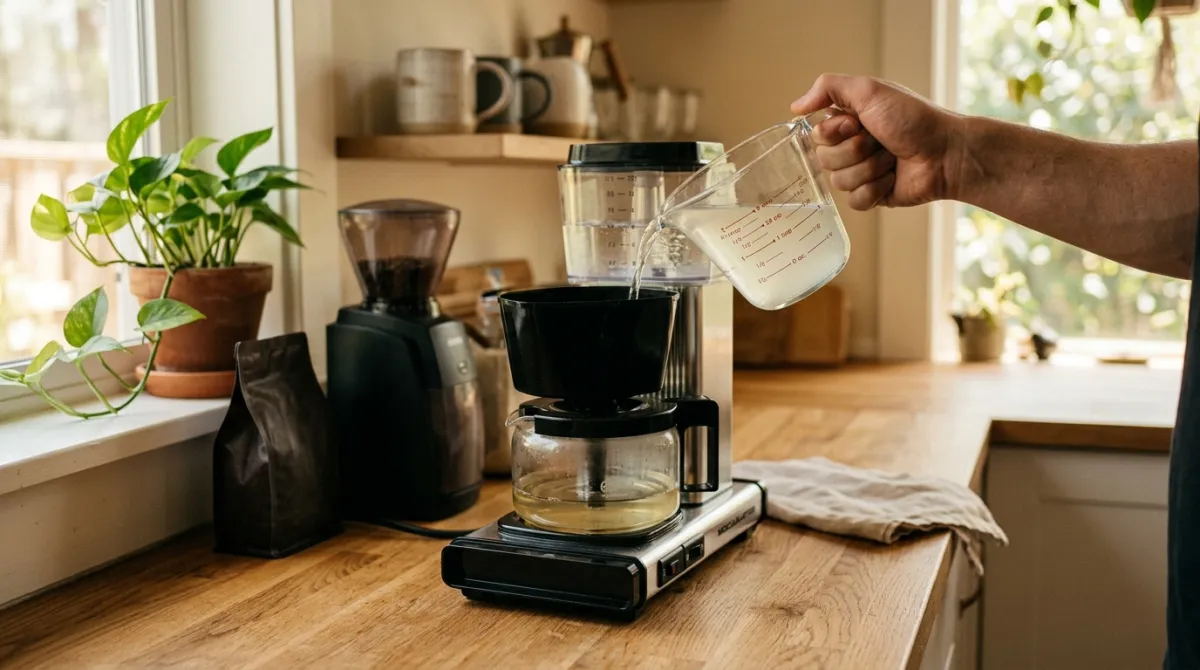
Here is the routine I use:
- Mix the solution. Fill the water reservoir with equal parts white vinegar and water. For a standard 12-cup maker, that is roughly 6 cups vinegar and 6 cups water.
- Start a half cycle. Place the empty carafe on the warmer and begin brewing. Turn the machine off when about half the solution has run through.
- Let it sit. Wait 30 to 60 minutes. This soak loosens the scale inside the reservoir and tubes.
- Finish the cycle. Switch the machine back on and let the rest of the solution run through.
- Dump and cool. Pour out the hot vinegar water and let the machine rest for a few minutes.
- Rinse thoroughly. Fill the reservoir with fresh water and run a full cycle. Repeat 2 to 3 times.
Wipe down the warming plate once everything cools. If your carafe still has stains, that is normal, and I cover the fix a couple of sections down.
How much vinegar to use (and the right ratio)
Use equal parts vinegar and water, a 1 to 1 ratio. For a full 12-cup reservoir, that means about 6 cups of white vinegar to 6 cups of water. This mix is strong enough to dissolve scale but gentle enough that it rinses out cleanly.
You do not need to be exact to the ounce. Half vinegar, half water is the goal, and eyeballing it works fine. If your machine is small, a 4 or 5 cup maker, just fill the reservoir to its normal max line with the same 1 to 1 blend.
Should you ever go stronger? Only if the machine is badly neglected. For heavy scale, I sometimes let a 1 to 1 solution soak for the full 60 minutes rather than mixing in more vinegar. A longer soak beats a harsher ratio, and it is easier on the machine.
Avoid running pure, undiluted vinegar through your coffee maker. It is unnecessary, harder to rinse out, and rougher on internal parts over the long run.
How to rinse so your coffee does not taste like vinegar
Rinsing is where people go wrong. Run at least 2 to 3 full cycles of plain, fresh water after the vinegar, refilling the reservoir each time. One quick rinse is not enough, and that is usually why a machine keeps producing sour coffee days later.
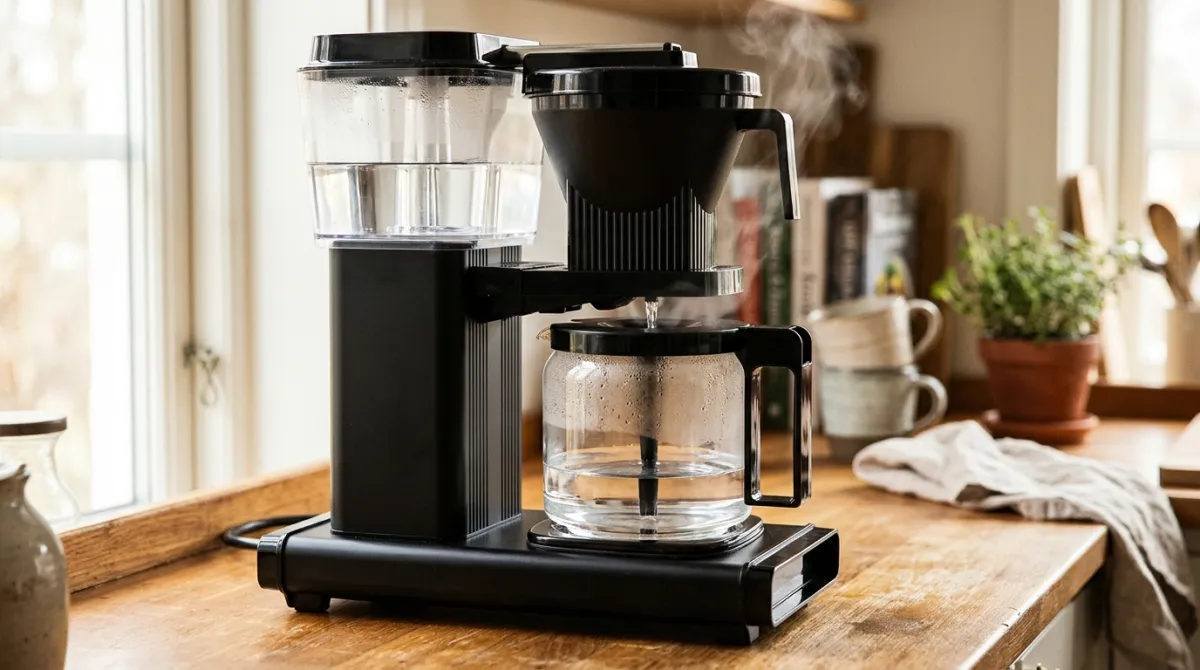
Smell the water coming out of the last cycle. If you still catch any vinegar tang, run one more cycle. I always do a final sniff test before I trust the machine with real coffee again, and on hard-water weeks it sometimes takes a fourth pass.
Between rinse cycles, let the machine cool for a couple of minutes. Cool water seems to carry less of that lingering acidity than very hot water, and it gives you a cleaner baseline.
One last tip from experience: wipe the reservoir with a damp cloth after your final rinse. Trapped droplets in the corners hold onto vinegar smell, and a quick wipe removes them.
How to clean the carafe, basket, and exterior
The reservoir is only half the job. The carafe, filter basket, and outside of the machine collect coffee oils that turn rancid and bitter. Wash the carafe and basket by hand with warm, soapy water after the vinegar clean, or run them through the dishwasher if the manufacturer says they are dishwasher safe.
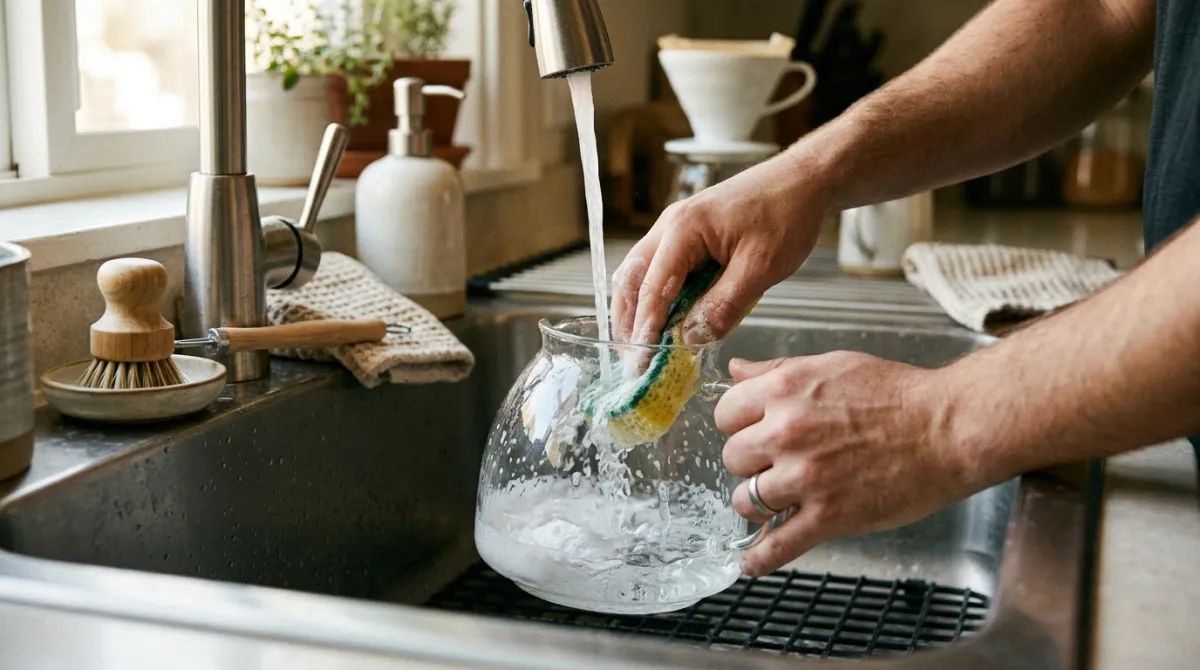
For a stained glass carafe, I use a paste of baking soda and a little water, then scrub gently with a sponge. For stubborn rings, fill the carafe with warm water, add a spoon of baking soda, and let it sit before scrubbing. It lifts brown staining without harsh chemicals.
Do not forget these spots:
- Filter basket: rinse out oils daily, deep clean weekly with soap.
- Warming plate: wipe with a damp cloth once cool, never when hot.
- Exterior and buttons: wipe with a soft, slightly damp cloth.
- Water reservoir lid: clean the underside, where mineral spots hide.
Let every part dry fully before reassembling. Sealing a damp basket or reservoir invites mildew, which brings its own musty flavor to your cup.
Frequently asked questions
How much vinegar to clean a coffee maker?
Use equal parts white vinegar and water, a 1 to 1 ratio. For a standard 12-cup machine, that is about 6 cups of vinegar and 6 cups of water. Fill smaller machines to their normal max line with the same even blend. There is no need to measure precisely.
How often should I clean my coffee maker with vinegar?
Clean it about once a month for typical home use. If you have hard water or brew multiple pots daily, do it every two to three weeks instead. Watch for slow brewing, sputtering, or white flakes, since those signs mean scale has built up and the machine is overdue.
Can I use apple cider vinegar to clean a coffee maker?
You can, but I recommend plain white distilled vinegar instead. Apple cider vinegar works chemically, yet its stronger smell and residue are harder to rinse out, which raises the chance of a lingering taste. White vinegar is cheaper, milder in odor, and rinses cleaner.
How do I get the vinegar taste out after cleaning?
Run 2 to 3 full cycles of fresh, plain water through the machine, refilling each time. Smell the water after the final cycle, and run another cycle if any vinegar tang remains. Wiping the reservoir dry with a cloth removes trapped droplets that hold the smell.
A clean machine is the easiest upgrade to your daily cup, and it costs about a dollar of vinegar. Keep to a monthly rhythm, rinse until the water smells like water, and your coffee will taste like the beans instead of the buildup. For more routines like this one, browse my more brewing guides and keep your setup dialed in.
Keep brewing
Dial in your next cup with Brew Better Co.
Tested ratios, methods, and gear notes from a real home kitchen. New guides added regularly.
Explore all guides