milk drinks
What Is a Flat White? A Home Barista's Simple Guide

A flat white is a small espresso-based drink made with a double shot of espresso and steamed milk, finished with a very thin layer of silky microfoam. It usually lands in a 5 to 6 ounce cup, so it tastes stronger and more coffee-forward than a latte.
Think of it as the espresso lover’s milk drink. You get the warmth and sweetness of steamed milk without drowning the coffee, and the foam stays glossy and flat instead of piling up like a cappuccino.
Key Takeaways
- A flat white pairs a double espresso with steamed milk and a thin layer of microfoam.
- It serves in a small 5 to 6 ounce cup, making it stronger than a latte.
- The milk should be silky and pourable, not stiff or bubbly like cappuccino foam.
- A rough ratio is 1 part espresso to 2 to 3 parts steamed milk.
- The drink is widely credited to Australia and New Zealand cafe culture.
What exactly is a flat white?
A flat white is espresso plus steamed milk with a thin, glossy cap of microfoam, served in a small cup around 5 to 6 ounces. The “flat” in the name points to that low, silky foam layer, which sits close to the surface instead of rising into a thick, airy dome.
Most cafes build a flat white on a double shot, roughly 36 mL pulled from about 18 grams of coffee. That concentrated base is why the drink reads as bold. The milk softens the espresso, but it never buries it.
In my ten years of daily brewing at home, I’ve found the flat white is the drink that finally taught me milk texture. When your foam is right, the surface looks like wet paint. That glossy sheen is the whole point.
Where did the flat white come from?
The flat white is closely tied to the cafe scenes of Australia and New Zealand, where it grew into an everyday order. Both countries claim it, and the friendly rivalry is part of the story. What matters for home brewers is the intent behind it: a milk drink that keeps espresso front and center rather than turning it into a mild latte.
How does a flat white compare to a latte and cappuccino?
The main difference is milk volume and foam texture. A flat white uses less milk and a thinner microfoam layer than a latte, and it skips the thick, dry foam of a cappuccino. Cup size drives most of this, since a smaller cup means a stronger coffee-to-milk balance.

A latte typically arrives in a larger cup, often 8 ounces or more, with more steamed milk and a slightly deeper foam cap. A cappuccino traditionally splits into rough thirds: espresso, steamed milk, and a tall layer of airy foam. The flat white sits between them, closer to the coffee end.
If you want a deeper side-by-side, my cappuccino vs latte guide breaks down how milk ratios change the whole experience. For an even smaller, punchier cousin, see what is a cortado, which cuts the milk back further.
Flat white vs latte
A flat white is smaller and stronger, while a latte is larger and milkier. The espresso base is often the same double shot, but the latte dilutes it with more milk. If you love the taste of espresso and want the milk to support it rather than mask it, the flat white wins.
Flat white vs cappuccino
A cappuccino leans on thick, dry foam that you can almost spoon. A flat white keeps the foam thin, wet, and pourable, so the texture feels smooth and velvety instead of fluffy. Both use espresso, but the mouthfeel is completely different.
What is the right flat white ratio?
A flat white runs roughly 1 part espresso to 2 to 3 parts steamed milk, built on a double shot in a small cup. That balance keeps the espresso audible while the milk rounds off any sharp edges. Push the milk higher and you drift toward latte territory.
Start with about 36 mL of espresso, then steam enough milk to fill a 5 to 6 ounce cup. Some baristas pull a double ristretto instead, which is a shorter, sweeter shot, to concentrate the flavor even more. That’s a personal call, and it’s worth experimenting with once your technique is steady.
Here’s a contrarian point I stand by: the ratio matters less than the milk texture. You can hit the numbers perfectly and still serve a mediocre flat white if the foam is bubbly. Get the microfoam silky first, then fine-tune the volumes.
How do you make a flat white at home?
You make a flat white by pulling a double espresso, steaming milk to a silky microfoam, then pouring it over the shot into a small cup. The whole process takes only a few minutes once your grinder and steam wand are dialed in, and the payoff is a cafe-quality drink at home.

Below is the routine I use most mornings. It assumes an espresso machine with a steam wand, but the milk principles apply to any steaming method you prefer.
Step by step
- Pull the espresso. Grind about 18 grams, tamp level, and brew a double shot near 36 mL. Keep your water in the 195 to 205°F range for balanced extraction.
- Purge and steam. Fill a cold pitcher with cold milk to just below the spout. Purge the wand, then submerge the tip just under the surface to introduce a little air.
- Texture the milk. Once the milk warms, drop the tip slightly deeper to create a smooth whirlpool. Stop steaming when the pitcher feels too hot to hold comfortably, around 140°F.
- Groom and pour. Tap the pitcher, swirl to fold the foam back in, and pour steadily into the cup. Start high, then drop close to the surface to lay down that thin foam layer.
If you want a dedicated walkthrough for the milk drink basics, my how to make a latte guide covers pouring technique that carries straight over to flat whites.
Why does milk texture make or break a flat white?
Milk texture is the single biggest factor in a good flat white, because the drink is defined by silky microfoam rather than volume or sweetness. When the milk is right, it looks glossy and pours like paint. When it’s wrong, you get large bubbles that ruin the smooth mouthfeel the drink is known for.
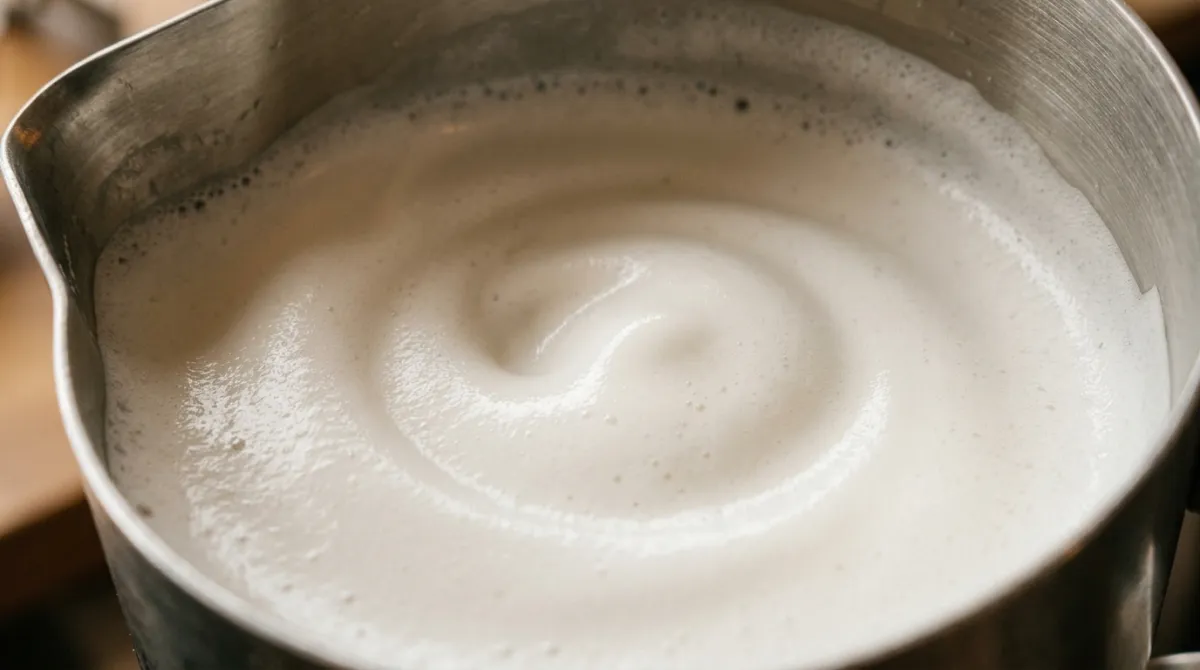
Microfoam means tiny, uniform bubbles you can barely see. The goal is a liquid that stays integrated with the milk beneath it, not a separate foam cap floating on top. That integration is what gives a flat white its velvety body.
In my experience, the most common home mistake is adding too much air, too early. You end up with cappuccino-style foam sitting on a flat white. If you’d rather practice cold texture first, how to make cold foam is a low-pressure way to learn how milk behaves before you tackle the steam wand.
Frequently asked questions
Is a flat white stronger than a latte?
Yes, a flat white usually tastes stronger than a latte because it uses less milk in a smaller cup. Both drinks often share the same double espresso base, but the flat white dilutes it less. That higher coffee-to-milk ratio is exactly why espresso fans tend to prefer it over a milkier latte.
How much caffeine is in a flat white?
A flat white built on a double espresso contains the caffeine of two shots, similar to a standard latte or cappuccino made the same way. The milk doesn’t change the caffeine. If you order a flat white with a single shot, expect roughly half. Ask your barista how many shots they pull.
What size cup should a flat white be?
A flat white is traditionally served in a small cup, usually around 5 to 6 ounces. That compact size is central to the drink, since it keeps the espresso concentrated and the milk restrained. A larger cup would add milk and push the balance toward a latte, softening the coffee-forward character.
Can you make a flat white without an espresso machine?
You can approximate a flat white using a moka pot or strong stovetop coffee plus milk steamed with a handheld frother. It won’t match true espresso crema or microfoam, but the concept still works: strong coffee, a little silky milk, thin foam. Focus on texturing the milk smoothly for the best result.
Once you nail the flat white, the rest of the milk-drink family opens up fast, since the same espresso and steaming skills carry across every cup. Keep practicing your microfoam, trust your eyes over the numbers, and explore more brewing guides when you’re ready for the next drink.
Keep brewing
Dial in your next cup with Brew Better Co.
Tested ratios, methods, and gear notes from a real home kitchen. New guides added regularly.
Explore all guides