milk drinks
How to Make a Latte at Home Like a Barista
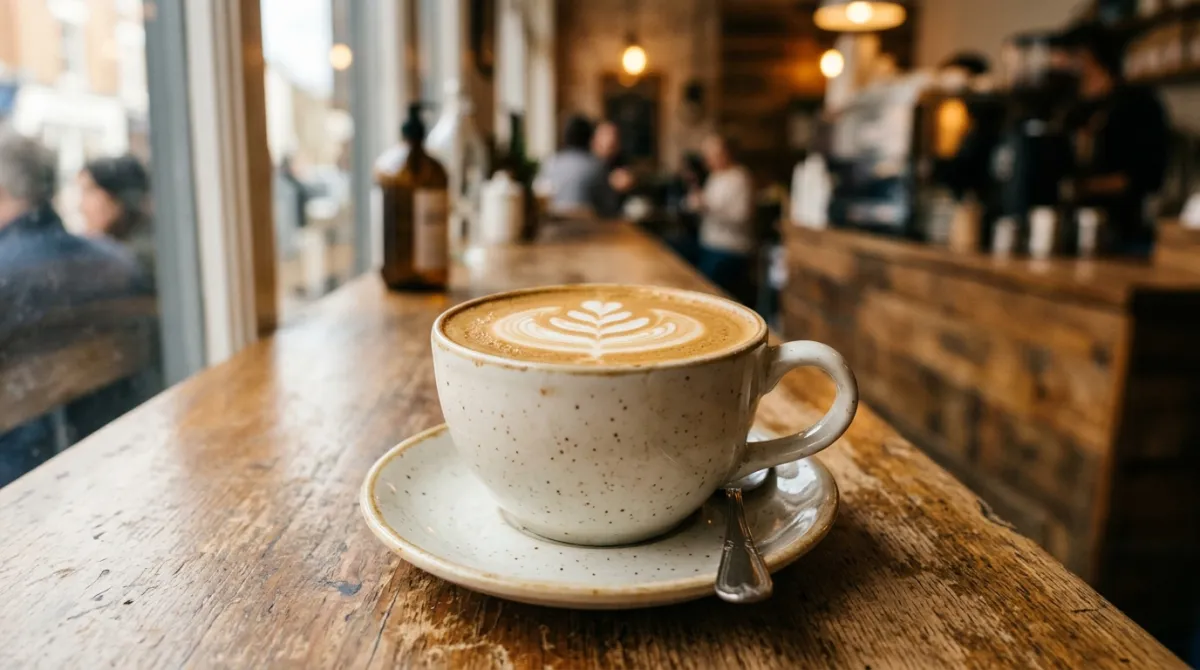
To make a latte, pull a double espresso, steam cold milk to silky microfoam, then pour the milk over the shot and finish with a thin (~1 cm) foam cap. The classic ratio is roughly 1 part espresso to 4-5 parts steamed milk in an 8-12 oz cup.
That is the whole drink in one sentence. After more than a decade of pulling shots every morning, I can tell you the espresso matters, but the milk is where lattes are won or lost. Below is the exact process I use at home.
Key Takeaways
- A latte is 1 part espresso to about 4-5 parts steamed milk, and a thin ~1 cm foam cap.
- Use a double espresso (~36 mL from ~18 g of coffee) as the base.
- Steam milk to about 140-150°F, silky and glossy, never boiling.
- No machine? A moka pot or AeroPress plus a milk frother works well.
- Latte vs cappuccino: a latte has more milk and much less foam.
What is a latte, exactly?
A latte, short for caffè latte, is an espresso drink built mostly from steamed milk with only a thin layer of foam on top. Picture a double espresso topped with several times as much milk. That milk-forward balance is what gives a latte its soft, rounded, almost sweet flavor.
The name literally means “milk coffee” in Italian, and the milk is doing most of the work. In my experience, a good latte tastes creamy and mellow, with the espresso sitting underneath rather than shouting. If your drink tastes sharp or bitter, you either need more milk or better-textured milk.
Most home brewers think they have an espresso problem when they actually have a milk problem. The espresso is fine; the milk is thin, hot, and bubbly instead of glossy and sweet.
For a foamier, smaller cousin, see my guide on how to make a cappuccino.
What you need to make a latte at home
You need three things: a source of espresso, cold milk, and a way to heat and texture that milk. The espresso is the base flavor, the milk is the body, and the texturing turns flat milk into microfoam. Get those three right and the rest is practice.
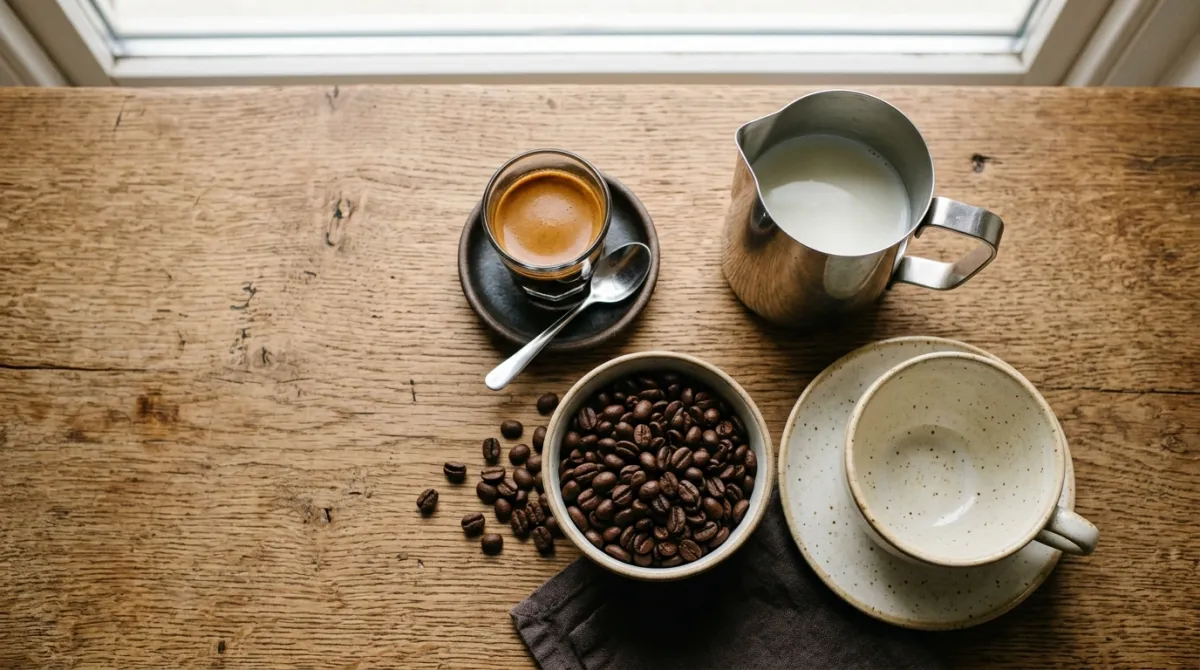
Equipment
Here is my short list:
- Espresso source: an espresso machine, a moka pot, or an AeroPress.
- Grinder: a burr grinder, ideally, for a fine, even espresso grind.
- Milk texturing: a steam wand, or a handheld or electric frother.
- A scale and a thermometer: cheap, and they make you consistent.
- A cup: 8-12 oz for a standard latte.
Ingredients
The recipe is short. You want about 18 g of fresh coffee for a double espresso, roughly 180 mL of cold milk, and nothing else. Whole dairy milk steams the most forgiving microfoam, but oat milk is my go-to non-dairy pick because it froths thick and stays glossy.
I keep a dedicated cold jug in the fridge door so the milk is always steaming-cold. Warm milk foams poorly and gives you big, soapy bubbles instead of tight microfoam.
How do you make a latte step by step?
Making a latte takes four moves: pull the espresso, steam the milk, pour, and finish. A double espresso is about 36 mL pulled from ~18 g of coffee, brewed with water at 195-205°F. Steam your milk to about 140-150°F. Then combine them at roughly a 1:4 to 1:5 ratio.
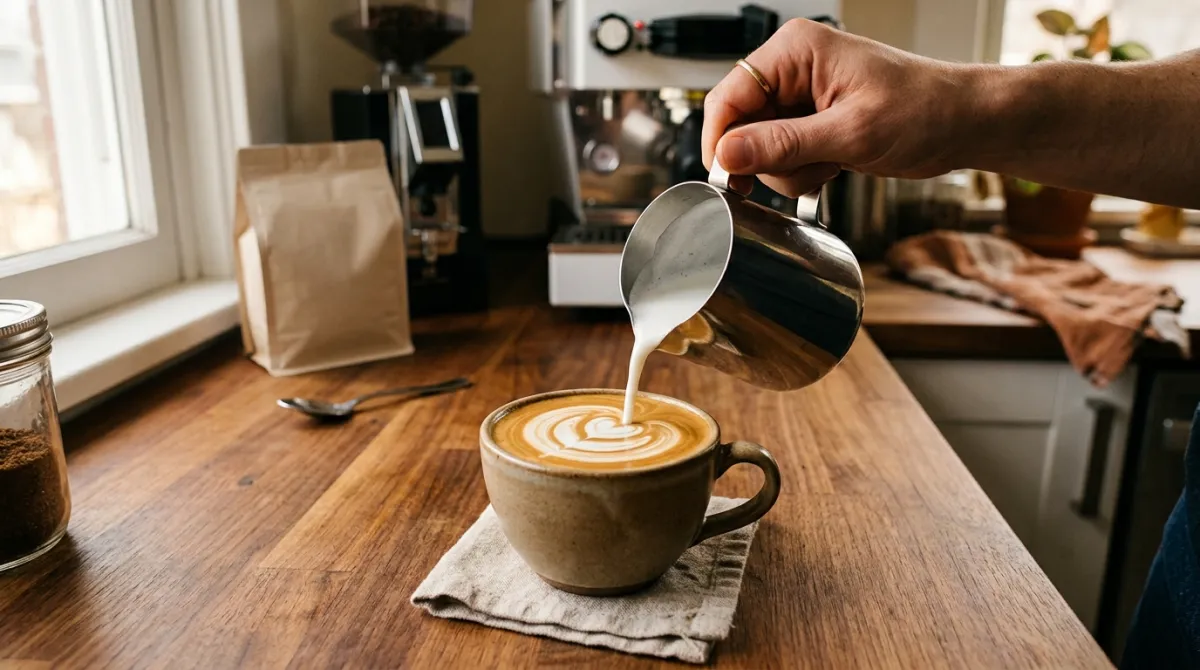
Work in order and keep the two hot components close in timing. Espresso goes stale fast, and milk sets as it cools, so pour while both are fresh.
Step 1: Pull the espresso
Grind ~18 g fine, distribute it level in the portafilter, and tamp flat with firm, even pressure. Lock in and start the shot. You are aiming for about 36 mL in roughly 25-30 seconds. Pull it directly into your latte cup so you skip a transfer.
Step 2: Steam the milk
Pour cold milk into a clean jug, filling it around a third full. Purge the steam wand, then set the tip just below the surface to introduce air for a couple of seconds. You want a gentle hiss, not a screech. Then submerge the tip deeper to spin the milk into a smooth whirlpool.
Stop at about 140-150°F, when the jug feels too hot to hold comfortably for more than a second or two. The milk should look glossy, like wet paint, with no visible large bubbles. My deeper walkthrough on how to steam milk covers the wand angle in detail.
Step 3: Pour the latte
Give the jug a firm swirl and a tap on the counter to fold the foam back into the milk. Start pouring from a height of a few inches, aimed at the center of the espresso. This lets the milk dive under the crema and mix. As the cup fills, drop the spout close to the surface to float the foam on top.
Step 4: Finish with a thin foam cap
A latte wears only a thin foam layer, about 1 cm. If you want simple latte art, keep the spout close and let a white spot bloom, then cut through it as you lift. Do not chase art on day one. Silky milk first, patterns later.
How do you make a latte without an espresso machine?
You can make a very good latte with no espresso machine by swapping in a moka pot or AeroPress for the shot and a handheld frother for the milk. Neither produces true nine-bar espresso, but both give a strong, concentrated coffee that stands up to milk in a milky latte.
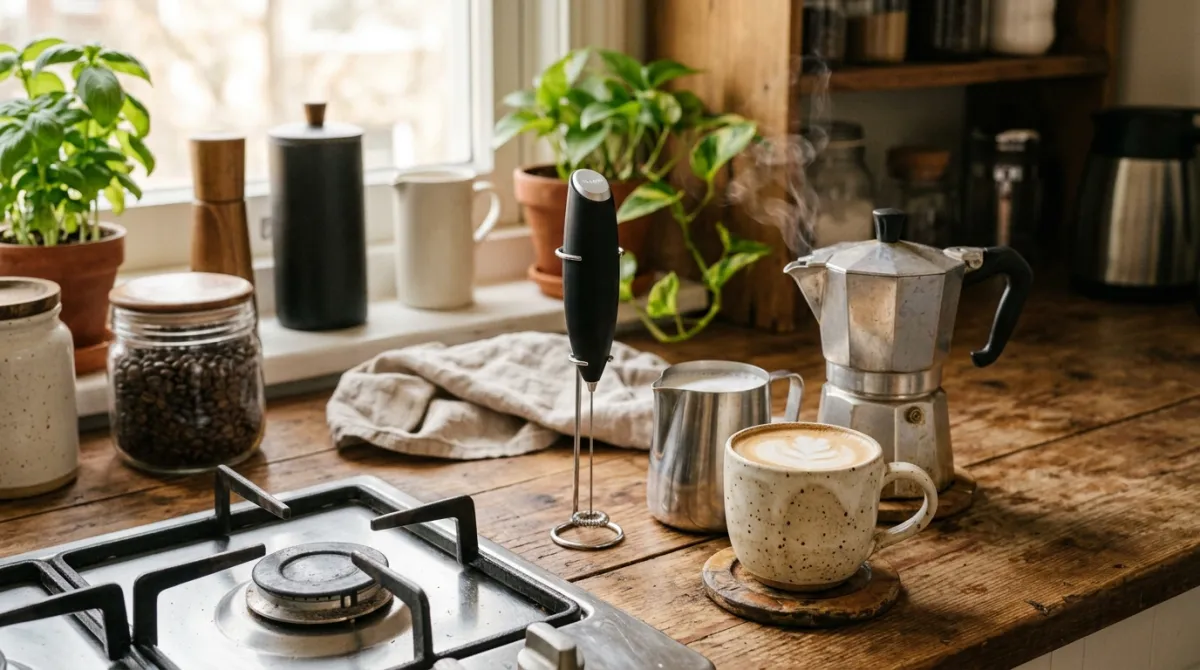
This is how I made lattes for years before I owned a machine, and honestly, guests rarely notice.
Moka pot method
Fill the moka pot base with hot water to just below the valve, add finely ground coffee to the basket without tamping, and assemble. Heat on medium. When the coffee gurgles up and turns pale, pull it off the heat. That concentrated brew is your espresso stand-in.
AeroPress method
Use a fine grind, a higher coffee dose, and a short steep for a concentrated shot. Press slowly into your cup. The result is smoother and less intense than moka coffee, and it pairs cleanly with steamed milk.
Frothing the milk
Heat the milk gently on the stove or in the microwave to about 140-150°F, then froth it. A handheld electric frother, a French press pumped by hand, or a dedicated frother all build usable foam. My guide on how to froth milk breaks down each tool. Swirl before pouring so the texture stays silky.
Latte vs cappuccino: what is the difference?
The difference is milk and foam. A latte uses more steamed milk and only a thin ~1 cm foam cap, while a cappuccino uses less milk and a thick, airy foam layer, often split into rough thirds of espresso, milk, and foam. Same espresso base, very different texture and strength.
Because a latte carries more milk, it tastes milder and creamier. A cappuccino tastes stronger and drier, with a more pronounced coffee bite. If you like a bolder cup, go cappuccino; if you like smooth and mellow, go latte. I break the two down side by side in cappuccino vs latte.
When I am dialing in a new bean, I taste it as a latte first. The extra milk mellows harsh notes and tells me whether the roast is worth drinking straight.
Frequently asked questions
How much espresso goes in a latte?
A standard latte uses a double espresso, about 36 mL pulled from roughly 18 g of coffee. In an 8-12 oz cup, that shot is topped with roughly four to five times as much steamed milk. If your latte tastes weak, use a smaller cup or a second double shot rather than diluting the milk.
What temperature should latte milk be?
Steam or heat latte milk to about 140-150°F, hot enough to feel too warm to hold but well short of boiling. Overheated milk above roughly 160°F scalds, loses its natural sweetness, and turns thin. A cheap thermometer removes the guesswork until you learn to judge temperature by touch on the jug.
Can I make a latte with non-dairy milk?
Yes. Oat milk is my favorite non-dairy option because it steams into thick, glossy microfoam and tastes naturally sweet with espresso. Soy also froths reliably. Barista-edition versions have added stabilizers that hold foam better. Almond and coconut can work, though they tend to foam thinner and split more easily under heat.
Why is my latte foam full of big bubbles?
Big bubbles mean you added too much air, added it too late, or started with warm milk. Introduce air only for the first couple of seconds, keep the tip just under the surface, then submerge to spin the milk smooth. Always swirl and tap the jug before pouring to knock out any large bubbles.
Making a latte at home comes down to a fresh double espresso, milk steamed to silky microfoam, and a patient pour. Nail the milk texture and everything else falls into place. Keep practicing the swirl, keep your milk cold to start, and your lattes will beat the café down the street within a week. For more techniques, browse my more brewing guides.
Keep brewing
Dial in your next cup with Brew Better Co.
Tested ratios, methods, and gear notes from a real home kitchen. New guides added regularly.
Explore all guides