milk drinks
How to Make a Cappuccino at Home: A Simple Guide

To make a cappuccino, pull a double espresso, then top it with equal parts steamed milk and thick, airy foam in a small 5 to 6 ounce cup. That classic balance of roughly equal parts espresso, steamed milk, and foam is what gives a cappuccino its bold flavor and cloud-like top.
I’ve been making cappuccinos at my kitchen bar most mornings for over a decade, and the drink is far more forgiving than it looks. Get the milk texture right, keep the cup small, and you’re most of the way there.
Key Takeaways
- A cappuccino is roughly equal thirds: espresso, steamed milk, and thick foam.
- Use a double shot (about 18 g of coffee yielding around 36 mL of espresso).
- Steam milk to 140-150°F, never boiling, and build more foam than you would for a latte.
- Serve in a small 5 to 6 oz cup so the ratios stay tight.
- No espresso machine? A moka pot or AeroPress plus a milk frother gets you close.
What Exactly Is a Cappuccino?
A cappuccino is an espresso-based drink built from three roughly equal layers: a shot of espresso, steamed milk, and a thick cap of microfoam. Traditionally it’s served in a 5 to 6 ounce cup, which keeps the coffee flavor front and center instead of drowning it in milk.
The foam is the defining feature. Where a flat white or latte leans on silky, barely-there foam, a cappuccino wears a proud, spoonable dome. That extra air is what makes the first sip feel so light.
Ever wonder why café cappuccinos taste stronger than the ones at a chain? It’s the ratio. Less milk means the espresso doesn’t get buried. If you want the full side-by-side breakdown, I compared them in cappuccino vs latte.
What You’ll Need to Make a Cappuccino
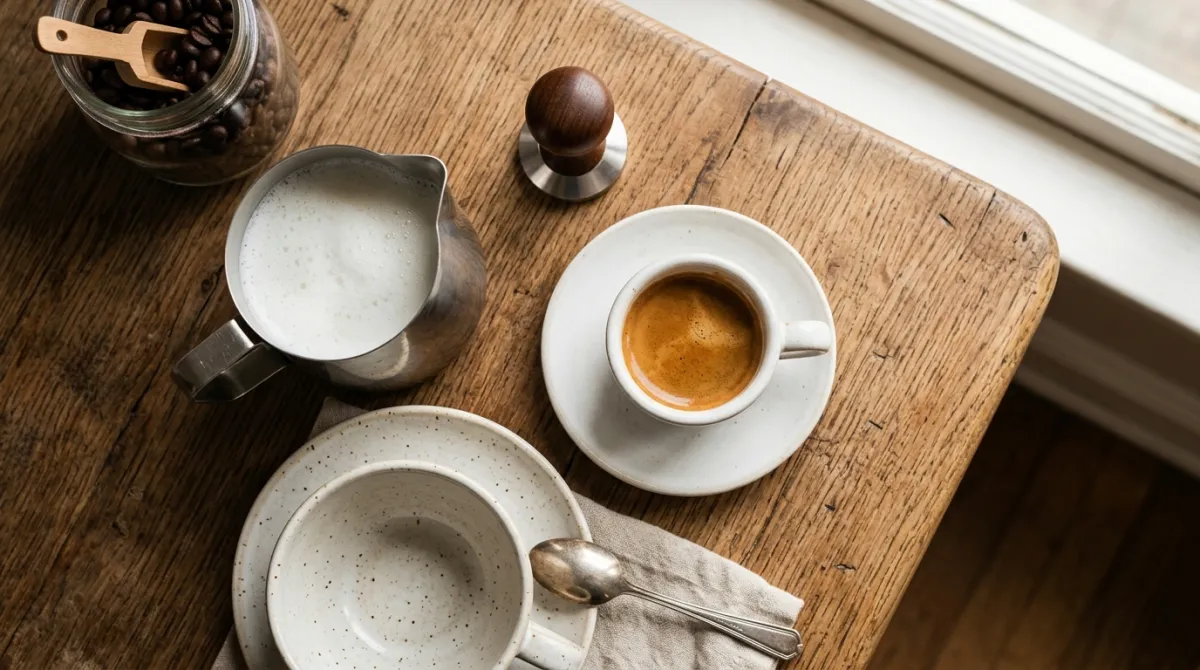
The good news is that a cappuccino needs surprisingly little gear. At minimum you want a source of espresso or strong concentrated coffee, cold milk, and a way to add heat and air to that milk. Everything else is refinement, not requirement.
Equipment
- An espresso machine with a steam wand, or a moka pot / AeroPress for the no-machine route
- A milk pitcher (a 12 oz stainless steel jug is my everyday pick)
- A digital scale for dosing coffee consistently
- A small 5 to 6 oz ceramic cup
- A thermometer, or trained hands, to catch the milk at temperature
Ingredients
- About 18 grams of fresh, finely ground coffee for a double shot
- Around 4 to 5 ounces of cold milk
- That’s genuinely it
The single upgrade that changed my cappuccinos most wasn’t a pricier machine. It was a cheap thermometer clipped to the pitcher, so I stopped scalding the milk and killing its natural sweetness.
How Do You Make a Cappuccino Step by Step?
Making a cappuccino comes down to two skills done in sequence: pulling a solid double espresso and texturing your milk into thick foam. A classic build is about 36 mL of espresso plus equal parts steamed milk and foam, poured into a warm 5 to 6 ounce cup for the right balance.
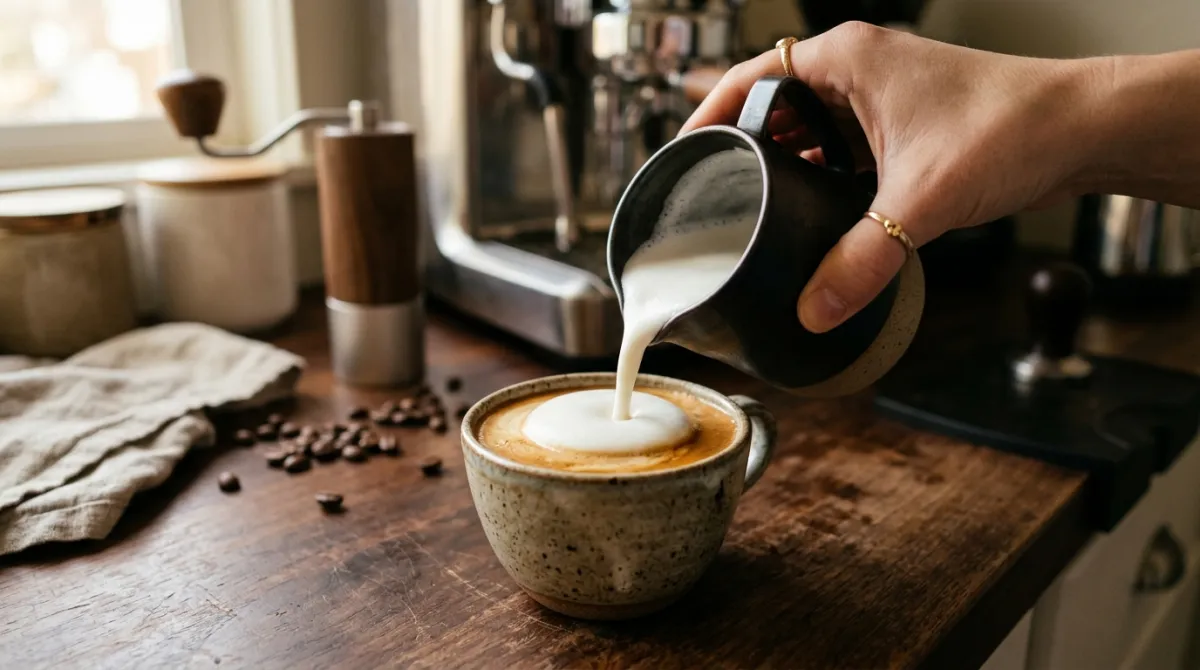
Here’s the routine I follow every morning.
Step 1: Pull the Espresso
Grind roughly 18 grams of coffee fine, tamp it level, and pull a double shot. You’re aiming for about 36 mL of rich espresso in 25 to 30 seconds. Pull it straight into your warmed cup so the crema stays intact.
Step 2: Steam the Milk
Fill your pitcher with about 4 to 5 ounces of cold milk. Introduce the steam wand just below the surface to pull in air, then submerge it slightly to spin and heat. Stop at 140 to 150°F. For a full walkthrough, see how to steam milk properly.
Step 3: Build the Foam
A cappuccino wants more air than a latte, so let that early “stretching” phase run a beat longer. You’re after a glossy, paint-like foam, not big soapy bubbles. Give the pitcher a firm tap and a swirl to knock out any large bubbles.
Step 4: Pour and Serve
Pour the steamed milk into the espresso first, holding the foam back with a spoon. Once the cup is roughly two-thirds full, spoon the thick foam on top to finish that signature dome. Serve right away, while it’s hot.
Most home brewers rush the pour and get a flat, foamless drink. The fix is counterintuitive: steam more aggressively than feels comfortable early on, because foam always deflates a little between the pitcher and the cup.
How Do You Get the Milk Foam Right?
Milk foam is where most homemade cappuccinos succeed or fail. The target is thick, dry microfoam heated to 140-150°F, cooler than boiling so the milk keeps its natural sweetness. Overheat past about 160°F and the proteins scorch, leaving that flat, slightly bitter taste.
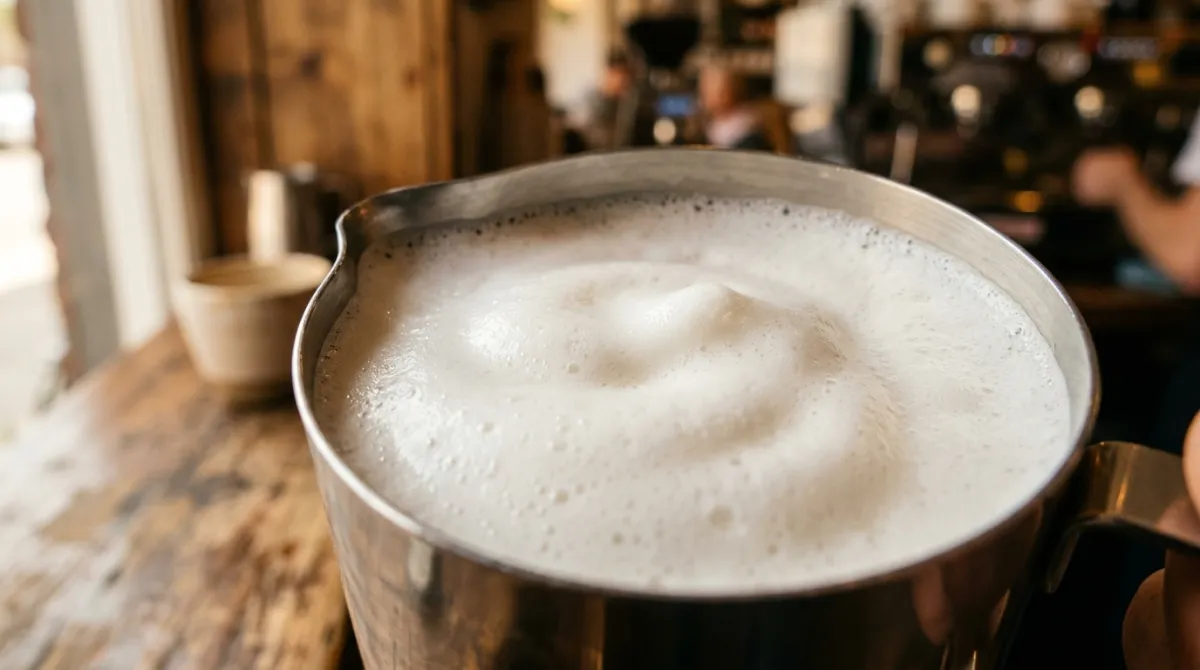
Cold milk is your friend. Starting cold buys you more time to add air before the milk gets hot, and more air means the taller, sturdier foam a cappuccino needs.
Which Milk Works Best?
Whole dairy milk foams most reliably thanks to its fat and protein. That said, I’ve pulled great foam from barista-style oat milk when I want something dairy-free. Skim milk foams big but tastes thin, so I usually skip it.
If you want to go deeper on technique, I broke down the mechanics in this guide on how to froth milk at home. The core idea stays the same: air first, then heat, then texture.
How Do You Make a Cappuccino Without an Espresso Machine?
You can absolutely make a cappuccino-style drink without an espresso machine. The workaround is simple: brew a strong, concentrated coffee with a moka pot or AeroPress, then froth your milk separately using a handheld frother, a French press, or even a sealed jar shaken hard.
The espresso substitute matters most. A moka pot brews thick, intense coffee that stands up to milk almost as well as a real shot. An AeroPress with a fine grind and a short brew gets close too.
Frothing Milk Without a Steam Wand
- Handheld electric frother: heat your milk first, then whisk it to a thick foam. My go-to for speed.
- French press: pour in warm milk and pump the plunger fast for 20 to 30 seconds.
- Jar method: half-fill a jar with warm milk, seal it, and shake until foamy.
Build it the same way as the machine version: concentrated coffee first, warm milk poured in, thick foam spooned on top. It won’t be identical to a café pour, but it’s a genuinely satisfying cup. The same trick powers a no-machine latte if you prefer more milk and less foam.
Frequently asked questions
What is the difference between a cappuccino and a latte?
A cappuccino uses roughly equal thirds of espresso, steamed milk, and thick foam in a small 5 to 6 oz cup. A latte holds more steamed milk and only a thin layer of foam, served in a larger cup. The result: a cappuccino tastes bolder and lighter, while a latte tastes creamier and milder.
How hot should the milk be for a cappuccino?
Aim for 140 to 150°F, comfortably below boiling. At that range the milk tastes naturally sweet and pours with a glossy, spoonable foam. Push past roughly 160°F and the milk proteins scorch, turning the flavor flat and faintly bitter. A cheap clip-on thermometer removes all the guesswork here.
Can I make a cappuccino with a single shot of espresso?
Yes, though I prefer a double. A single shot delivers about 18 mL of espresso, which can get lost under the milk and foam. A double shot, around 36 mL from roughly 18 grams of coffee, keeps the coffee flavor assertive against that thick foam. If you use a single, shrink the milk to match.
Why is my cappuccino foam disappearing?
Collapsing foam usually means the milk was steamed too gently or heated too fast. You need to add plenty of air early, while the milk is still cold, before it warms up. Big, soapy bubbles also pop quickly, so tap and swirl the pitcher to tighten the texture into fine, stable microfoam.
Making a cappuccino at home really comes down to small, repeatable habits: a solid double shot, cold milk stretched into thick foam, and a small cup that respects the ratios. My first few attempts were flat and lukewarm, and yours might be too, but the technique clicks fast once your hands learn the milk. Keep practicing, taste as you go, and explore more brewing guides when you’re ready for the next drink.
Keep brewing
Dial in your next cup with Brew Better Co.
Tested ratios, methods, and gear notes from a real home kitchen. New guides added regularly.
Explore all guides