comparisons
French Press vs Drip Coffee: Which Should You Brew?
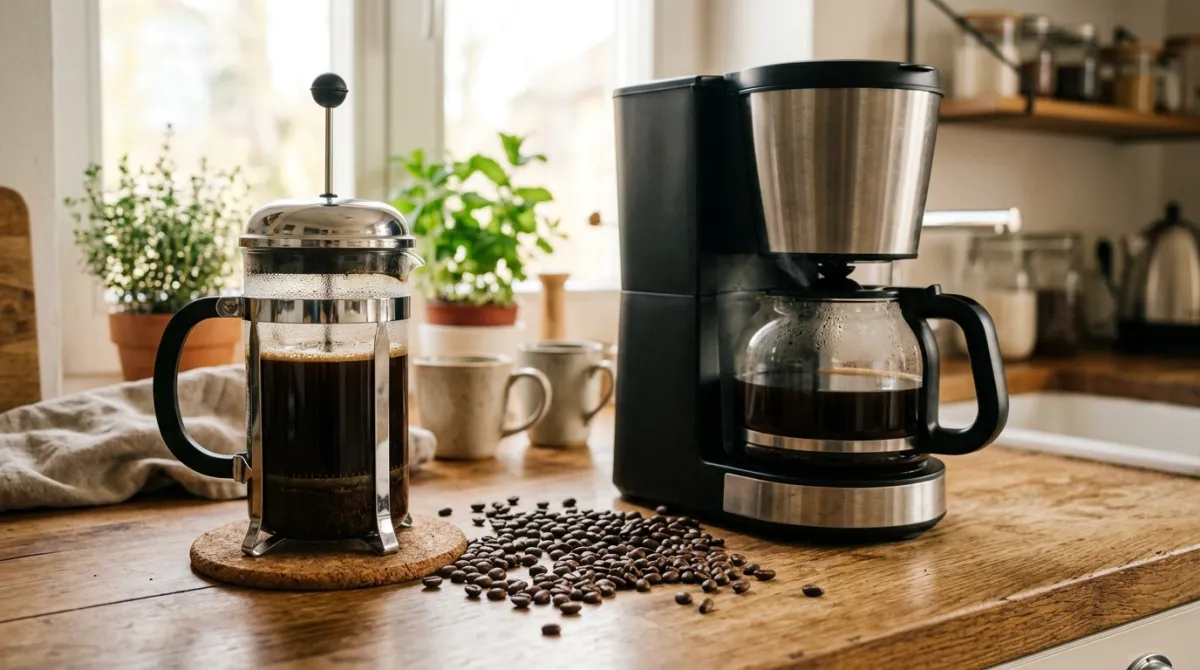
Neither wins outright. When you compare french press vs drip coffee, you are really choosing between two textures. A French press gives you a fuller, heavier, more textured cup because its metal filter lets natural oils and fine particles through. Drip coffee gives you a cleaner, lighter, more consistent cup, plus far less fuss.
I have brewed both almost daily for over ten years. My rule of thumb: reach for a French press when you want richness and ritual, and reach for drip when you want a hands-off, reliable pot. Your taste and your morning routine decide the winner, not some universal ranking.
Key Takeaways
- French press uses full immersion and a metal mesh filter, so oils and sediment stay in the cup for a bold, heavy body.
- Drip runs water through a paper filter that traps oils and grit, giving a cleaner, brighter, lighter cup.
- Caffeine per cup is roughly similar; your dose and coffee-to-water ratio matter more than the device.
- French press costs little upfront with no filters to buy; drip machines cost more and use paper filters.
- Drip is easier and more consistent; French press rewards attention with more flavor.
French press vs drip coffee: which is better?
Neither is strictly better, because they solve different problems. The French press wins on body and richness. Drip wins on convenience and consistency. The right pick depends on whether you value flavor and ritual or speed and ease. Here is the comparison at a glance, with the details in the sections below.
| Factor | French press | Drip coffee |
|---|---|---|
| Body | Full, heavy, oily | Clean, light, bright |
| Filter | Metal mesh (oils pass through) | Paper (traps oils and grit) |
| Effort | Hands-on: time it and plunge | Hands-off: press a button |
| Cleanup | Messy wet grounds | Toss the paper filter |
| Cost | Low, no filters to buy | Higher, uses paper filters |
| Best for | Rich cups, slow mornings | Speed, consistency, big batches |
Read the table as a starting point, not a verdict. Plenty of people own both and switch based on the day, which is exactly what I do.
How they brew differently (immersion vs drip)
The core difference is contact. A French press is full immersion: coarse grounds sit in hot water and steep for about four minutes, then a metal mesh plunger separates the grounds from the liquid. Drip works the opposite way, trickling hot water through a bed of grounds held in a paper filter.
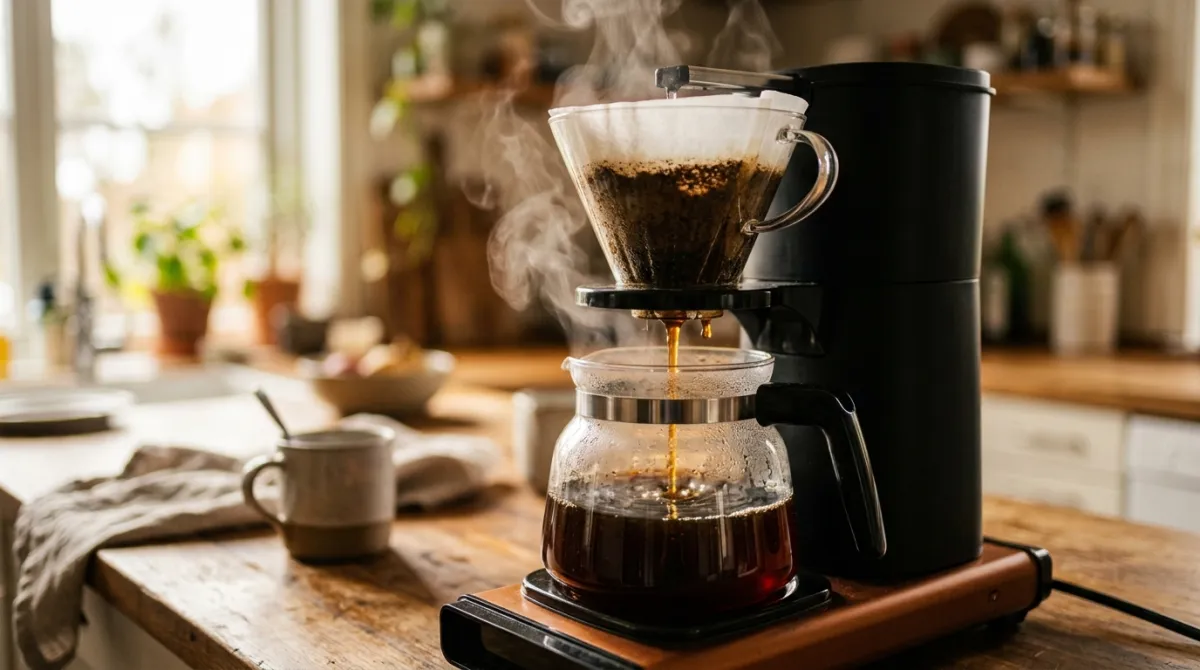
That paper filter changes everything. It traps the coffee’s oils and most of the fine sediment, so what lands in your carafe is thinner and clearer. The metal screen in a press does not. It lets those oils and micro-fines pass straight through.
Timing differs too. With immersion, every ground steeps for the same duration, which makes extraction fairly even once you dial in your grind. Drip machines vary more, since water flow, temperature, and bloom depend on the machine. If you want the immersion method done right, here is how to use a French press without over-extracting.
The National Coffee Association’s brewing guidance covers both styles, and it stresses fresh grounds, correct water temperature, and the right ratio regardless of the device you pick.
Taste and body: what to expect from each
Taste splits along that oil-and-sediment line. French press coffee is bold and heavy with an oily mouthfeel and a little sediment at the bottom of the cup. Drip coffee tastes cleaner and brighter, with a lighter body that lets delicate, floral, or fruity notes come through more clearly.
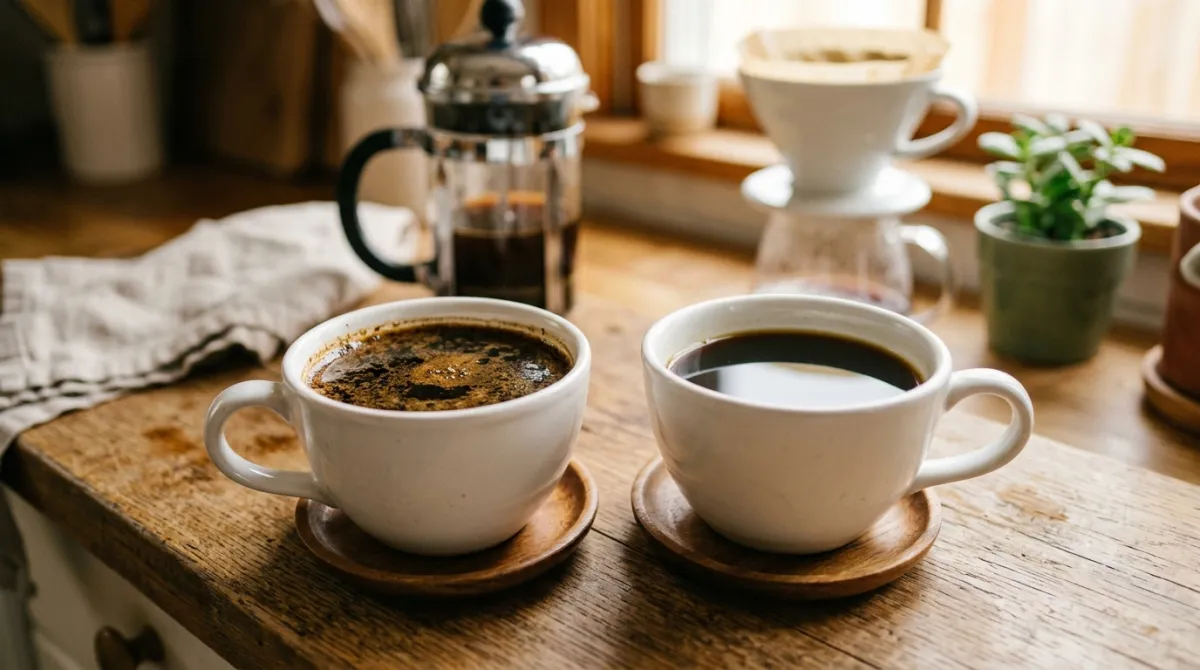
Think of it like whole milk versus skim. The press keeps the full, round texture. Drip strips some of that away and hands you clarity instead.
In my experience, a French press flatters darker roasts and chocolatey, nutty beans beautifully. The heavier body makes them feel richer. Drip, on the other hand, tends to show off a bright single-origin better, since nothing muddies the acidity.
Which do you actually prefer in the cup? If you like a thick, satisfying brew you can almost chew, the press wins. If you want a crisp coffee you can drink a lot of, drip pulls ahead. There is no wrong answer here, just a different feel.
Convenience, cleanup, and consistency
This is where drip earns its keep. An automatic drip machine is hands-off: you add grounds and water, press a button, and walk away. It also brews the same way every time, so consistency is easy even before your first sip. When cleanup arrives, you just toss the paper filter and grounds together.
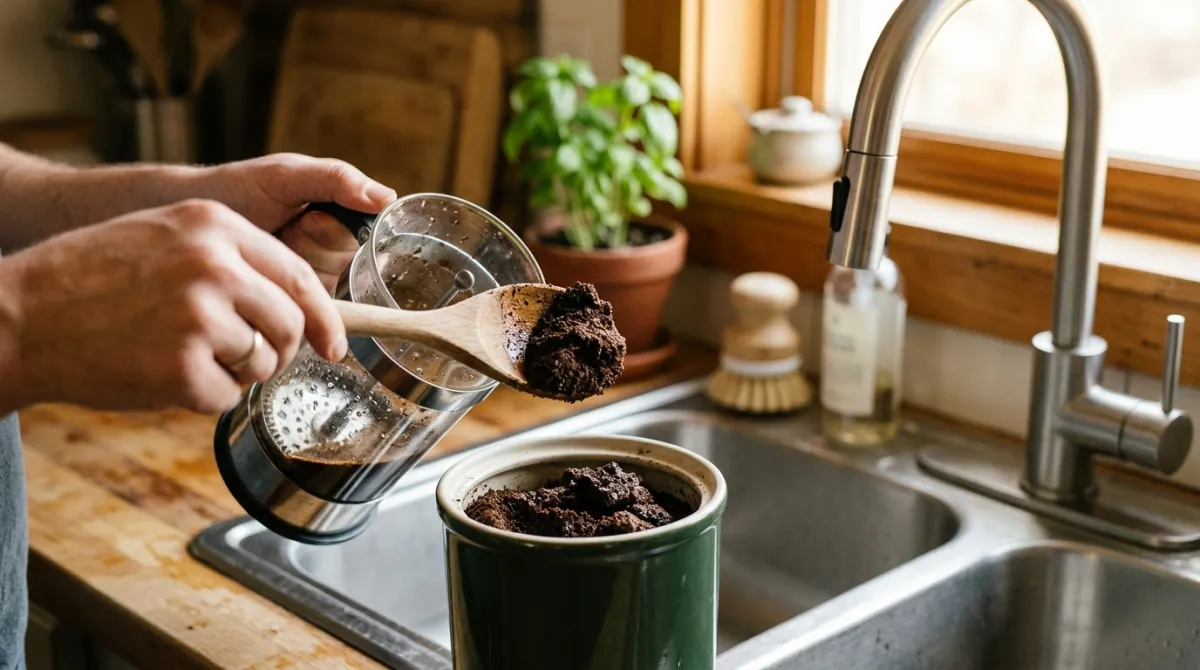
A French press asks more of you. You heat the water, time the steep, and plunge at the right moment. Then comes the messier part: scooping out wet grounds, rinsing the mesh screen, and making sure fines do not clog your sink.
Honestly, the grounds cleanup is the number one reason people drift back to drip. I keep a small compost bin next to the sink just to make the press less annoying. Consistency also takes practice, because your grind and steep time swing the results more than a machine ever would. Nailing your French press coffee ratio removes most of that guesswork.
Caffeine and cost compared
Caffeine per cup between the two is roughly similar, and it depends far more on how much coffee you use and your coffee-to-water ratio than on the device itself. A strong, high-dose drip pot can easily out-caffeinate a weak French press, and the reverse is just as true. Do not assume one method automatically loads more of a kick.
Cost is where they truly separate. A French press has a low upfront price and no ongoing filters to buy, so once you own it, your only recurring cost is coffee. Drip machines usually cost more to purchase, and most rely on paper filters you replace with every brew.
Over years, those small filter costs add up, though they stay minor for most households. If budget is your deciding factor, the press is the cheaper long-term companion by a comfortable margin.
Which one should you choose?
Choose based on your mornings, not on hype. Pick a French press if you love a rich, full-bodied cup, you enjoy a short brewing ritual, and you do not mind a little cleanup. It is cheap to start and forgiving once you learn your grind and ratio.
Pick drip if you value speed, consistency, and brewing larger batches with minimal effort. It suits busy households and anyone who wants coffee ready without standing over it.
Here is my honest take after a decade of both sitting on my counter: I keep each for a different mood. Weekends and slow mornings belong to the press. Rushed weekdays, or when I am brewing for a crowd, belong to drip. You do not have to choose only one forever, and owning both covers every situation nicely.
Frequently asked questions
Is French press better than drip coffee?
Neither is strictly better. A French press makes a fuller, heavier, more textured cup because its metal filter passes oils and fines. Drip makes a cleaner, lighter, more consistent cup with far less effort. Your taste and routine decide which one deserves the counter space.
Does French press have more caffeine than drip?
Not reliably. Caffeine per cup is roughly similar and depends mostly on your dose and coffee-to-water ratio, not the brewing device. A strong drip pot can hold more caffeine than a weak French press, and the opposite happens too. Adjust your grounds if you want a bigger jolt.
Is French press coffee stronger than drip?
It usually tastes stronger because it is heavier and oilier, with more body and sediment in the cup. That perceived strength comes from texture and flavor intensity, not necessarily caffeine. Drip tastes cleaner and lighter by comparison, even when both use the same coffee and similar ratios.
Which is easier, French press or drip?
Drip is easier. An automatic machine brews hands-off, delivers consistent results, and cleans up with a single disposable filter. A French press needs timing, plunging, and messier grounds cleanup afterward. If minimal effort matters most to your mornings, drip is the simpler daily choice.
Ready to get more from whichever brewer you pick? Explore our more brewing guides for ratios, grind tips, and step-by-step methods that make every cup better.
Keep brewing
Dial in your next cup with Brew Better Co.
Tested ratios, methods, and gear notes from a real home kitchen. New guides added regularly.
Explore all guides