methods
How to Use a French Press: A Step-by-Step Guide
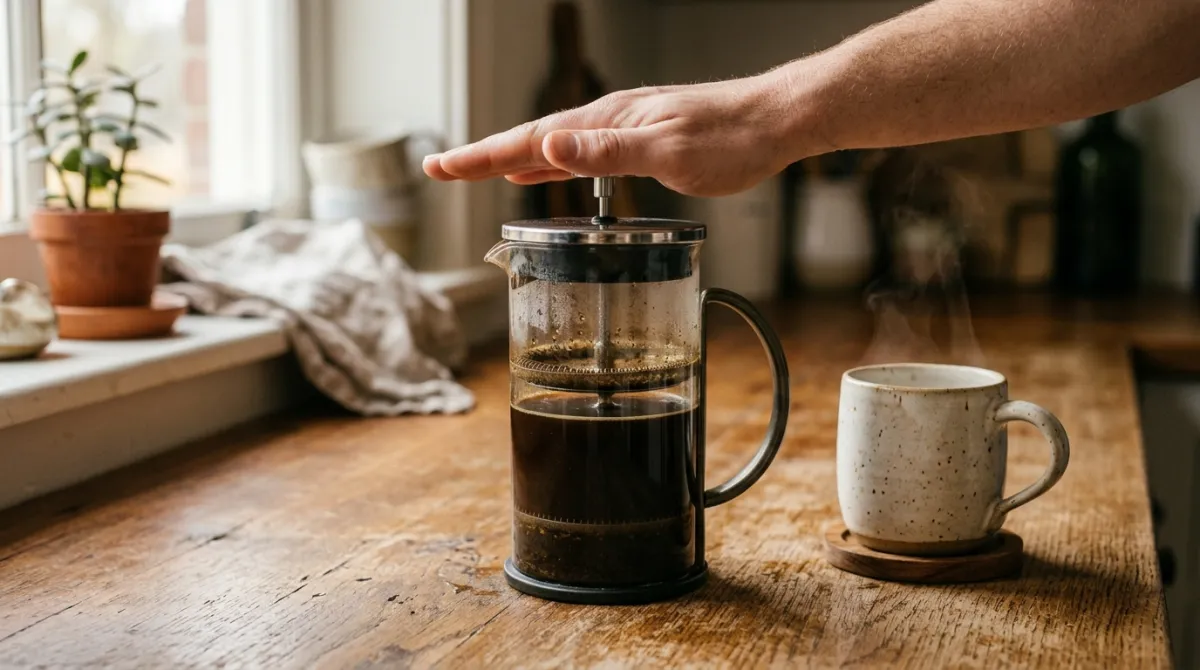
Brewing coffee in a French press is one of the simplest ways to make a rich, full-bodied cup at home. If you want to know how to use a French press, the short version is this: add coarse grounds, pour in hot water, stir, steep for four minutes, then press the plunger down slowly and pour. That is the whole method, and once you have done it a few times it takes less than five minutes start to finish.
I have brewed on a French press almost every morning for more than a decade, and it is still my go-to when I want something forgiving and flavorful. Below, I will walk you through the exact ratio, grind, and temperature I use, plus the mistakes that quietly ruin most cups.
Key Takeaways
- Use coarse grounds the texture of sea salt, never a fine espresso grind.
- Start with a 1:15 to 1:17 coffee-to-water ratio and adjust to taste.
- Heat water to roughly 195-205°F, the range the National Coffee Association recommends for brewing.
- Steep for a full four minutes, then press slowly and decant right away.
- Pouring off the coffee immediately stops over-extraction and bitterness.
How do you use a French press?
You use a French press by combining coarse coffee grounds with hot water, letting them steep for about four minutes, then pressing the metal plunger down to separate the grounds from the liquid. Pour and drink right away. It is a full-immersion method, meaning the coffee sits in the water the entire time.
That immersion is why French press coffee tastes so heavy and satisfying. The mesh filter lets natural oils and fine particles through, which paper filters trap. In my experience, that is exactly what gives the cup its signature body. If you are weighing it against an automatic machine, see French press vs drip coffee.
The plunger does not “brew” the coffee. By the time you press, extraction is already done. Pressing only pushes the grounds to the bottom so they stop steeping.
What you need to brew with a French press
You need surprisingly little gear, which is part of why the French press stays so popular. Here is the short list.
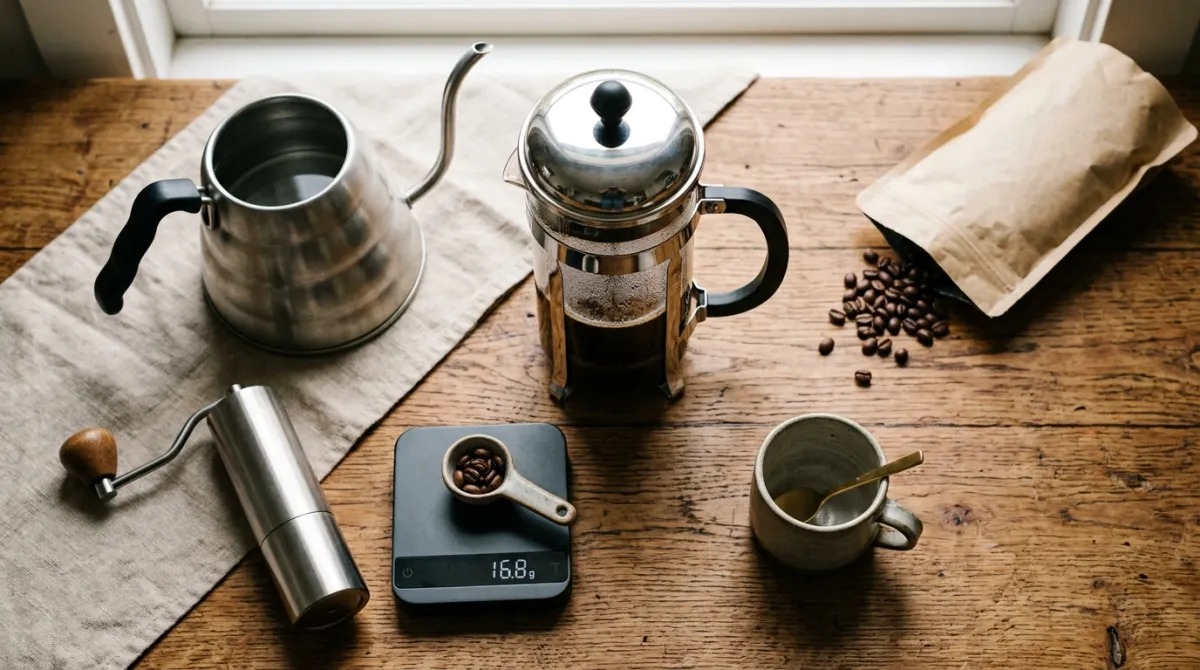
- A French press (an 8-cup, 34-ounce model is the most versatile size)
- A burr grinder, or pre-ground coarse coffee
- A kitchen scale, ideally one with 1-gram precision
- A kettle, gooseneck optional but not required
- A timer (your phone works fine)
- Fresh whole-bean coffee, roasted within the last few weeks
A scale matters more than people expect. Eyeballing scoops is the single biggest reason cups come out inconsistent from one day to the next. Weighing takes ten seconds and removes the guesswork completely.
The French press coffee ratio to start with
Start with a ratio between 1:15 and 1:17, meaning 1 gram of coffee for every 15 to 17 grams of water. For a standard 8-cup press, that is roughly 53 grams of coffee to about 850 grams of water. A 1:16 ratio is a reliable middle ground that suits most beans.
After years of testing, I have found the French press rewards a slightly stronger ratio than pour over does. Because the mesh filter passes more solids, a 1:15 pour can taste muddy in a paper-filter brewer but balanced and syrupy here.
If you want the full breakdown with exact gram tables, see my detailed French press coffee ratio guide. For how ratios work across every brew method, the pillar coffee to water ratio guide covers the math.
Prefer a lighter cup? Push toward 1:17. Want it bolder? Move toward 1:15. Change one variable at a time so you can taste what each adjustment does.
Step by step: how to brew French press coffee
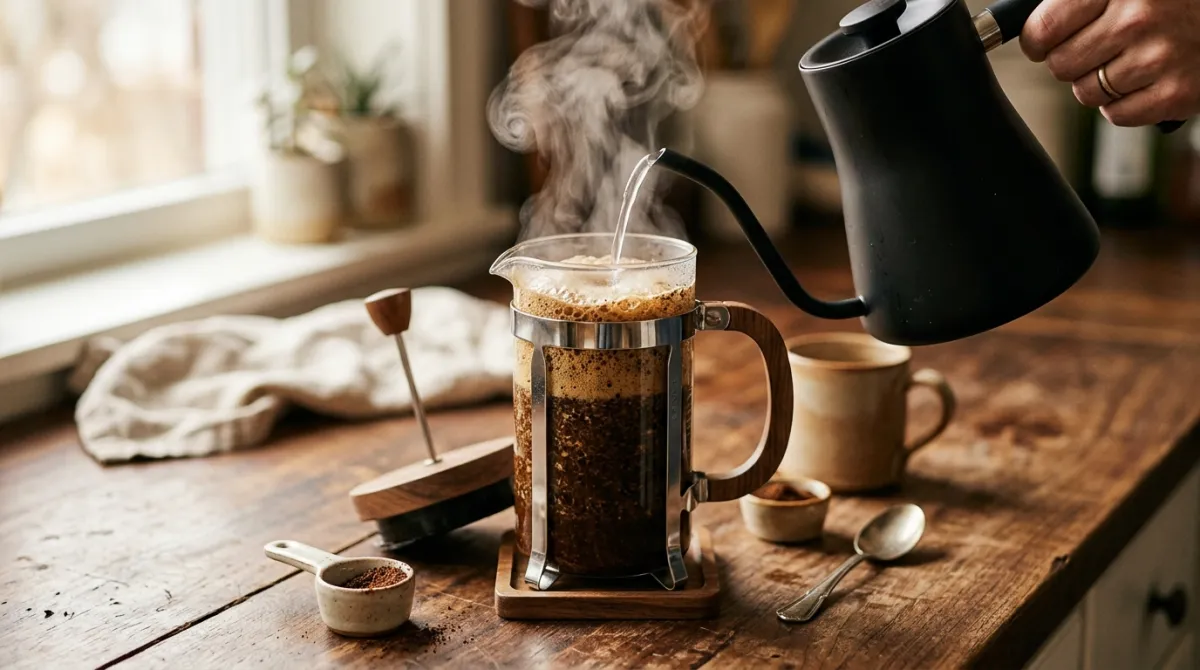
Follow these steps for a consistent cup every morning. The whole process takes about five minutes, and four of those are hands-off steeping. Weigh your coffee and water for repeatable results.
- Grind coarse. Grind 55 grams of beans to a coarse, sea-salt texture just before brewing.
- Preheat the press. Swirl hot water inside the empty carafe, then dump it out. This keeps the brew temperature stable.
- Add the coffee. Pour the grounds into the empty, warmed press and give it a gentle shake to level them.
- Bloom and stir. Add about twice the coffee’s weight in water (roughly 110 grams), stir gently, and wait 30 seconds. Fresh coffee will puff up and release carbon dioxide.
- Add the rest of the water. Pour in the remaining water to hit around 850 grams total. Pour steadily to saturate all the grounds.
- Lid on, plunger up. Set the lid on top with the plunger pulled all the way up. This traps heat without pressing yet.
- Steep four minutes. Start your timer and leave it alone.
- Press slowly. Push the plunger down with steady, even pressure over 15 to 20 seconds. If it fights back hard, your grind is too fine.
- Decant immediately. Pour all the coffee out into your cup or a carafe right away, even if you are not drinking it all at once.
The step most people skip is decanting. Coffee left sitting on the grounds keeps extracting and turns bitter within minutes. I learned this the hard way after years of wondering why my second cup always tasted harsh.
Grind size and water temperature that make or break it
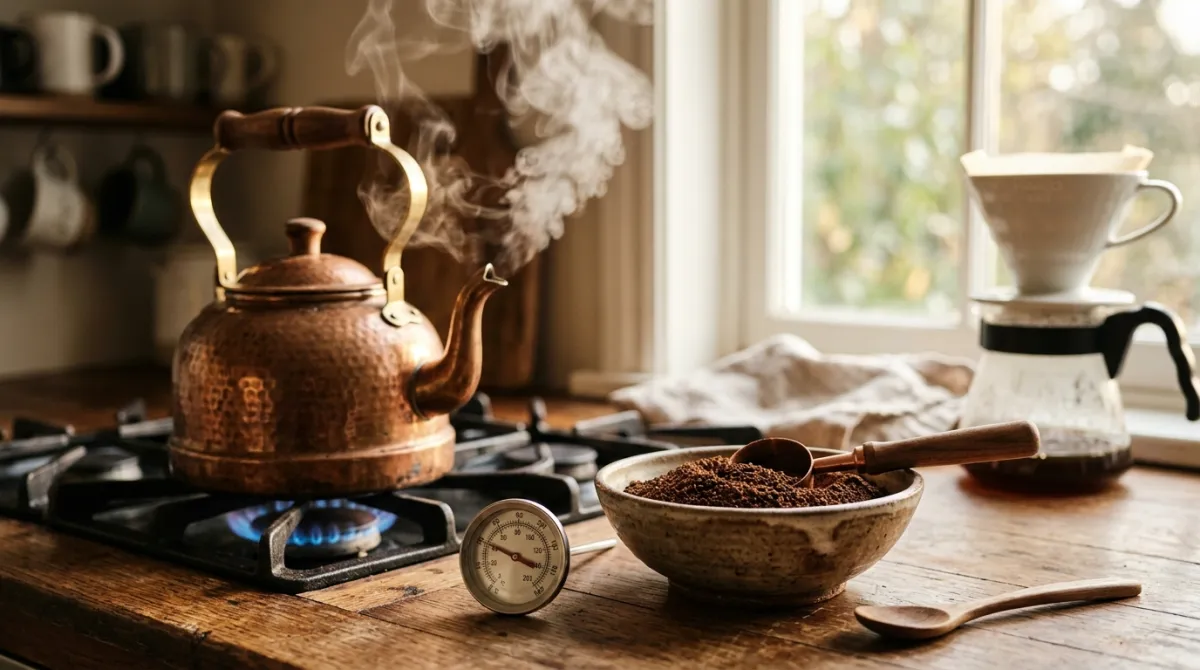
Two variables decide whether your cup sings or disappoints: grind size and water temperature. The National Coffee Association recommends brewing water between roughly 195°F and 205°F, just off a boil (National Coffee Association). Below that range you get sour, underdeveloped coffee; above it, you risk scorched, bitter notes.
Why coarse grind matters
Your grind should look like coarse sea salt or breadcrumbs. Fine grounds slip through the metal mesh, cloud your cup, and make the plunger nearly impossible to press. They also over-extract fast, since more surface area meets the water.
A quality burr grinder makes the biggest difference here. Blade grinders produce uneven particles, a mix of dust and boulders, which gives you bitterness and weakness at the same time. The Specialty Coffee Association points to consistent grind particle size as a foundation of good extraction (Specialty Coffee Association).
Getting water temperature right
If you do not own a thermometer, bring water to a boil, then let it rest for about 30 seconds. That short pause drops it neatly into the 195-205°F window. Simple, and it works with any kettle.
Common French press mistakes to avoid
Most French press problems trace back to a handful of repeat offenders, and grind size tops the list. Here is what to watch for.
Grinding too fine. This is the number one mistake. Fine grounds clog the filter and cause a gritty, over-extracted cup.
Skipping the scale. Guessing your dose leads to a different cup every day. Weigh both coffee and water.
Leaving coffee on the grounds. As I mentioned, decant immediately. This one change fixes bitterness for most people.
Pressing too hard or too fast. Slam the plunger and you will agitate the grounds, muddying the cup and sometimes splashing hot coffee. Slow and steady wins.
Using stale beans. Coffee older than a month tastes flat no matter how well you brew. Buy whole beans and grind fresh.
Ever wonder why café French press tastes better than yours? Nine times out of ten, it is fresher beans and a proper coarse grind, nothing more exotic than that.
Frequently asked questions
How long do you steep a French press?
Steep a French press for four minutes for a standard medium roast. This is the sweet spot most home baristas and brewing guides recommend. If your coffee tastes weak, add 30 seconds; if it is bitter, cut back to three and a half minutes. After steeping, press and pour immediately to stop extraction.
What is the ratio for a French press?
The ratio for a French press is between 1:15 and 1:17, or 1 gram of coffee per 15 to 17 grams of water. A 1:16 ratio works well as a starting point, which translates to about 53 grams of coffee for 850 grams of water in an 8-cup press. Adjust toward 1:15 for stronger coffee.
Do you stir a French press?
Yes, you should stir a French press, ideally right after adding water during the bloom. Stirring saturates all the grounds evenly and helps the coffee extract fully. A gentle stir with a wooden or plastic spoon after 30 seconds is enough. Avoid metal utensils, which can scratch glass carafes over time.
Can you use regular ground coffee in a French press?
You can use regular pre-ground coffee, but most supermarket grinds are too fine for a French press. Fine grounds slip through the mesh filter and make your cup gritty. For the best results, buy coarse-ground coffee labeled for French press, or grind whole beans yourself to a coarse, sea-salt texture.
Once you have the French press down, the same fundamentals of grind, ratio, and temperature carry over to every method you will try next. Browse more brewing guides to build on what you have learned here and find your next favorite cup.
Keep brewing
Dial in your next cup with Brew Better Co.
Tested ratios, methods, and gear notes from a real home kitchen. New guides added regularly.
Explore all guides