brewing
French Press Coffee Ratio: The Simple Golden Formula
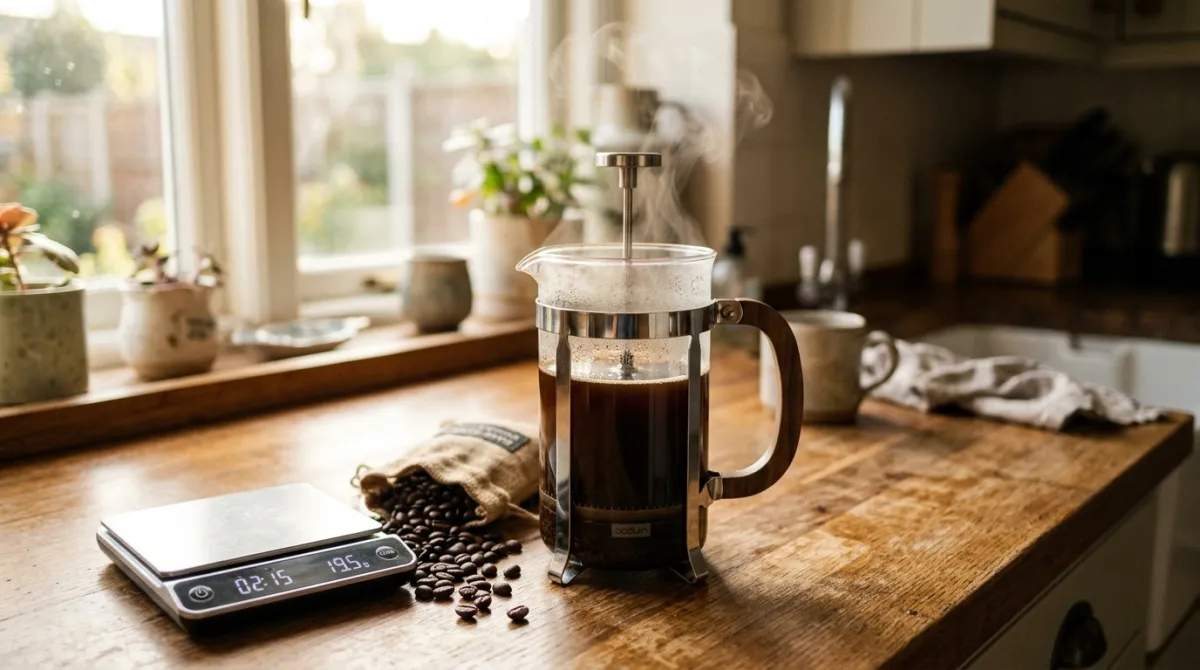
The best French press coffee ratio sits between 1:15 and 1:17 coffee to water by weight. Use about 1:15 for a strong cup, 1:16 for balanced, and 1:17 for a milder brew. In plain terms, that is roughly 60 to 67 grams of coffee per liter of water.
A repeatable coffee-to-water target like this beats guesswork. The Specialty Coffee Association promotes a “golden cup” standard that actually runs a little leaner (closer to 1:18), and many French press drinkers brew slightly stronger, which is why 1:15 to 1:17 is the range most home brewers settle into. In my kitchen I default to 1:16, then nudge it based on the beans.
Key Takeaways
- A French press ratio of 1:15 to 1:17 (coffee to water by weight) covers strong, balanced, and mild.
- Use the chart below to scale grams and tablespoons for roughly 2-cup up to 8-cup presses.
- Weigh in grams when you can. One level tablespoon of ground coffee is about 5 grams, so 2 tablespoons per small cup is a decent backup.
- The ratio only works with a coarse grind and a 4-minute steep, so grind and time matter as much as the numbers.
Let’s get into the exact measurements, the no-scale shortcut, and the small mistakes that quietly wreck an otherwise good ratio.
What is the best coffee to water ratio for a French press?
Think of the ratio as coffee to water by weight, written as 1 to something. At 1:15 you are using 1 gram of coffee for every 15 grams of water, which brews bold and heavy. At 1:17 the same water gets less coffee, so the cup tastes lighter and cleaner. Most home brewers live happily at 1:16.
Why by weight and not by scoops? Because beans differ in density and grind changes how much a spoon holds, so weight is the only measure that stays true across roasts. If you take one thing from this guide, make it this: pick a ratio, weigh to it, and you can finally repeat a cup you liked. The chart below turns those ratios into numbers you can actually scoop. For how ratios work across every method, see the pillar guide on coffee to water ratio.
French press ratio chart by cup size and strength
Here is the chart to copy. It assumes water measured in grams (1 gram of water is 1 milliliter), and it uses the rule that 1 level tablespoon of ground coffee is about 5 grams. Tablespoon numbers are rounded to something you can actually scoop.
| Water (g / ml / fl oz) | 1:15 strong (g / tbsp) | 1:16 balanced (g / tbsp) | 1:17 mild (g / tbsp) |
|---|---|---|---|
| 250 g / 250 ml / ~8.5 fl oz | 17 g / ~3.5 tbsp | 16 g / ~3 tbsp | 15 g / ~3 tbsp |
| 500 g / 500 ml / ~17 fl oz | 33 g / ~6.5 tbsp | 31 g / ~6 tbsp | 29 g / ~6 tbsp |
| 700 g / 700 ml / ~23.5 fl oz | 47 g / ~9.5 tbsp | 44 g / ~9 tbsp | 41 g / ~8 tbsp |
| 1000 g / 1000 ml / ~34 fl oz | 67 g / ~13.5 tbsp | 63 g / ~12.5 tbsp | 59 g / ~12 tbsp |
A quick note on “cups.” A French press “cup” is about 118 to 125 ml, not a full 8-ounce mug, which is why the classic 8-cup press holds roughly 1 liter. So a “3 cup” pour in press terms is around 350 to 375 ml, while the 700 g row above suits a bigger 6-cup serving. Match the water row to what your carafe actually holds, then read across.
If you want one number to memorize, take your water in grams and divide by 16. That is your balanced coffee dose in grams. For the full 1-liter press, 1000 divided by 16 is about 63 grams.
How to measure your ratio without a scale
No scale? Use the tablespoon rule: about 2 level tablespoons of ground coffee per small (roughly 180 ml) cup of water. Since 1 tablespoon is close to 5 grams, 2 level tablespoons is about 10 grams, which is roughly a 1:18 ratio at 180 ml, so it brews on the milder side. Heap the spoons a little, or add a third tablespoon, and you move toward the 1:15 to 1:16 range.
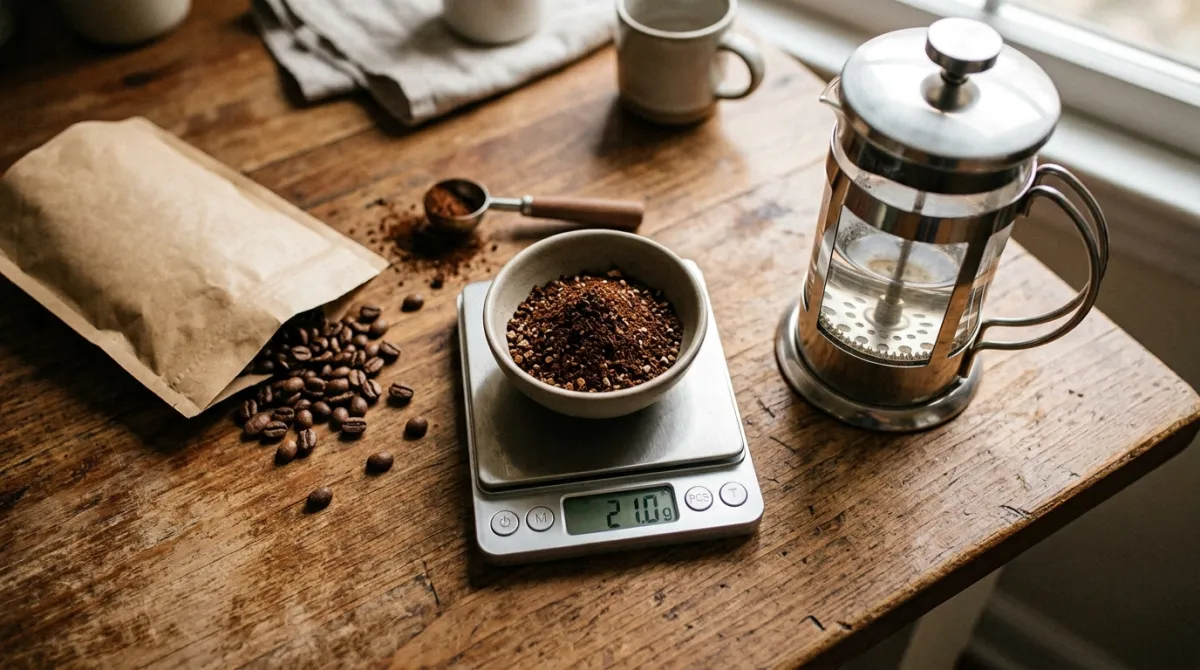
That variability is the catch. Ground coffee is fluffy, and a coarse French press grind scoops differently than a fine grind, so tablespoons drift. The National Coffee Association offers general home-brewing guidance, and even good rules of thumb assume a fairly consistent scoop.
Here is my honest take after years of doing it both ways. A cheap kitchen scale that reads in grams is the single biggest upgrade for consistent French press, bigger than a new grinder for most people. Tablespoons get you close; a scale gets you the same cup twice. Measure your water by volume (a measuring cup is fine) and your coffee by tablespoons, and you will still be in the right neighborhood.
Grind size and steep time the ratio depends on
The ratio only tastes right with a coarse grind and a 4-minute steep. Aim for grounds the texture of coarse sea salt or breadcrumbs. Then pour water just off the boil, around 200°F, stir the crust after about a minute, and press at the 4-minute mark.
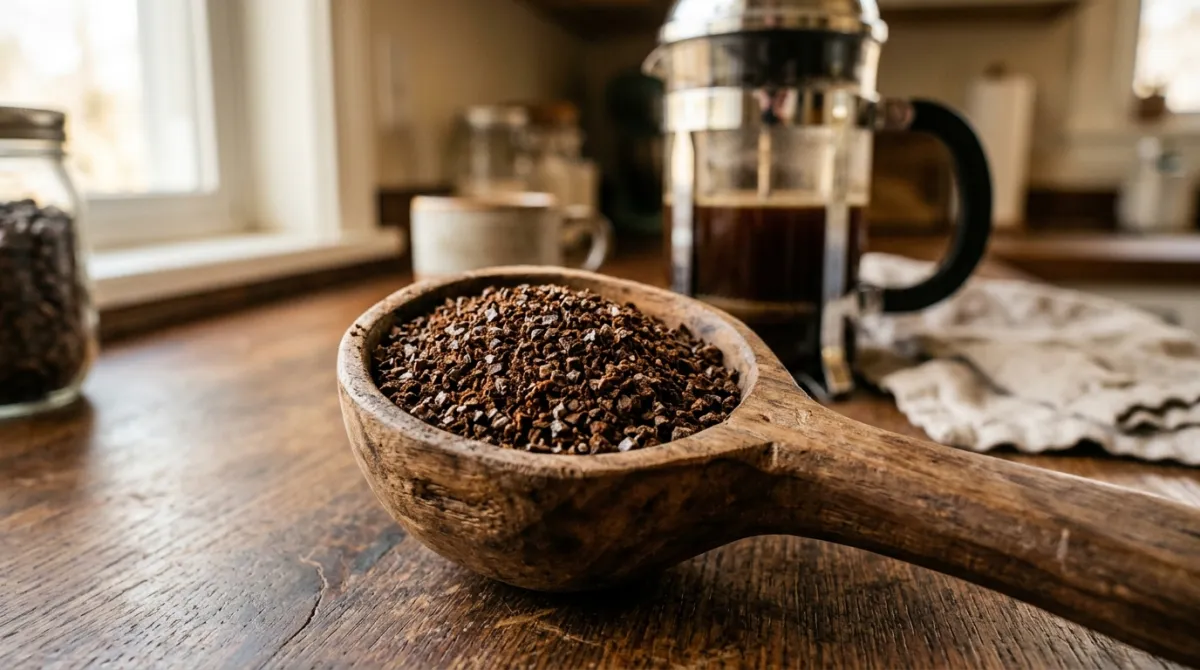
Grind and time are the two dials that change how much of your dose actually dissolves. A finer grind and a longer steep pull more out of the same grams, so a 1:16 brew can taste like a 1:15 if you grind too fine or forget to press on time. That is why two people using the identical chart can get different cups.
In my experience, the most common fix for muddy, over-extracted French press is not changing the ratio at all. It is grinding coarser. Fine grounds slip through the mesh, keep extracting in the carafe, and turn bitter within minutes. Coarse grounds give you a clean press and let the ratio do its job.
Decant right after pressing. Even a perfect ratio keeps extracting if the coffee sits on the grounds, so pour it into your mug or a separate carafe once the plunger is down.
How to adjust the ratio for a stronger or weaker brew
Change the coffee, not the water. Keep your water amount fixed so the press stays full, and move the grams of coffee up or down. For stronger, shift from 1:16 toward 1:15 by adding a few grams. For weaker, move toward 1:17 or 1:18 by taking a few grams away.
Small moves matter more than you think. On a 500 g brew, the difference between 1:15 and 1:17 is only about 4 grams of coffee, which is roughly one tablespoon. Adjust in single-tablespoon steps, taste, and note what you did, so you can repeat the winner.
One warning from plenty of trial and error. If your coffee tastes weak, resist the urge to just steep longer. Longer steeping on a fixed ratio pulls more bitterness before it adds real strength. Add coffee grams instead, or grind slightly finer, and keep the 4-minute timing. Strength comes from the dose and the grind, not from letting it sit.
Common French press mistakes that ruin the ratio
Even a correct ratio falls apart from a few habits. The usual suspects are a too-fine grind, water that is fully boiling, guessing the dose by eye, and leaving the coffee on the grounds after pressing. Any one of these can make a 1:16 brew taste weak, sour, or harsh.
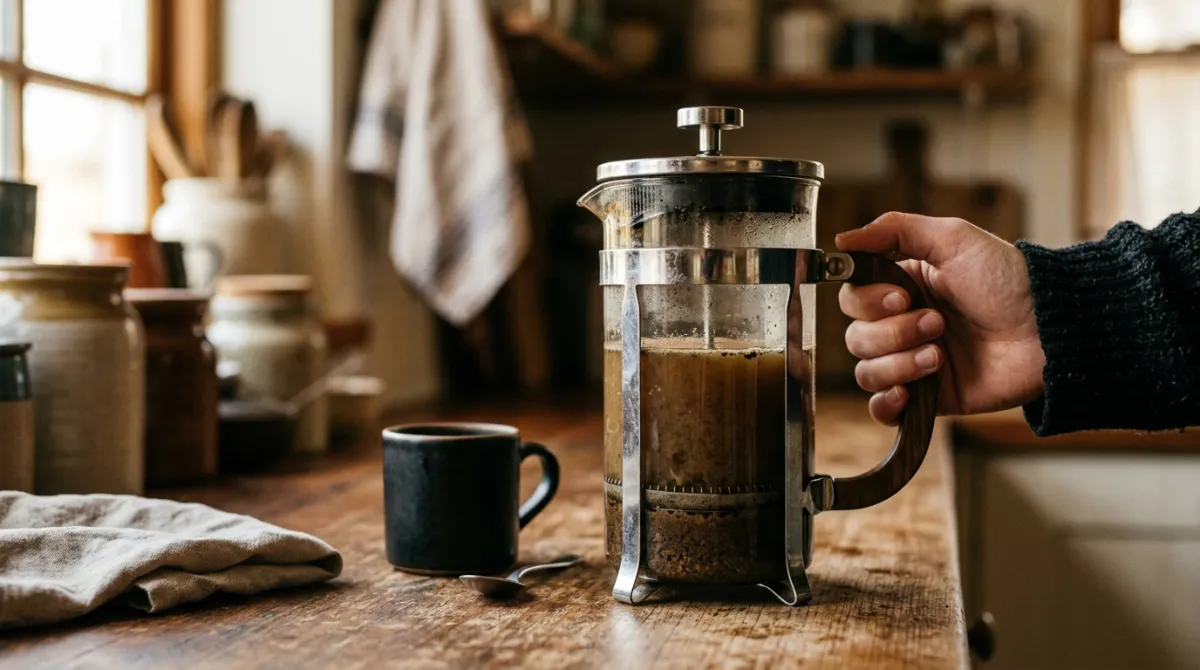
Boiling water is a quiet one. Water straight off a rolling boil scorches the grounds and adds bitterness, so let the kettle rest 30 seconds after it boils, targeting about 195°F to 205°F, the brewing range the National Coffee Association points to.
Here is the mistake I made for years. I eyeballed the coffee, filled the press to the top, and wondered why every pot tasted a little different. The ratio was random because the dose was random. Weighing (or at least leveling the tablespoons) fixed more of my inconsistency than any gear did. Stale beans are the other silent killer. A dialed-in ratio cannot rescue coffee roasted three months ago, so buy smaller bags and grind right before you brew.
Frequently asked questions
How much coffee for a 4 cup French press?
A 4-cup press holds roughly 500 ml of water. At a balanced 1:16 ratio that is about 31 grams of coffee, or roughly 6 level tablespoons. Go up to about 33 grams (1:15) for a stronger cup, or down to 29 grams (1:17) for a milder one.
Is French press 1:15 or 1:17?
Both are correct, they just make different cups. A 1:15 water to coffee ratio french press brew tastes bold and heavy, while 1:17 tastes lighter and cleaner. I brew 1:16 as a middle default, then adjust toward 1:15 or 1:17 based on the beans and my mood.
How many tablespoons of coffee per cup for French press?
About 2 level tablespoons per small (roughly 180 ml) cup of water. That is close to 10 grams, which is near a 1:18 ratio, so heap the spoons or add a third for a stronger 1:15 to 1:16 cup. Tablespoons vary with grind, so for a bigger 1-liter press, weigh out about 63 grams instead of counting spoons.
Why is my French press coffee weak or bitter?
Weak usually means too little coffee or too coarse a grind, so add a tablespoon or grind slightly finer. Bitter usually means the opposite: too fine a grind, water that is too hot, or coffee left sitting on the grounds. Fix the grind and decant right after the 4-minute press.
New to the method itself? My step-by-step walkthrough on how to use a French press covers the full routine from bloom to press. Deciding between brewers? See French press vs drip coffee.
Dial in your coffee to water ratio for french press once, write it on the carafe, and you will pour a repeatable cup every morning. When you are ready to compare methods and refine your setup, explore more brewing guides and keep tasting your way to your ideal brew.
Keep brewing
Dial in your next cup with Brew Better Co.
Tested ratios, methods, and gear notes from a real home kitchen. New guides added regularly.
Explore all guides