ratios
Coffee to Water Ratio: The Golden Ratio Chart for Every Brew
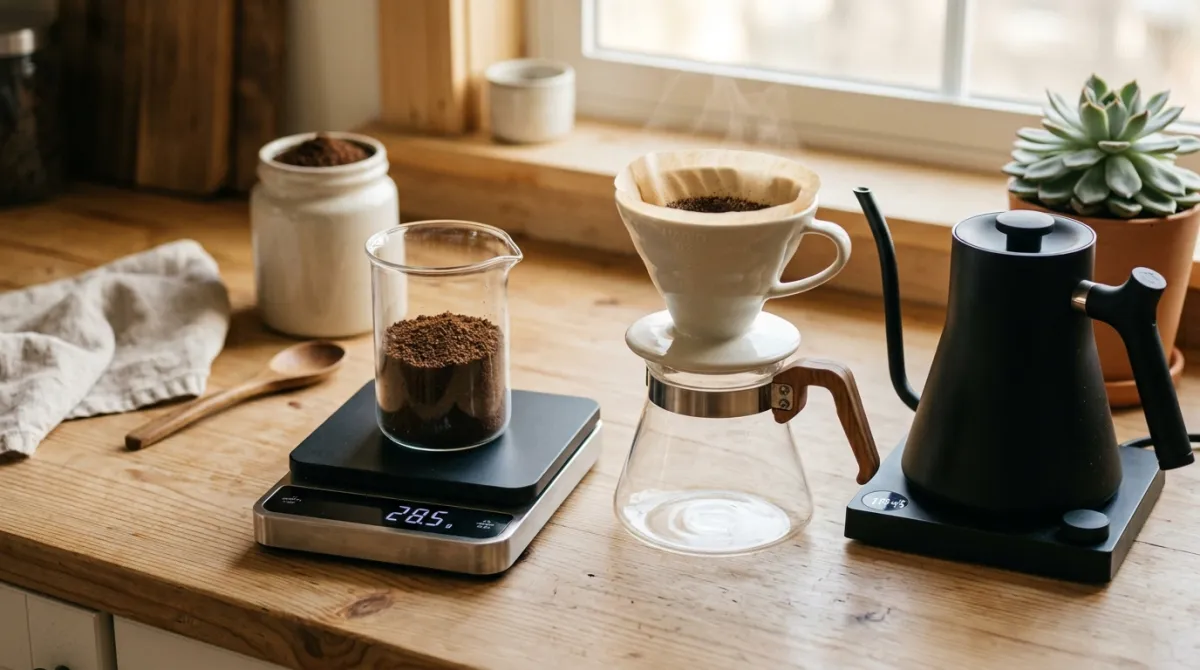
I have brewed coffee daily for over a decade, and if there is one number that changed my cup more than any gear upgrade, it is the ratio. Get your coffee to water ratio right, and cheap beans taste good. Get it wrong, and even an expensive bag tastes flat or bitter.
The golden ratio for coffee sits between 1:15 and 1:18 by weight, which works out to roughly 56 to 67 grams of coffee per liter of water. If you want a single number to memorize, use 1:16. It is forgiving, balanced, and it is the ratio I reach for on most mornings.
Below you will find a full ratio chart, method-by-method numbers, and simple ways to measure with or without a scale.
Key Takeaways
- The golden ratio for coffee is about 1:15 to 1:18 coffee to water by weight, or roughly 56 to 67 grams per liter.
- Use 1:16 as an all-purpose default: it balances strength and clarity for most brew methods.
- Weigh with a scale for accuracy; 1 level tablespoon of grounds is only about 5 grams.
- Water measures cleanly by weight because 1 gram of water equals 1 milliliter.
- Adjust in small steps: move toward 1:15 for a bolder cup, toward 1:18 for a lighter one.
What is the best coffee to water ratio?
The best coffee to water ratio for most brewing is 1:16 by weight, meaning 1 gram of coffee for every 16 grams of water. That falls inside the widely accepted golden range of 1:15 to 1:18. The National Coffee Association recommends measuring by weight for consistent results (National Coffee Association), and in my experience that single habit fixes more bad cups than anything else.
Why a range instead of one perfect number? Taste is personal. Some people love a dense, syrupy cup near 1:15. Others prefer the tea-like clarity you get closer to 1:18.
When I switched from scooping to weighing, my daily brew stopped swinging between bitter and watery. Same beans, same grinder, but suddenly repeatable.
The Specialty Coffee Association promotes a “golden cup” concept that lands around 1:18 for its target extraction and strength (Specialty Coffee Association). Treat that as a well-regarded reference point, not a rule you must hit exactly.
The golden ratio chart (grams per cup and per liter)
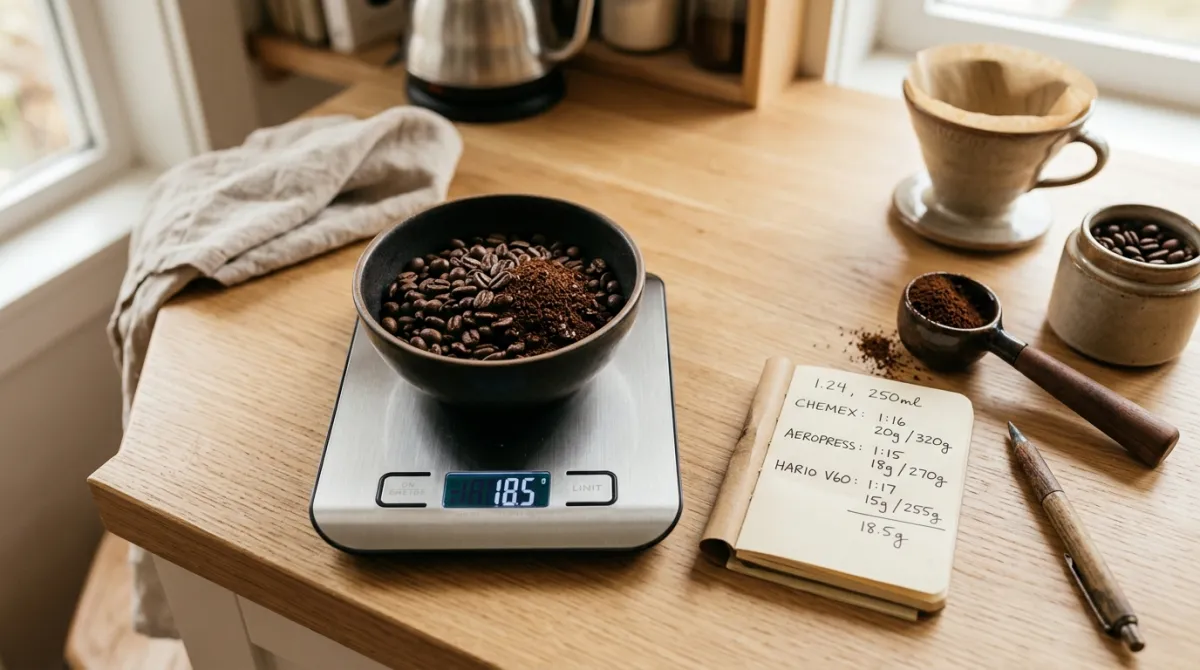
A ratio chart removes the guesswork, and it is the reference I keep taped inside my coffee cabinet. Because 1 gram of water equals 1 milliliter, you can read the water column as either grams or ml. The table below shows how much coffee to use at 1:15, 1:16, 1:17, and 1:18 for three common water amounts.
| Water (g / ml) | 1:15 coffee | 1:16 coffee | 1:17 coffee | 1:18 coffee |
|---|---|---|---|---|
| 250 g | 16.7 g | 15.6 g | 14.7 g | 13.9 g |
| 500 g | 33.3 g | 31.3 g | 29.4 g | 27.8 g |
| 1000 g | 66.7 g | 62.5 g | 58.8 g | 55.6 g |
Here is the quick math: divide the water by the ratio number. For a 1:16 cup with 500 grams of water, you get 500 divided by 16, which is about 31 grams of coffee.
Most “cup” confusion comes from units. A coffee maker’s “cup” is usually 5 ounces (about 150 ml), not the 8-ounce mug you actually drink from. Weighing water in grams sidesteps that mess entirely.
Coffee to water ratio by brew method
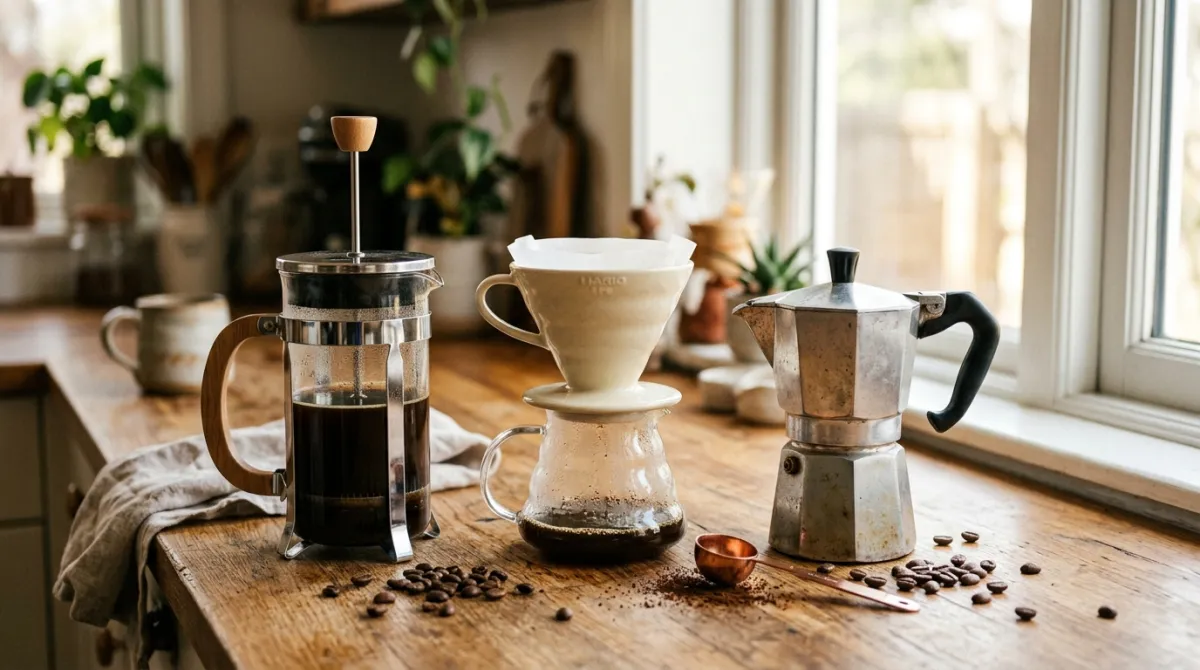
Every brew method has a ratio sweet spot, because contact time and grind size change how fast coffee extracts. Espresso runs concentrated near 1:2, while cold brew concentrate can go as loose as 1:4. Brew method strongly shapes strength, so match your ratio to your gear.
| Brew method | Typical ratio (coffee:water) |
|---|---|
| Drip / automatic | 1:16 to 1:17 |
| Pour over | 1:15 to 1:17 |
| French press | 1:15 to 1:17 |
| Cold brew concentrate | 1:4 to 1:8 |
| Espresso | about 1:2 |
| Moka pot | about 1:10 |
For immersion brewing like the French press, a slightly stronger ratio near 1:15 suits the full-contact steep. My full French press coffee ratio guide walks through timing and grind.
Cold brew is its own animal. You are making a concentrate to dilute later, so the numbers look extreme. See the cold brew coffee ratio breakdown for concentrate versus ready-to-drink math. The AeroPress is flexible too, but a 1:15 to 1:16 ratio is a reliable place to start.
Espresso and the moka pot sit far from the golden range on purpose. They are built to pull intense, low-volume shots, not full mugs.
How to measure your ratio: scale vs tablespoons
A kitchen scale is the most accurate way to measure your ratio, and a decent one costs less than a bag of specialty beans. One level tablespoon of ground coffee weighs only about 5 grams, but that varies with grind size and bean density. Weighing gives repeatable results, and I agree completely after years of both.
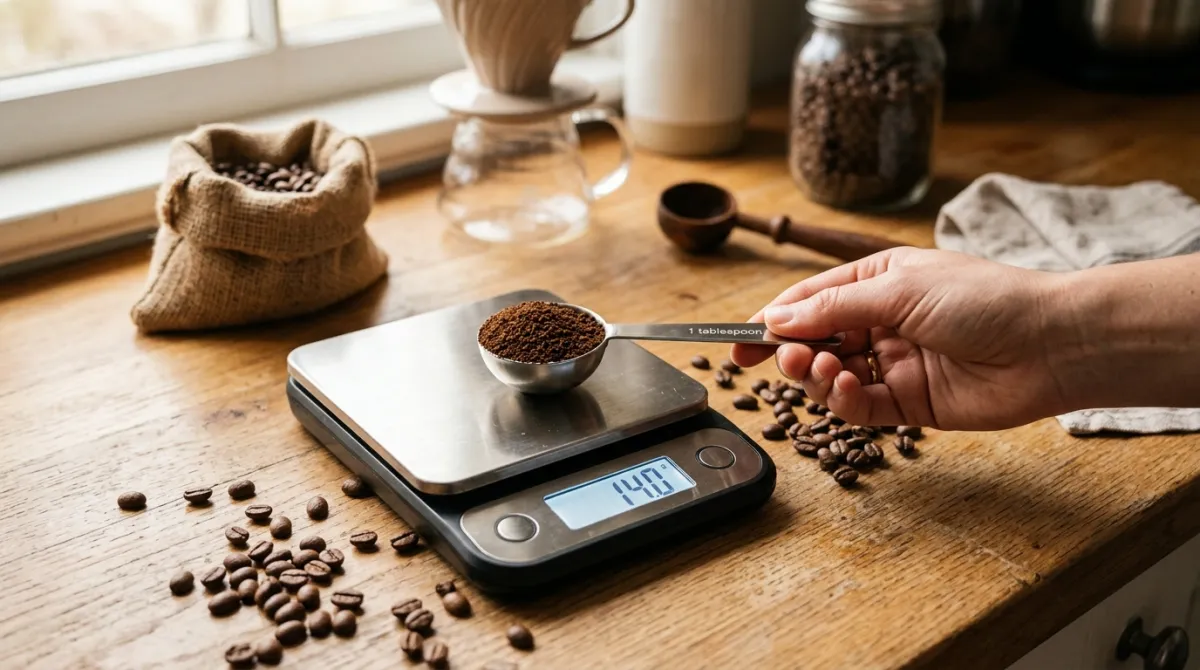
Want the tablespoon shortcut? At roughly 5 grams per level tablespoon, a 1:16 cup with 250 grams of water needs about 15 grams of coffee, or roughly 3 level tablespoons.
Water is easier. Since 1 gram equals 1 milliliter, you can weigh it or pour it by volume and get the same answer.
I resisted buying a scale for years and relied on scoops. My cup quality only became consistent once grams entered the picture. If you brew daily, it pays for itself in wasted beans alone.
For the full volume conversions, I keep a companion piece on how many tablespoons of coffee per cup that covers different mug sizes.
How to adjust the ratio for a stronger or weaker cup
Adjusting your ratio is the fastest way to fix a cup, and you only need small moves. To brew stronger, add coffee and shift toward 1:15. To brew weaker, add water and shift toward 1:18. Change one variable at a time so you actually learn what each tweak does to the flavor.
Think of it as a slider. More coffee per unit of water means more body and intensity. More water means a lighter, brighter, more tea-like cup.
What if your coffee tastes bitter, not strong? That is often over-extraction, not too much coffee. Try a coarser grind or shorter brew time before you touch the ratio.
Strength and extraction are different levers, and confusing them ruins good beans. Ratio controls strength, which is how much coffee is dissolved relative to water. Grind and time control extraction, which is how much flavor you pull from the grounds. Fix the right one.
Here is my simple loop: brew at 1:16, taste, then move by half a ratio point. If it is thin, try 1:15.5 tomorrow. If it is heavy, try 1:16.5. Small, boring steps win.
Frequently asked questions
What is the golden ratio for coffee?
The golden ratio for coffee is about 1:15 to 1:18 coffee to water by weight, roughly 56 to 67 grams of coffee per liter of water. Use 1:16 as a reliable default. The Specialty Coffee Association references a “golden cup” concept near 1:18 for balanced extraction and strength.
How much coffee for 2 cups of water?
For 2 standard 8-ounce cups, you have about 480 milliliters, or 480 grams of water. At a 1:16 ratio, that needs roughly 30 grams of coffee, about 6 level tablespoons. Remember that a coffee maker’s “cup” is usually 5 ounces, so check which “cup” your machine actually means.
Is 1:15 or 1:16 better?
Neither ratio is universally better; it depends on your taste and method. A 1:15 ratio brews a stronger, fuller cup, while 1:16 leans slightly lighter and more balanced. I default to 1:16 for drip and pour over, then nudge toward 1:15 for a French press. Try both and compare.
How do I measure coffee without a scale?
Without a scale, use level tablespoons: 1 tablespoon of ground coffee is about 5 grams. For a 1:16 cup with 250 grams of water, use roughly 3 level tablespoons. It is less precise because grind and bean density shift the weight, so treat it as a starting point and adjust to taste.
Dialing in your coffee to water ratio is the single most valuable habit you can build as a home brewer. Start at 1:16, weigh what you can, and make small adjustments until the cup tastes like yours. Once the ratio clicks, everything else gets easier to tune. Ready to go deeper on your favorite method? Explore more brewing guides and pick the one matching your setup.
Keep brewing
Dial in your next cup with Brew Better Co.
Tested ratios, methods, and gear notes from a real home kitchen. New guides added regularly.
Explore all guides