ratios
Cold Brew Coffee Ratio: The Simple Formula (With Chart)
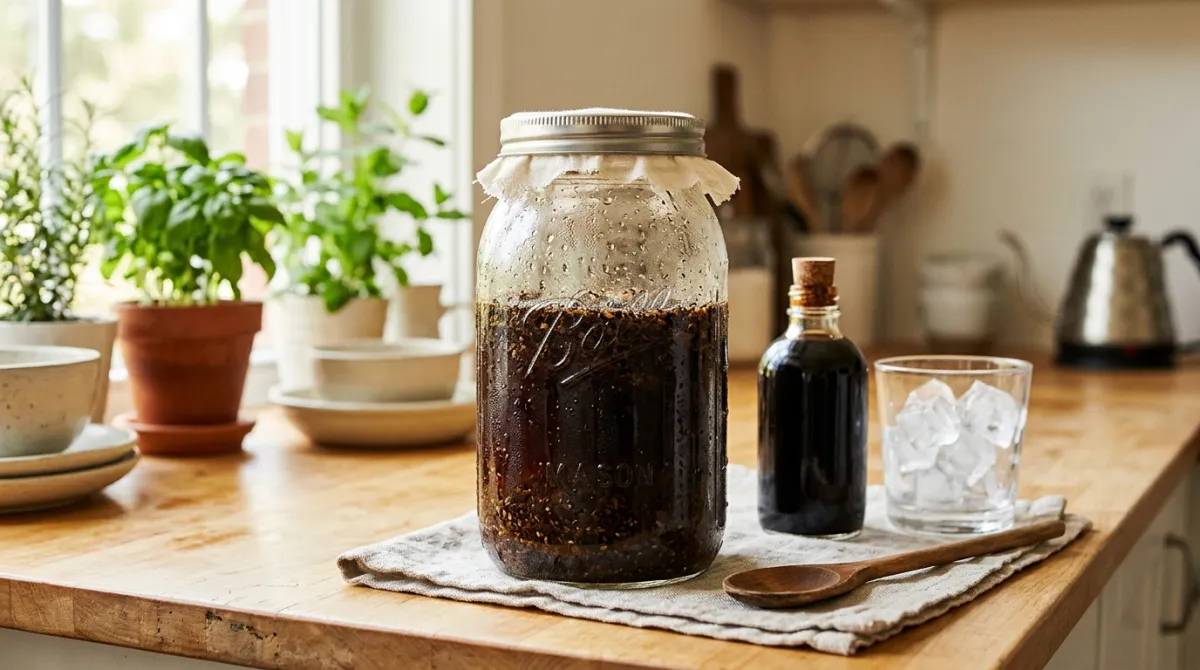
The best cold brew coffee ratio depends on whether you want concentrate or ready-to-drink, but a safe starting point is 1:8 coffee to water by weight. After brewing cold brew almost every summer for the last decade, I keep coming back to that number. It forgives grind mistakes, tastes smooth, and dilutes cleanly. This guide breaks down the cold brew ratio for both styles, gives you a chart you can actually use, and shows you how to measure without gear.
Key Takeaways
- Cold brew concentrate lands between 1:4 and 1:8 coffee to water by weight; ready-to-drink cold brew sits around 1:15 to 1:17.
- Use a coarse grind and steep 12 to 18 hours, shorter at room temperature and longer in the fridge.
- Dilute concentrate roughly 1:1 with water, milk, or ice before drinking.
- No scale? About 6 level tablespoons of grounds per cup of water gets you close to a 1:8 concentrate.
What is the best cold brew coffee ratio?
The best cold brew coffee ratio is 1:8 coffee to water by weight for a versatile concentrate, or 1:16 if you want a batch you can drink straight from the jar. The National Coffee Association groups cold brew with immersion methods, where longer contact time replaces heat to pull flavor from the grounds (National Coffee Association).
Here is the simple way I think about it. Concentrate means less water, more coffee, and a syrup you cut later. Ready-to-drink means more water up front and no dilution.
In my experience, 1:8 is the sweet spot for most home setups. It brews strong enough to store for about a week (see how long cold brew lasts), yet it is not so intense that it tastes harsh. If you love a punchy, near-espresso body, drop to 1:5. If you want to sip it immediately, go to 1:16. For the full method, follow my how to make cold brew coffee walkthrough.
Both approaches follow the same coffee logic. For the full breakdown of how strength scales across every method, see our pillar on coffee to water ratio.
Cold brew ratio chart: concentrate vs ready-to-drink
A cold brew ratio chart removes the guesswork by pairing each water amount with the coffee weight for three strengths. The Specialty Coffee Association encourages brewing by weight rather than volume, since scoops vary with grind and bean density (Specialty Coffee Association). The table below covers common batch sizes so you can scale up or down.
| Water | 1:5 strong concentrate | 1:8 light concentrate | 1:16 ready to drink |
|---|---|---|---|
| 250 g (about 1 cup) | 50 g | 31 g | 16 g |
| 500 g (about 2 cups) | 100 g | 63 g | 31 g |
| 750 g (about 3 cups) | 150 g | 94 g | 47 g |
| 1000 g (about 4 cups) | 200 g | 125 g | 63 g |
A few notes on reading this. Water in grams roughly equals water in milliliters, so 1000 g pours out to about 1 liter. The cup estimates assume roughly 240 g of water per US cup.
Here is a small insight most charts skip. Your coffee grounds soak up water and never give it all back. Expect to lose 10 to 15 percent of your liquid to the spent grounds, so brew a little extra if you need a precise final volume.
Start with the 1:8 column if you are new. It is hard to ruin and easy to adjust later.
How to measure cold brew without a scale
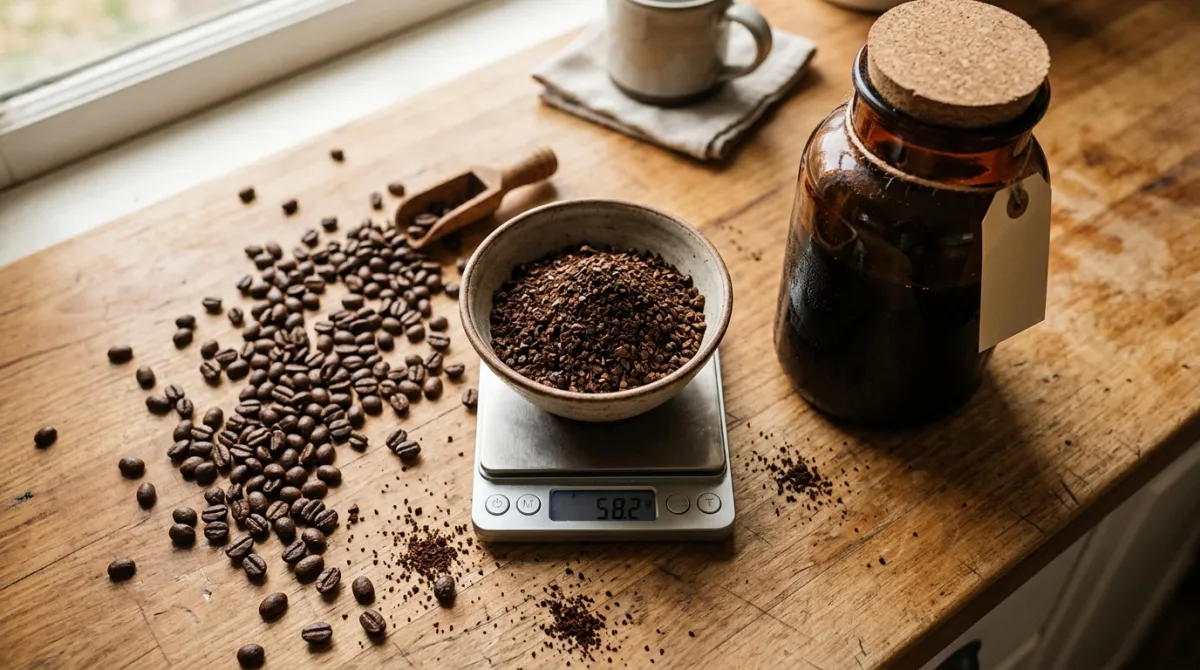
You can measure cold brew without a scale using tablespoons, though a scale gives far more consistent results. One level tablespoon of coarse grounds weighs close to 5 grams, and one US cup of water weighs about 240 grams. To hit a 1:8 concentrate you need about 30 grams of coffee per cup, which is roughly 6 level tablespoons.
Want a different strength? For a bold 1:5 concentrate, use about 10 tablespoons per cup. For ready-to-drink cold brew at 1:16, drop to about 3 tablespoons per cup. These are volume estimates, so weigh your coffee when you can.
Volume measuring drifts, though. Coarse grounds for cold brew take up more space than fine grounds, so a “scoop” changes weight depending on how you grind. I learned this the messy way early on, brewing one batch that tasted like water and the next like tar from the same scoop.
If you brew cold brew often, a basic kitchen scale pays for itself fast. It is the single upgrade that made my batches repeatable season after season.
Grind size and steep time for cold brew
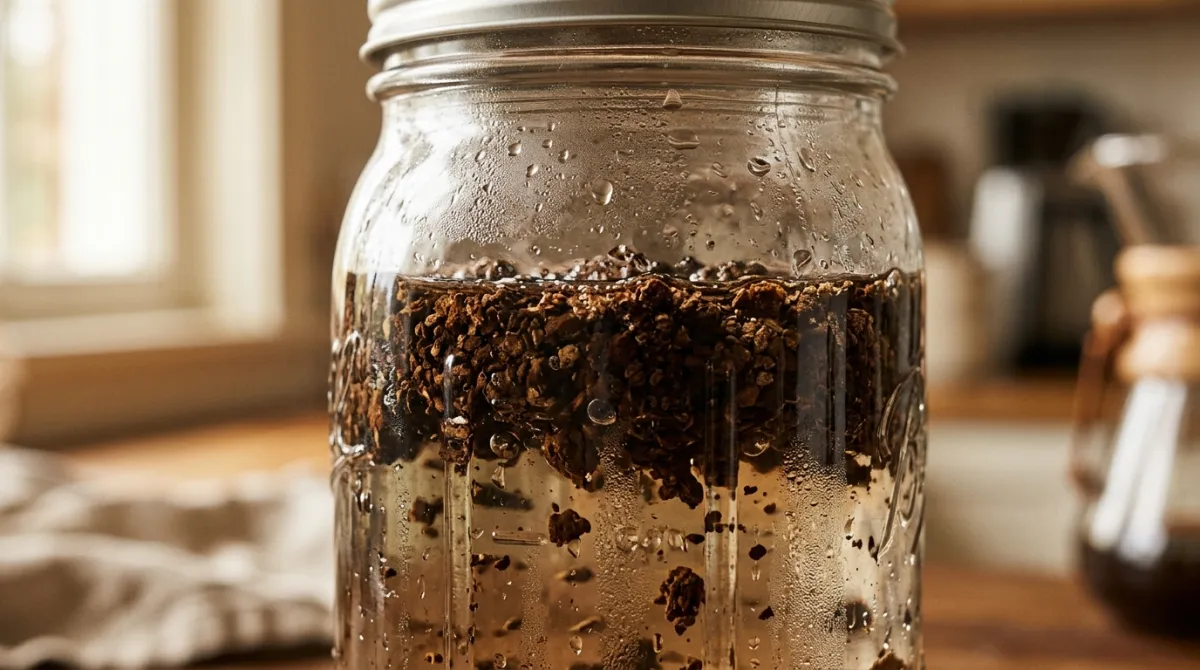
Cold brew needs a coarse grind and a 12 to 18 hour steep, because low temperature extracts slowly and fine particles turn the batch bitter. Grind size should match the brew method, and long immersion methods call for the coarsest settings (National Coffee Association). Think coarse sea salt, not table salt.
Why grind size matters so much
Coarse grounds slow extraction and keep the water flowing between particles. Fine grounds over-extract during a long soak and clog your filter, leaving muddy sludge at the bottom. If your cold brew tastes bitter or dusty, your grind is almost always too fine.
How steep time changes the result
Steep time controls strength alongside your ratio. Room temperature brewing works faster, so 12 to 14 hours is plenty on the counter. Fridge brewing runs colder and slower, so I push those batches to 16 to 18 hours.
Past 18 hours you gain little and risk woody, over-steeped flavors. Set a timer, then strain promptly. Leaving grounds in the jar keeps extraction going and throws off the ratio you carefully measured.
How to dilute cold brew concentrate
Dilute cold brew concentrate roughly 1:1 with water, milk, or ice, which turns a 1:8 concentrate into a balanced drink near 1:16. This is where concentrate earns its keep. One jar flexes into iced coffee, an oat milk latte, or a stronger pour depending on your mood that morning.
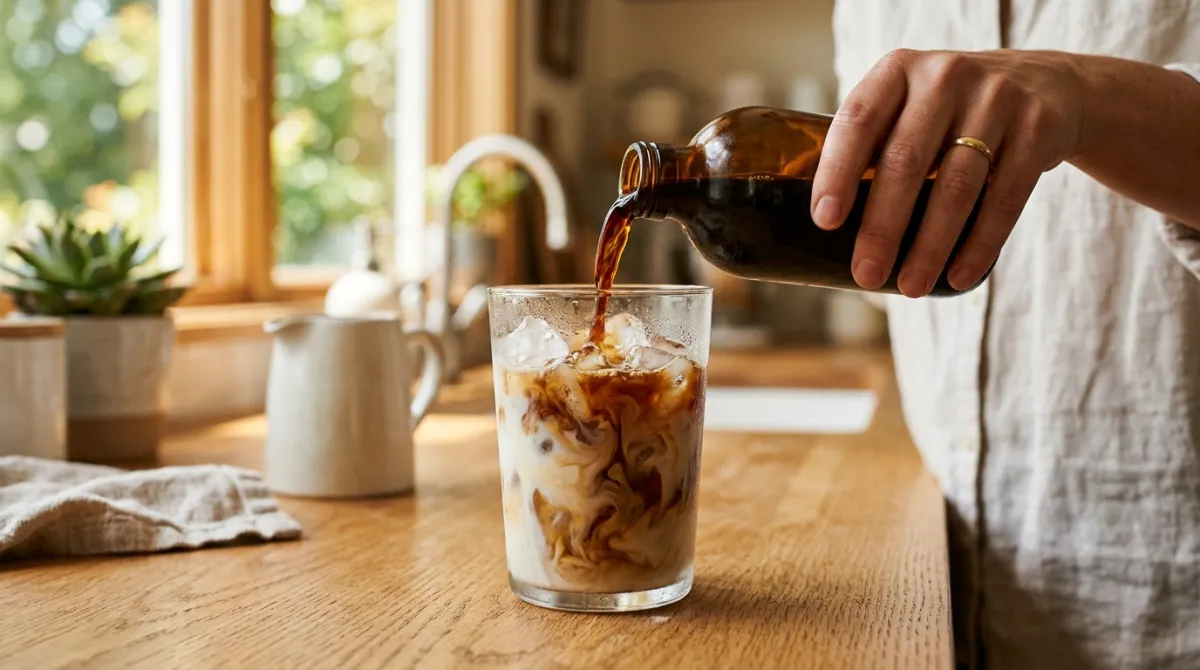
Start with equal parts concentrate and your chosen liquid, then taste. Want it stronger? Add more concentrate. Too intense? Splash in more water or milk.
Ice counts as dilution. As cubes melt, they water down the glass, so pour your concentrate a touch stronger over a full glass of ice. I usually go slightly heavier on concentrate for iced drinks and let the melt finish the job.
For hot cold brew on a cold morning, cut the concentrate with hot water at 1:1. It will not taste identical to a fresh hot brew, but it is smooth, low in acid, and ready in seconds.
Common cold brew ratio mistakes
The most common cold brew ratio mistake is treating concentrate like ready-to-drink and gulping it straight, which tastes overpowering and wastes coffee. The second is measuring by scoop instead of weight, which introduces real inconsistency batch to batch.
Here are the errors I see most from readers and made myself early on.
Using a fine grind is the big one. It clogs filters and turns smooth cold brew harsh. Skimping on steep time is another, since a four-hour soak at 1:16 brews weak, sour coffee.
Forgetting grounds absorb water throws off your final volume, so your “ready-to-drink” batch comes out stronger than planned. And storing concentrate without labeling the ratio means you never know how much to dilute next time.
Fix these and your cold brew gets predictable. Write the ratio and brew date on the jar. That one habit saved me more guesswork than any gadget.
Frequently asked questions
What is the ratio of coffee to water for cold brew?
The coffee to water ratio for cold brew is 1:4 to 1:8 by weight for concentrate, and 1:15 to 1:17 for ready-to-drink. Most home brewers do well at 1:8, then dilute the concentrate before serving. Measure by weight for consistency.
Is cold brew 1:4 or 1:8?
Both work, and the choice depends on how strong you want your concentrate. A 1:4 cold brew ratio makes an intense, syrupy concentrate that needs heavy dilution, while 1:8 makes a lighter concentrate that is easier to balance. I recommend starting at 1:8 and adjusting toward 1:4 only if you crave more punch.
How long should cold brew steep?
Cold brew should steep 12 to 18 hours, with room temperature batches ready sooner than fridge batches. Because cold water extracts slowly, shorter steeps taste weak and sour. Strain promptly once time is up, since grounds left in the jar keep extracting and can turn the batch bitter and woody.
How do you dilute cold brew concentrate?
Dilute cold brew concentrate roughly 1:1 with water, milk, or ice. Equal parts concentrate and liquid turns a 1:8 concentrate into a smooth drink near 1:16. Taste and adjust from there, adding more concentrate for strength or more water for a lighter cup. Pour slightly stronger over ice to offset melt.
Dialing in your cold brew ratio is mostly about picking concentrate or ready-to-drink, weighing your coffee, and giving it enough time. Start at 1:8, grind coarse, steep overnight, and cut the concentrate 1:1 when you pour. Once you nail cold brew, the same ratio thinking upgrades every cup you make, so browse our more brewing guides and keep experimenting.
Keep brewing
Dial in your next cup with Brew Better Co.
Tested ratios, methods, and gear notes from a real home kitchen. New guides added regularly.
Explore all guides