ratios
Moka Pot Ratio: How Much Coffee and Water to Use
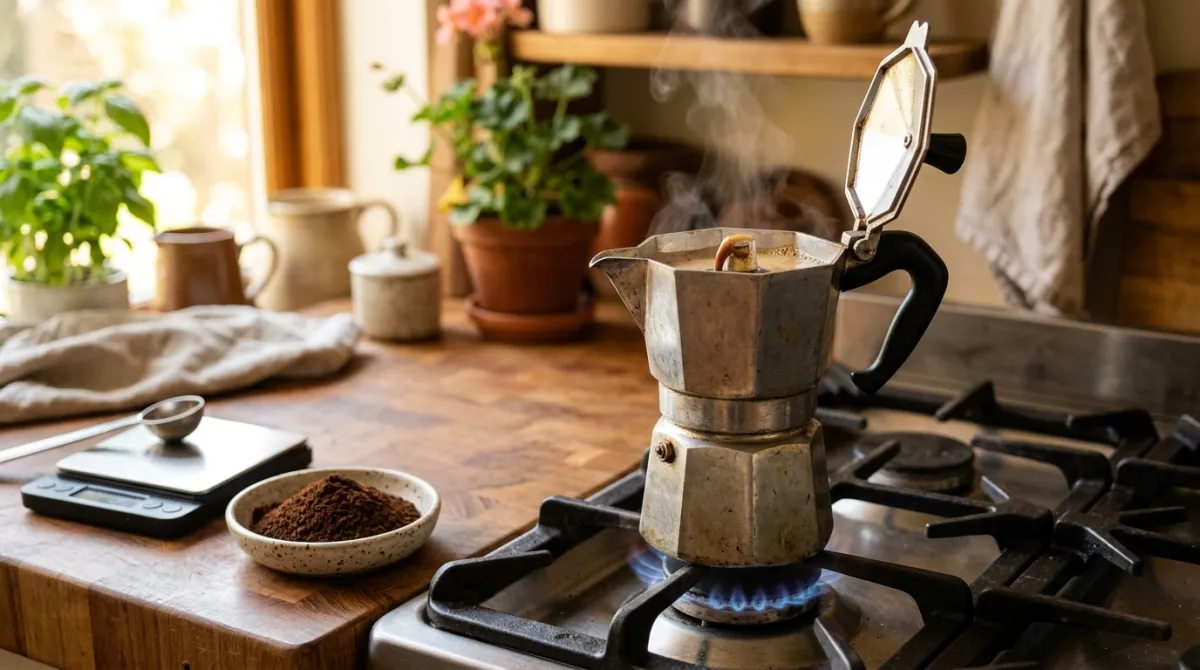
Moka pot coffee lives or dies on one thing: the ratio of ground coffee to water. The short answer is to aim for about a 1:10 coffee-to-water ratio by weight, which for most pots means filling the basket level and the water just below the safety valve. Get it right and you pull a rich, syrupy brew that sits somewhere between drip and espresso. Get it wrong and you end up with something bitter, thin, or weirdly metallic.
The good news is that the moka pot ratio is forgiving and easy to hit. Fill the funnel basket level with ground coffee, do not tamp, and fill the water chamber to just below the safety valve. By weight that lands right around a 1:10 coffee-to-water ratio, which is my daily reference after brewing on a moka most mornings for the better part of a decade.
Key Takeaways
- Fill the funnel basket level and fill water just below the safety valve for a reliable pour.
- By weight, aim for roughly a 1:10 coffee-to-water ratio.
- Never tamp the grounds in a moka pot; keep the bed loose.
- Use a grind finer than drip but coarser than true espresso.
- Pull it off the heat the moment it starts to gurgle.
What is the best moka pot ratio?
The best moka pot ratio is about 1:10 coffee to water by weight, which for most home pots means filling the basket level and the water chamber to just under the safety valve. This mirrors how the classic Bialetti design was engineered, so the pot practically doses itself when you fill it correctly.
Here is the thing about a moka pot: the basket size is fixed. That single design choice means your ratio cannot drift very far. A 6-cup pot holds roughly the same amount of coffee every time you level off the basket, so consistency comes built in.
I still weigh my dose, though. Filling the basket “level” is repeatable enough for daily brewing, but a scale removes the guesswork on days when I switch beans or grind. If you want the full theory behind ratios across every method, our pillar guide on coffee to water ratio breaks it down.
The moka sits close to espresso in strength, which is why people compare the two. It is not true espresso, though. For that distinction, our espresso ratio guide is worth a read.
The simplest method: fill the basket and the water
The simplest method needs no scale at all: fill the funnel basket with ground coffee until it is level with the rim, then fill the water chamber to just below the safety valve. This traditional approach has guided moka brewing for generations, and it consistently produces something near that 1:10 target by weight.
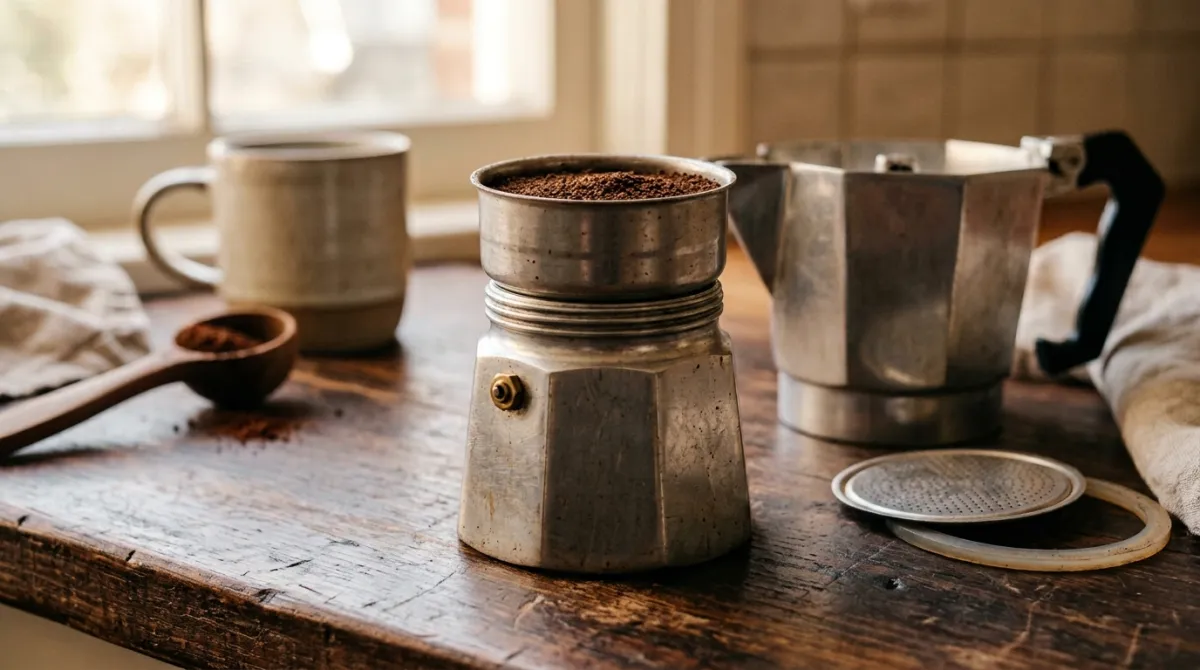
Do not press or tamp the grounds. A moka pot builds pressure through steam, not through a tight puck like an espresso machine. Tamping chokes the flow, spikes the pressure, and gives you a bitter, over-extracted cup. Level and loose is the goal.
The safety valve matters more than people think. Fill above it and you block the valve’s job, which is to release pressure if things go wrong. Keep the water just below that little metal button and you stay safe while getting the right water volume for the basket.
In my experience, this fill-and-go method gets you 90 percent of the way there. Weighing closes the last 10 percent when you want repeatable results across different beans.
Moka pot ratio chart by pot size
Moka pots are sold by “cup” size, but those cups are small espresso-style servings, not full mugs. A “6-cup” pot uses roughly 300 grams of water, not six mugs (the brewed yield is a little less, since some water stays in the base and the grounds). The chart below shows target water and coffee weights at a 1:10 ratio for the three most common sizes.
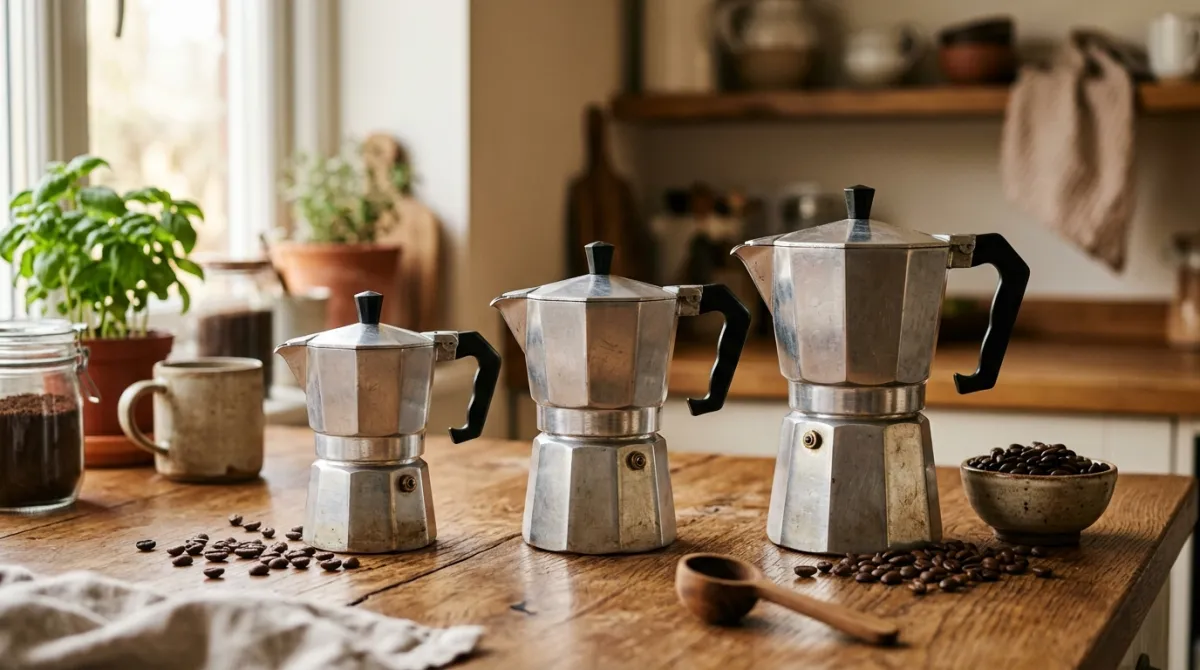
| Pot size | Water (grams) | Coffee (grams) |
|---|---|---|
| 3-cup | 165 | 17 |
| 6-cup | 300 | 30 |
| 9-cup | 480 | 48 |
The math is simple: coffee equals water divided by ten. For 165 grams of water you want about 17 grams of coffee. For 300 grams, 30 grams. For 480 grams, 48 grams. Round to the nearest gram and you are set.
One thing I have found: the basket on your specific pot may hold slightly more or less than these figures. Treat the chart as a starting point, then check whether a level basket matches the coffee weight for your size. If it is close, trust the basket. If it is way off, your grind might be too fine or too coarse.
Grind size and stove technique the ratio depends on
Your ratio only works if grind and heat cooperate. The Specialty Coffee Association points to grind size as one of the biggest levers on extraction (Specialty Coffee Association), and the moka is no exception. Aim for a grind finer than drip but a touch coarser than true espresso, roughly the texture of fine table salt or fine sand.
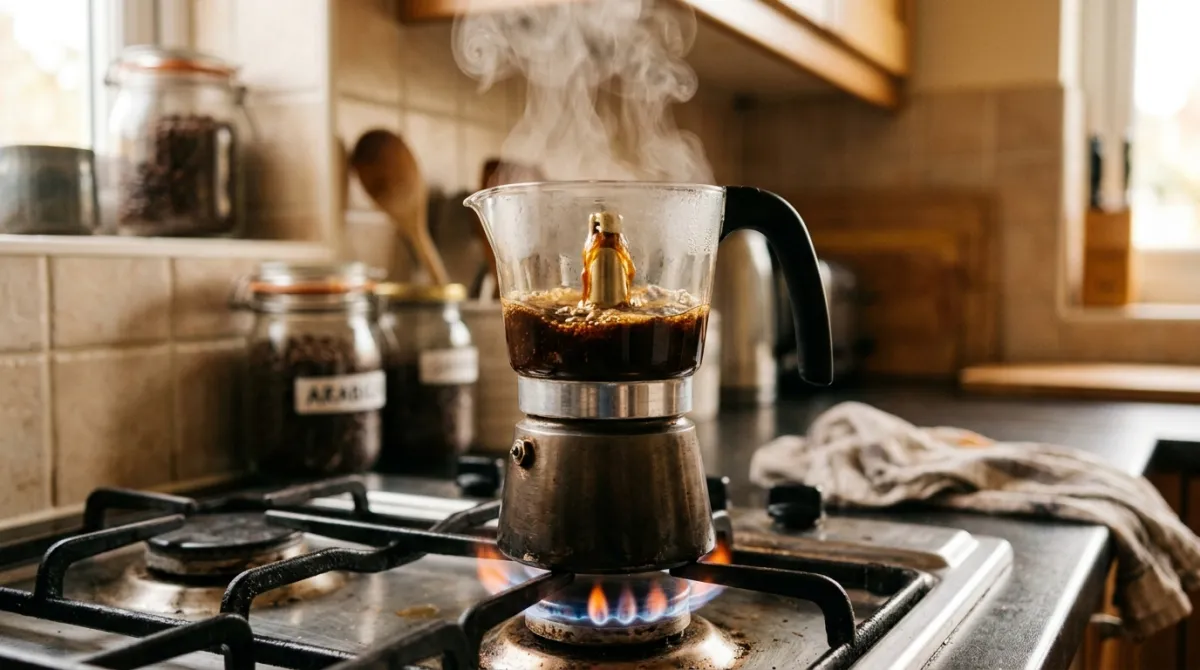
Technique matters just as much. Start with hot or preheated water in the base. Cold water sits on the burner too long, which cooks the grounds through the metal and leaves that harsh, metallic taste people complain about. Hot water shortens the brew and keeps things clean.
Keep the heat medium-low. High heat rushes the extraction and scorches the coffee. When you hear that gurgling, sputtering sound, the brew is nearly done, so pull the pot off the heat right then. I usually run the base under cool tap water for a second to stop extraction cold.
And again, do not tamp. Loose grounds let steam pass evenly through the bed.
How to adjust the moka pot ratio for taste
A moka pot resists big ratio changes because the basket size is fixed, so grind and heat become your main tuning tools. Want a stronger, more intense cup? Grind slightly finer or fill the basket completely full and lightly leveled. Finer grounds slow the water down and pull more from each particle.
For a milder cup, use a touch less coffee or nudge your grind slightly coarser. You cannot dilute inside the pot the way you might with a pour over, so small tweaks add up. If the result is still too strong, brew as normal and cut the finished coffee with a splash of hot water in the cup.
Chasing something less bitter? Lower your heat and pull the pot earlier, right as the stream lightens in color. Overheating causes far more bitterness than the ratio itself does. In my experience, most “bad moka” cups come from high heat and over-extraction, not the coffee-to-water balance.
Change one variable at a time. That is how you learn what your pot and your beans actually want.
Common moka pot mistakes
The most common moka pot mistake is tamping the grounds, which chokes flow and forces bitter over-extraction. A moka builds gentle steam pressure, so it needs a loose, level bed. Pressing the coffee down works against the entire design and ruins the cup nearly every time.
Overfilling the water above the safety valve is the second big one. It blocks the valve and throws off your ratio. Fill just below it, every time.
Using cold water in the base ranks third. It extends the time the pot spends on heat, and that extra contact with hot metal produces the metallic, scorched flavor so many people blame on the pot itself. Preheated water fixes it fast.
Finally, walking away during the brew. The window between “gurgle” and “burnt” is short. Stay close, listen for the sputter, and pull it the moment the sound changes. These four fixes solve the vast majority of complaints I hear from new moka users.
Frequently asked questions
What is the coffee to water ratio for a moka pot?
The practical moka pot coffee to water ratio is about 1:10 by weight. Fill the funnel basket level with grounds and the water chamber to just below the safety valve, and you will land close to this target automatically. For a 6-cup pot that is roughly 30 grams of coffee to 300 grams of water.
How much coffee do you put in a moka pot?
Put in enough coffee to fill the basket level with the rim, without tamping. By weight that is about 17 grams for a 3-cup pot, 30 grams for a 6-cup, and 48 grams for a 9-cup, matching a 1:10 ratio. The basket is designed to dose the right amount, so a level fill rarely steers you wrong.
Do you tamp coffee in a moka pot?
No, you do not tamp coffee in a moka pot. Keep the grounds loose and level with the rim of the basket. Tamping compresses the bed, chokes the steam flow, and spikes pressure, which produces a bitter, over-extracted cup. A gentle level-off with your finger is all the leveling you need.
Is moka pot coffee the same as espresso?
No, moka pot coffee is not the same as espresso. A moka brews at far lower pressure than the roughly 9 bars a true espresso machine produces, so it lacks real crema and pulls a bit thinner. It is espresso-adjacent and strong, but technically its own style of stovetop coffee.
Ready to dial in the rest of your setup? Compare methods, grind charts, and step-by-step tutorials in our collection of more brewing guides, and take what you have learned here to every pot you own.
Keep brewing
Dial in your next cup with Brew Better Co.
Tested ratios, methods, and gear notes from a real home kitchen. New guides added regularly.
Explore all guides