ratios
Espresso Ratio: Dose, Yield, and Time Explained
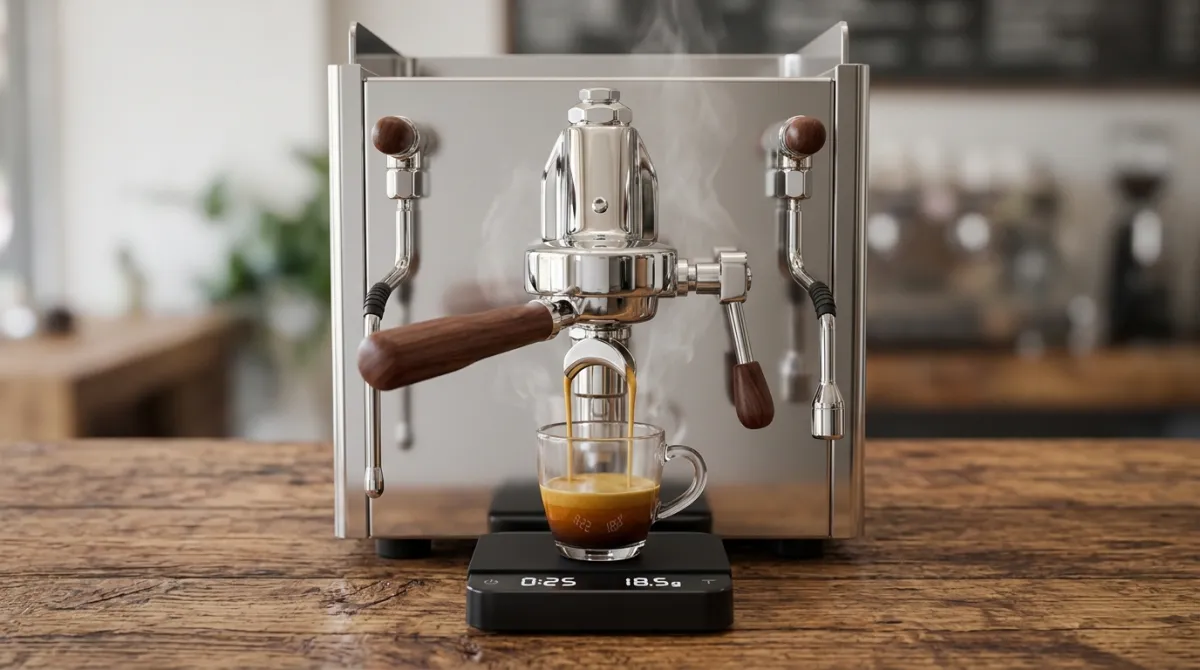
If you have ever pulled two shots from the same bag and gotten one thin and sour, then one thick and sweet, the difference usually comes down to your espresso ratio. It is the single number that ties your whole shot together.
An espresso ratio compares how much dry coffee you put in against how much liquid espresso you get out. Get it dialed, and your mornings get a lot more predictable. In my kitchen, it is the first thing I check when a shot tastes off.
Key Takeaways
- The modern standard espresso ratio is about 1:2, meaning the liquid yield weighs roughly twice the dry dose.
- A common recipe is 18 grams of coffee in and about 36 grams of espresso out, pulled in 25 to 30 seconds.
- Espresso ratio is measured by weight: dry dose in versus liquid yield out, not by water volume like drip coffee.
- A tighter ratio (toward 1:1) tastes syrupy and intense; a longer ratio (toward 1:3) tastes lighter and can turn bitter.
- Grind size controls the shot time, so grind and ratio always work together.
What is the best espresso ratio?
The best espresso ratio for most home setups is about 1:2, where your liquid yield weighs roughly twice your dry coffee dose, pulled in 25 to 30 seconds. A classic example is 18 grams in and about 36 grams out. It is the balanced starting point most modern cafes lean on.
Why 1:2? It sits in a sweet spot. You get enough extraction for sweetness and body without dragging out the bitter, drying compounds that show up when a shot runs too long.
There is no single “correct” number for every coffee. Lighter roasts often like a touch more yield, while dark roasts can shine tighter. But if you need a place to begin, start at 1:2 and adjust from there. Brewing on a stovetop moka pot instead? The numbers work differently there, since a moka is not true espresso.
Think of it as your home base. Once you can hit 1:2 consistently, changing it on purpose becomes easy.
Espresso ratio explained: dose, yield, and time
Espresso ratio is built from three numbers: dose, yield, and time. Dose is the dry coffee weight going into the portafilter. Yield is the liquid espresso weight landing in the cup. Time is how many seconds the shot runs. Together they define the shot.
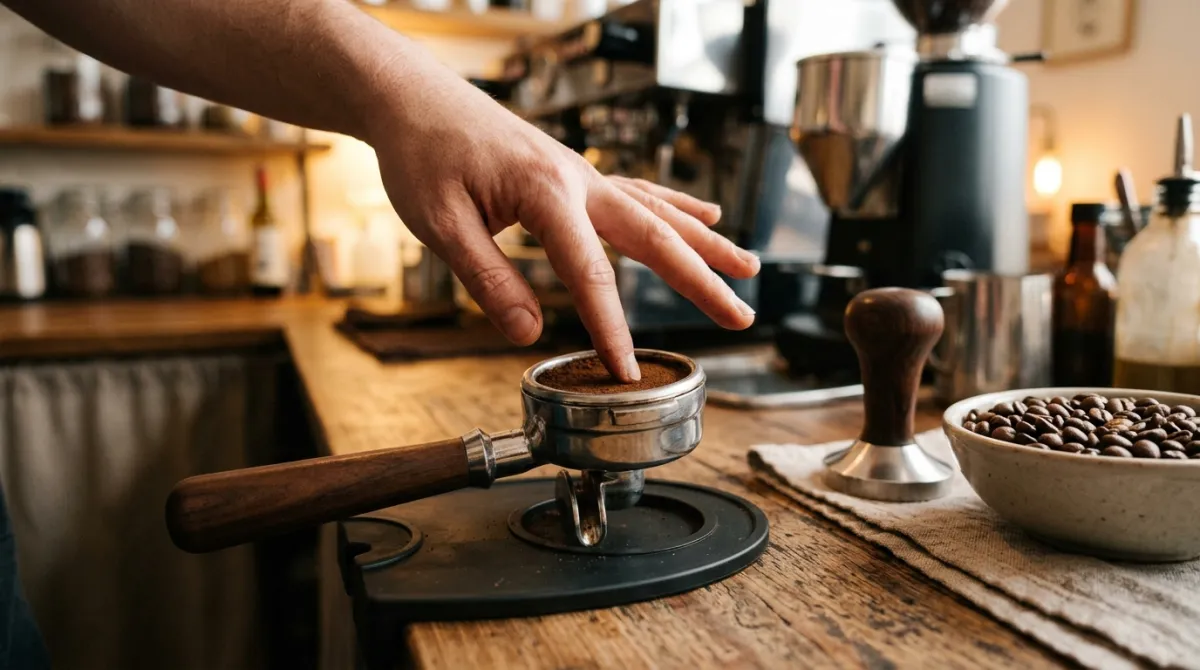
Here is the part people miss. An espresso ratio is dose to yield, measured in grams of dry coffee against grams of liquid espresso. That is different from the water-based coffee to water ratio you use for drip or pour over, where you weigh the water going in.
Dose is your input. Most double baskets are built for roughly 18 to 20 grams.
Yield is your output, weighed in the cup, not eyeballed by volume. Crema makes volume lying, so you trust the scale.
Time is your feedback. For a 1:2 shot, 25 to 30 seconds usually means your grind is in range. Way faster or slower tells you to adjust the grind, not the ratio.
Espresso ratio chart (ristretto, normale, lungo)
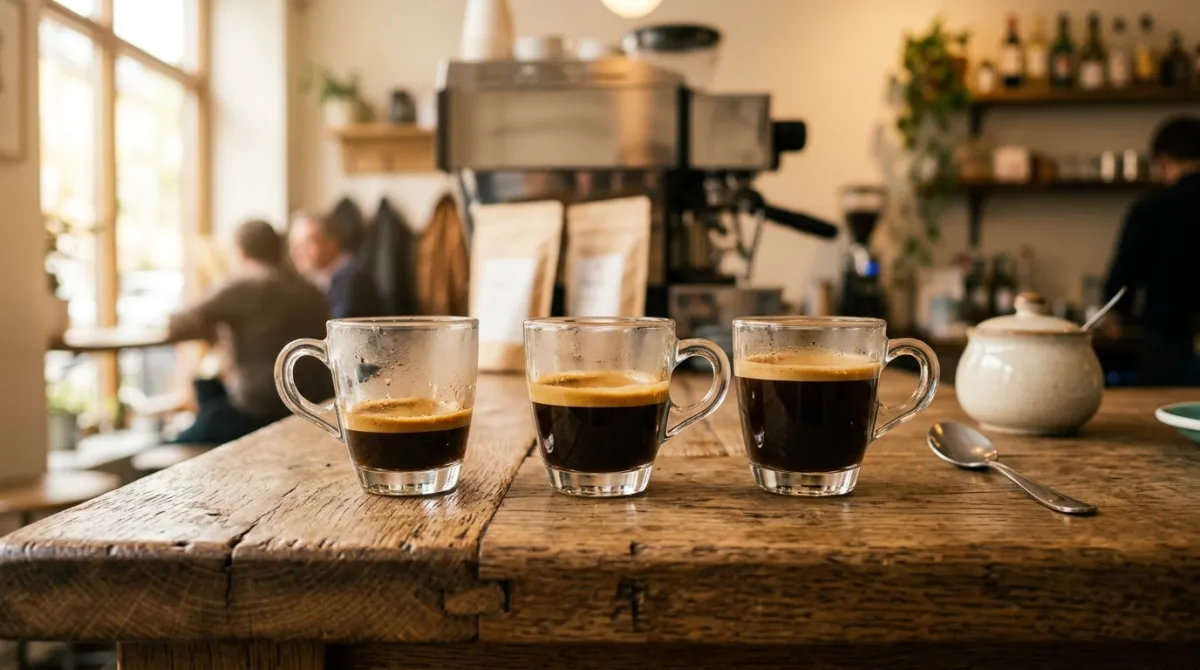
The three named shot styles are just different espresso ratios. A ristretto runs tight, around 1:1 to 1:1.5. A normale sits at the standard 1:2. A lungo stretches long, around 1:3. Same coffee, different yields, very different cups. Here is how the math lands for two common doses.
| Dose (in) | Ristretto (1:1 to 1:1.5) | Normale (1:2) | Lungo (1:3) |
|---|---|---|---|
| 18 g | 18 to 27 g out | 36 g out | 54 g out |
| 20 g | 20 to 30 g out | 40 g out | 60 g out |
Every yield is just the dose multiplied by the ratio. For 18 grams at 1:2, that is 18 times 2, so 36 grams. For 20 grams at 1:3, that is 20 times 3, so 60 grams. No guesswork needed.
Notice the doses stay the same across each row. You are not changing how much coffee you grind. You are changing how much liquid you let through it.
How to measure your espresso ratio
Measuring your espresso ratio takes two tools: a scale and a timer. Everything else is technique. First weigh the dry dose in the portafilter, then put the cup on a scale to weigh the liquid out, and time the shot from the moment you start the pump.
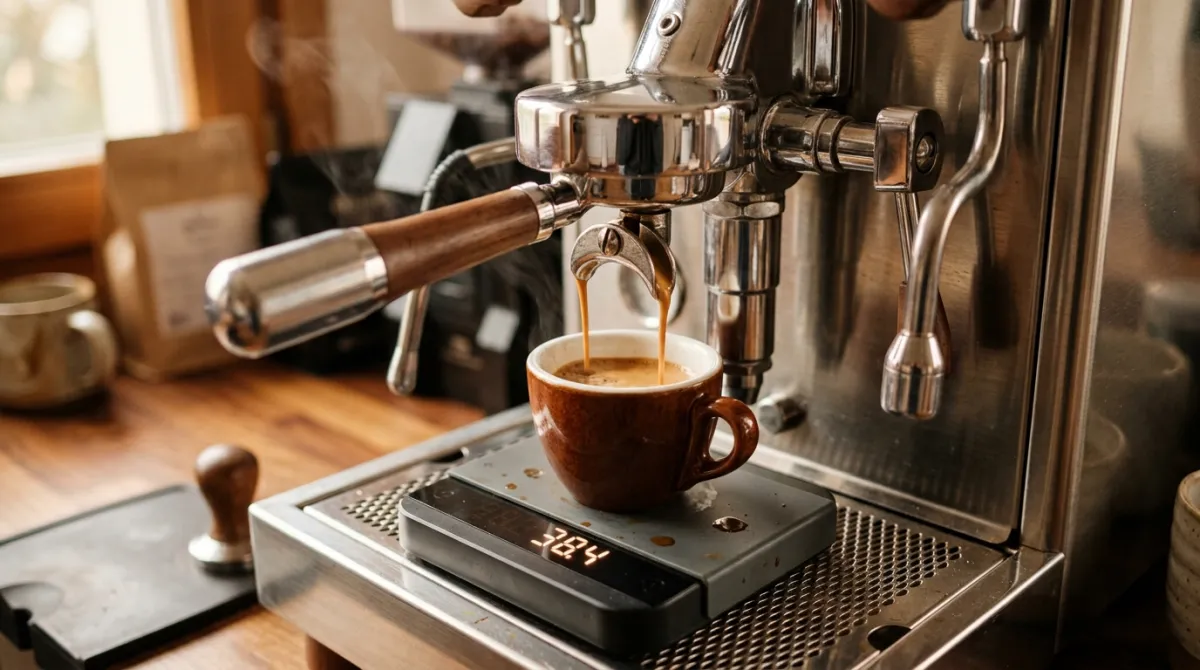
Here is the routine I use every single morning.
- Weigh your dry dose in the portafilter basket and note it. Say 18 grams.
- Zero a small scale under your cup on the drip tray.
- Start the shot and the timer at the same moment.
- Stop when the yield hits your target. For 1:2, that is about 36 grams.
- Check the clock. Aim for that 25 to 30 second window.
If your target weight arrives too fast, your grind is too coarse. Too slow, and it is too fine. Grind is the lever you pull to fix time, which is why grind size for espresso matters as much as the ratio itself.
A cheap scale that reads to 0.1 grams changed my shots more than any fancy gear ever did.
How to adjust the ratio for taste
Adjusting your espresso ratio is how you steer flavor without buying new beans. A tighter ratio toward 1:1 gives you a syrupy, intense, concentrated cup. A longer ratio toward 1:3 gives you a lighter, more diluted shot that can also pull more bitterness as extra water runs through the puck.
Want more punch and body? Pull the yield back toward a ristretto. Your shot gets sweeter and thicker, though it can turn sour if you go too far and stop too early.
Want a milder, tea-like cup? Stretch the yield out toward a lungo. Just know that more water means more of everything extracts, including the harsh, bitter notes near the end of the shot.
In my experience, most bright modern roasts taste best a hair past 1:2, closer to 1:2.2. Darker, older beans often prefer tighter. Change one thing at a time, and always keep the grind and ratio in conversation, since grind controls the time your water spends in contact with the coffee.
Common espresso ratio mistakes
The most common espresso ratio mistake is judging yield by volume instead of weight. Crema puffs up the shot and hides the real liquid mass, so a cup that looks full can be badly under or over your target. A scale removes the guesswork every time.
A few other traps I see often:
- Chasing time alone. A 27 second shot means nothing if you never weighed the yield. Time and ratio only make sense together.
- Changing dose and grind at once. Move one variable per shot, or you will never know what fixed it.
- Ignoring the basket size. Stuffing 20 grams into a 15 gram basket chokes the shot and skews your ratio.
- Copying a cafe recipe blindly. Their grinder, water, and machine differ from yours. Use their numbers as a starting point, not gospel.
Fix the weighing habit first. Almost everything else falls into place once your dose and yield are honest.
Frequently asked questions
What is the ratio for espresso?
The standard espresso ratio is about 1:2, meaning the liquid yield weighs roughly twice the dry dose. A typical shot is 18 grams of coffee in and about 36 grams of espresso out, pulled in 25 to 30 seconds. Lighter roasts sometimes prefer slightly more yield.
Is espresso 1:2 or 1:3?
Both are valid, but they taste different. A 1:2 ratio is the balanced modern standard, giving body and sweetness. A 1:3 ratio is a lungo, which runs longer and lighter but can pull more bitterness. Start at 1:2, then stretch to 1:3 only if you want a milder cup.
How many grams of coffee for a double shot?
A double shot usually uses 18 to 20 grams of dry coffee in the portafilter. At the standard 1:2 ratio, 18 grams yields about 36 grams of espresso, and 20 grams yields about 40 grams. Check your basket size, since most double baskets are built for this range.
What is a ristretto ratio?
A ristretto uses a tight ratio, roughly 1:1 to 1:1.5. With an 18 gram dose, that means about 18 to 27 grams of espresso out. The short yield makes the shot concentrated, syrupy, and intense, with less of the bitterness that shows up when more water runs through the coffee.
Ready to dial in the rest of your setup? Weigh your next few shots, keep notes, and tweak one variable at a time. When you are set, browse more brewing guides for grind, dose, and machine tips that build on everything here.
Keep brewing
Dial in your next cup with Brew Better Co.
Tested ratios, methods, and gear notes from a real home kitchen. New guides added regularly.
Explore all guides