grind
Espresso Grind Size: How to Dial It In
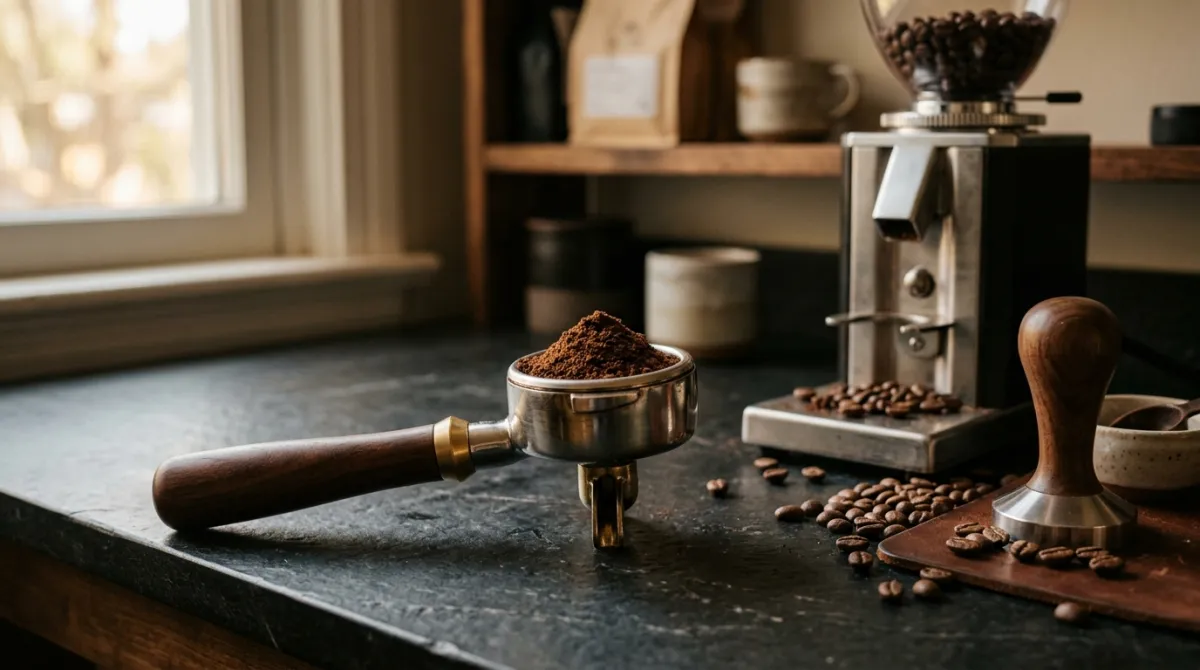
Getting the grind size for espresso right is the single biggest lever you have over shot quality. After ten years of pulling shots every morning, I can tell you that most bad espresso at home comes down to grind, not the beans or the machine. Espresso needs a very fine grind, finer than table salt and much closer to powdered sugar, though not so fine it turns dusty like flour.
The tricky part is that espresso is fussy. A tiny turn of the grinder dial can swing your shot from sour and gushing to bitter and choked. This guide walks you through what the grind should look like, how it controls your shot time, and how to dial it in step by step.
Key Takeaways
- Espresso needs a very fine grind, finer than table salt and close to powdered sugar.
- Use shot time to judge grind: aim for roughly 25 to 30 seconds at a 1:2 ratio.
- Too fast (under 20 seconds), grind finer. Too slow (over 35 seconds), grind coarser.
- Adjust in small steps and change only one variable at a time.
- A real espresso-capable burr grinder matters more here than for any other method.
What grind size is best for espresso?
The best grind size for espresso is very fine, sitting between table salt and powdered sugar in texture. Espresso forces near-boiling water through a compact puck of coffee under high pressure in seconds, so the grounds must be fine enough to slow that water down and build resistance. Too coarse and the water rushes through.
Think of it this way. Drip and pour over use a medium grind because water passes through slowly by gravity. Espresso is the opposite. High pressure demands a much finer grind so the shot takes 25 to 30 seconds instead of a few.
In my experience, most people who switch from drip to espresso undershoot the fineness at first. Their shots gush and taste sour. Once they grind noticeably finer, everything changes.
For more on the numbers behind the shot, see our guide to espresso ratio.
What espresso grind looks and feels like
Espresso grind should feel silky and slightly sticky when you rub it between your fingers, not gritty or granular. If you pinch a small amount, fine espresso grounds tend to clump together softly rather than falling apart like sand. That clumping is a decent visual cue that you are in the right range.
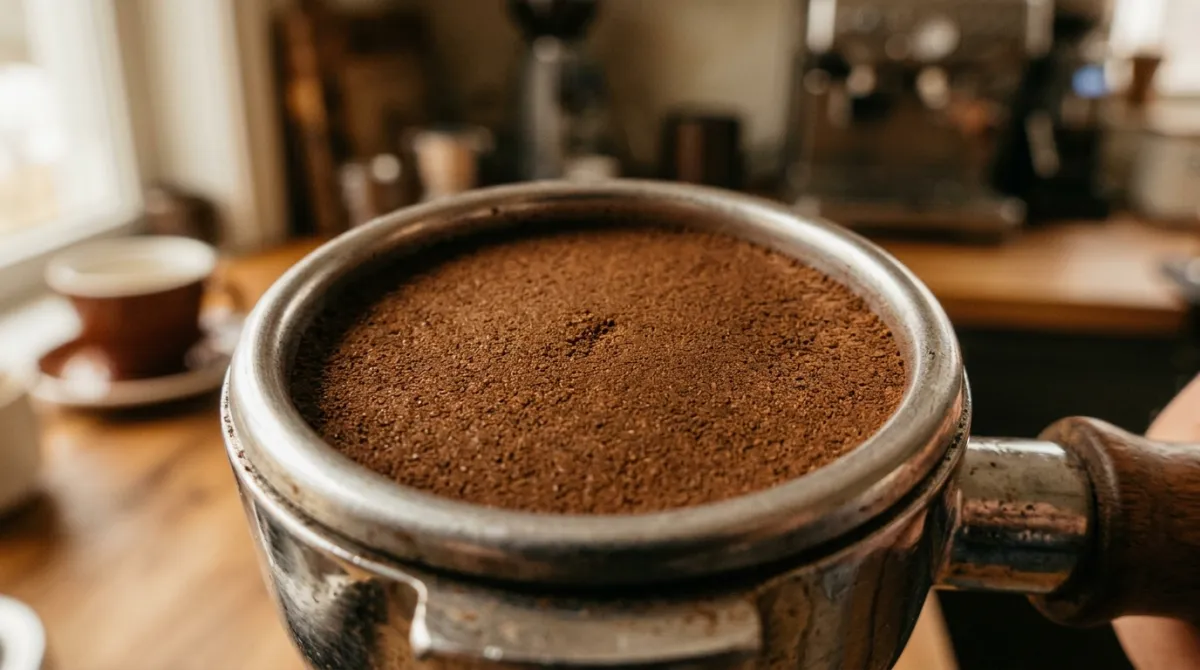
Here is a quick reference for how espresso compares to other brew methods.
| Brew method | Grind texture | Everyday comparison |
|---|---|---|
| French press | Coarse | Sea salt |
| Pour over | Medium | Table salt |
| Espresso | Very fine | Powdered sugar |
| Turkish | Extra fine | Flour |
Notice that espresso is one step short of the finest grind. You want powdered-sugar fine, not flour-dusty fine. Grind too far and the puck clogs completely, choking the machine and producing a bitter, uneven shot.
Run your fingers through it. If it feels like beach sand, you are still too coarse for espresso.
How grind size controls your shot time
Grind size is the main control over how fast water moves through your puck, which is why baristas use shot time as their dial-in signal. A standard shot pulls in roughly 25 to 30 seconds for about a 1:2 ratio. That means 18 grams of dry coffee in and about 36 grams of liquid espresso out.
Finer grounds pack tighter and resist water more, slowing the shot. Coarser grounds create gaps, so water races through. This relationship is sensitive: a small grind change can move your shot time by several seconds.
Why does this matter so much? Because time on the puck tracks extraction. Too fast and you underextract, giving you thin, sour espresso. Too slow and you overextract, pulling out harsh, bitter flavors. The same logic explains why coffee turns bitter or sour in any brewer.
The Specialty Coffee Association emphasizes that grind consistency is central to even extraction, and uneven grinds are a big reason home shots taste muddy (Specialty Coffee Association).
How to dial in espresso grind step by step
Dialing in espresso means adjusting grind size until your shot time lands in the target window, and it usually takes two or three test shots. Start with a known recipe: 18 grams in, aiming for 36 grams out, in 25 to 30 seconds. Weigh both the dose and the output with a scale so you are judging one variable cleanly.
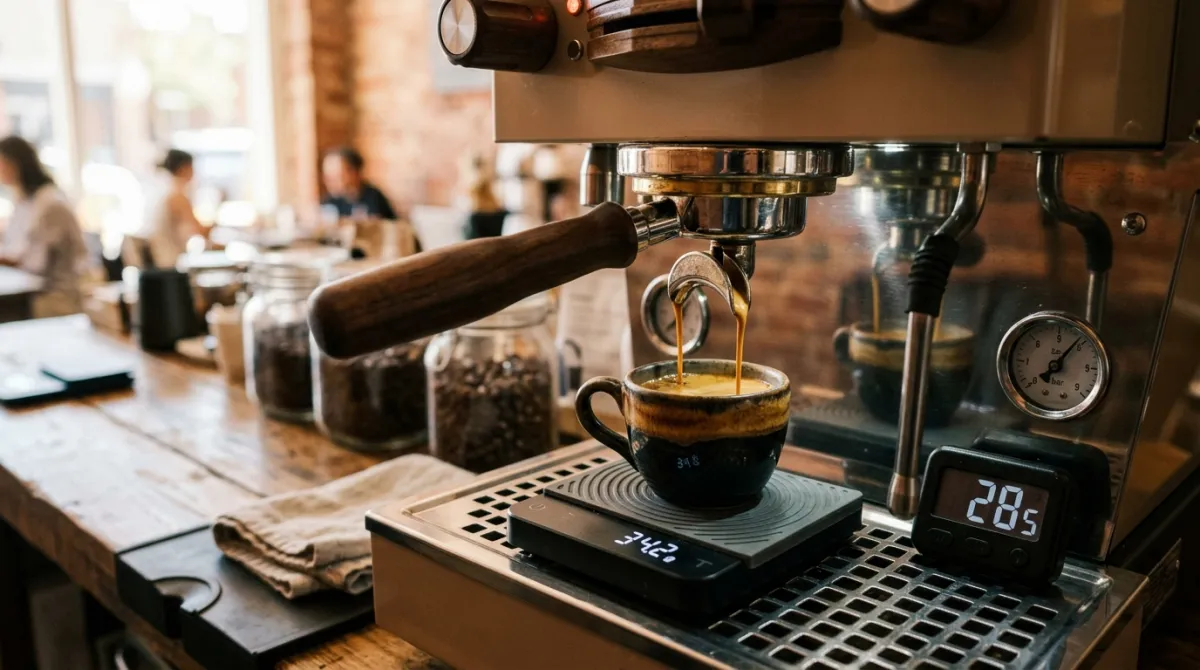
Here is the process I use every time I open a new bag of beans.
Pull a test shot and time it
Grind, distribute, tamp level, and start your timer the moment you begin the shot. Watch the clock and the scale. Stop at 36 grams out and note how long it took. This is your baseline.
Read the result and adjust
If the shot runs too fast and gushes, finishing under 20 seconds, grind finer. If it drips slowly, chokes the machine, or runs past 35 seconds, grind coarser. Make small adjustments, just one or two increments on the dial.
Repeat until it lands
Pull another shot and check the time again. Change only the grind between shots so you can see its effect. Within a few tries, you should land in the 25 to 30 second window. Then taste and fine-tune from there.
For a deeper look at how dose and yield connect, our pillar on coffee to water ratio breaks down the math.
Why a good grinder matters for espresso
A capable grinder matters more for espresso than for any other brew method, because espresso lives or dies by fine, consistent particles. Most inexpensive grinders, especially blade grinders and cheap burr models, simply cannot grind fine enough or evenly enough to make good espresso. They produce a mix of dust and boulders that extracts unevenly.
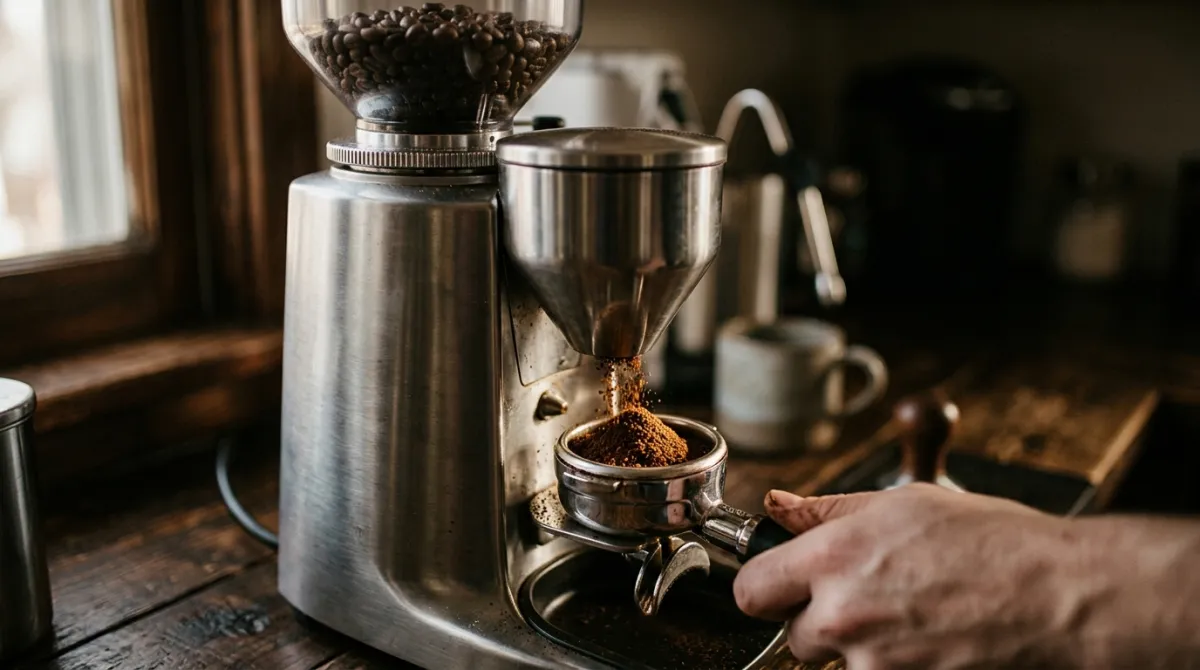
For espresso you want a burr grinder that is either stepless or has fine steps. The reason is precision. Because tiny grind changes move shot time so much, you need small, repeatable adjustments to hit your target.
I learned this the hard way. My first espresso setup paired a good machine with a budget grinder, and no matter how I dialed it, shots ran inconsistent. Upgrading the grinder fixed more problems than any machine tweak ever did.
If you are budgeting, put more money into the grinder than you might expect. It is the part that decides whether dialing in is even possible.
Common espresso grind mistakes
The most common espresso grind mistake is making big grinder adjustments and changing several variables at once, which makes it impossible to know what fixed or broke a shot. Espresso rewards patience. Move the dial in small steps, pull a shot, and judge before adjusting again.
Watch out for these frequent errors:
- Grinding too coarse, so shots gush and taste sour and weak.
- Grinding so fine the puck chokes and the shot turns bitter.
- Changing grind, dose, and tamp all at once, hiding the real cause.
- Ignoring shot time and judging only by eye.
- Using stale beans, which shift how the grind behaves day to day.
One more thing I see often: people give up too early. Two or three test shots per new bag is normal. Beans change as they age, so a grind that worked last week may need a small tweak today.
Keep it simple. One variable, small steps, and let shot time guide you.
Frequently asked questions
What grind size for espresso?
Espresso needs a very fine grind, finer than table salt and close to powdered sugar in texture. It should feel silky and slightly sticky, clumping softly when pinched. The grind must be fine enough to slow high-pressure water so your shot pulls in about 25 to 30 seconds at a 1:2 ratio.
Why is my espresso shot too fast?
A shot that gushes and finishes under 20 seconds is almost always ground too coarse. Coarse grounds leave gaps that let water race through, underextracting the coffee and tasting sour and thin. Grind finer in small steps, keeping your dose and tamp the same, until the shot slows into the 25 to 30 second range.
Can I make espresso without an espresso grinder?
You can try, but results are usually poor because most cheap grinders cannot grind fine or consistent enough for espresso. Blade grinders in particular produce uneven particles that choke or gush unpredictably. A stepless or fine-stepped burr grinder gives you the precision espresso needs, and it matters more than the machine itself.
How fine should espresso grind be?
Espresso grind should be very fine, sitting between table salt and powdered sugar. Aim for powdered-sugar fine, not flour-dusty fine, since grinding too far chokes the puck and produces bitter shots. Let shot time confirm it: 25 to 30 seconds for a 1:2 ratio means your fineness is close to right.
Ready to pull better shots at home? Dial in your grind using shot time as your guide, adjust in small steps, and taste as you go. When you are ready to go further, explore our other more brewing guides for espresso, pour over, and everything in between.
Keep brewing
Dial in your next cup with Brew Better Co.
Tested ratios, methods, and gear notes from a real home kitchen. New guides added regularly.
Explore all guides