methods
How to Make Iced Coffee at Home (Without Watering It Down)
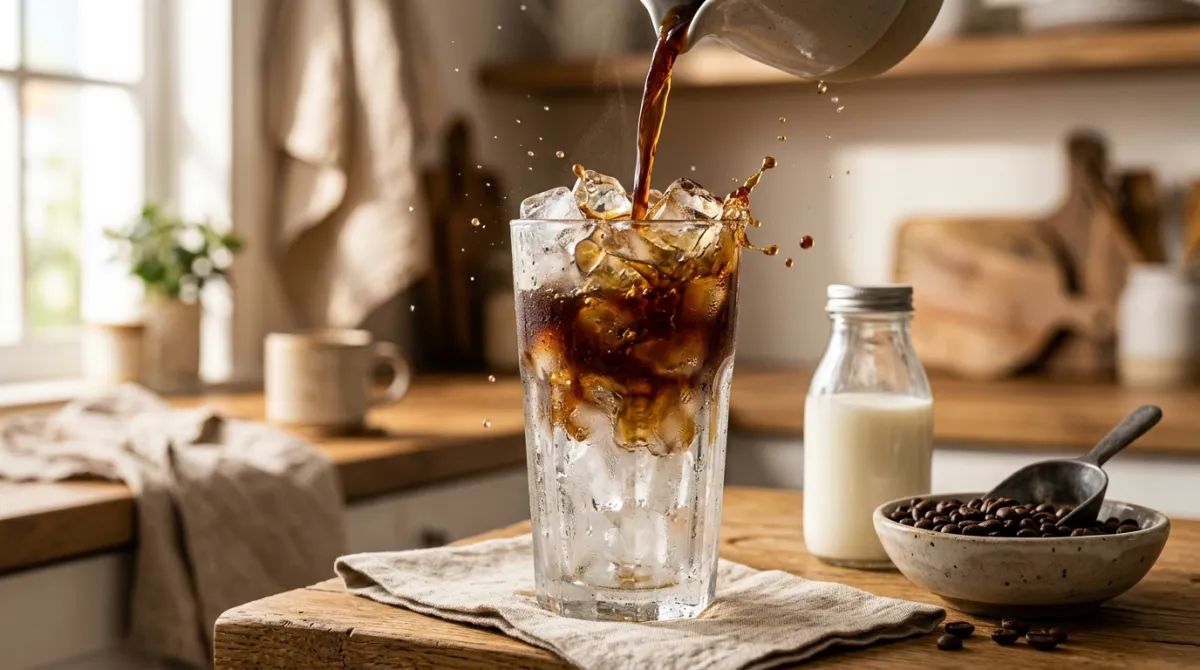
To make iced coffee at home fast, brew hot coffee noticeably stronger than usual, around a 1:12 to 1:13 ratio, and pour it straight over a full glass of ice. That single move chills the coffee in seconds while keeping the aroma bright. The stronger brew offsets the melting ice, so your drink tastes full instead of thin.
I have brewed coffee at home almost every morning for over a decade, and this is still the method I reach for when it is hot out. Iced and cold coffee have become some of the most popular ways people drink coffee, and once you dial it in at home, you stop paying cafe prices.
Key Takeaways
- The fastest iced coffee is hot coffee brewed strong and poured over ice, called flash chilling or Japanese iced coffee.
- Brew at about 1:12 to 1:13 so melting ice dilutes it back toward a balanced 1:16.
- Iced coffee is brewed hot then chilled in minutes; cold brew steeps cold for 12 to 18 hours.
- Coffee ice cubes are the simplest fix for a watery glass.
- Skip pre-chilling if you want speed; the ice does the work.
How do you make iced coffee at home?
You have two main routes to iced coffee at home. The fast one is flash chilling: brew hot coffee, made a bit stronger than usual, straight onto ice so it cools instantly. The slow one is cold brew, which steeps coarse grounds in cold water overnight for a smoother, lower-acid drink.
This guide focuses on the fast route, because it is ready in the few minutes a normal brew takes and it keeps the bright, aromatic flavor that hot brewing pulls out. If you would rather plan ahead for something smoother, I will point you to the cold brew method further down.
The fastest way to make iced coffee (flash chill)
Flash chilling is the quickest method, and it is ready in the same few minutes a normal pour over takes. You brew hot coffee directly onto a glass packed with ice. The coffee cools the instant it hits the cubes, which locks in aroma and acidity that slow cold methods can flatten out.
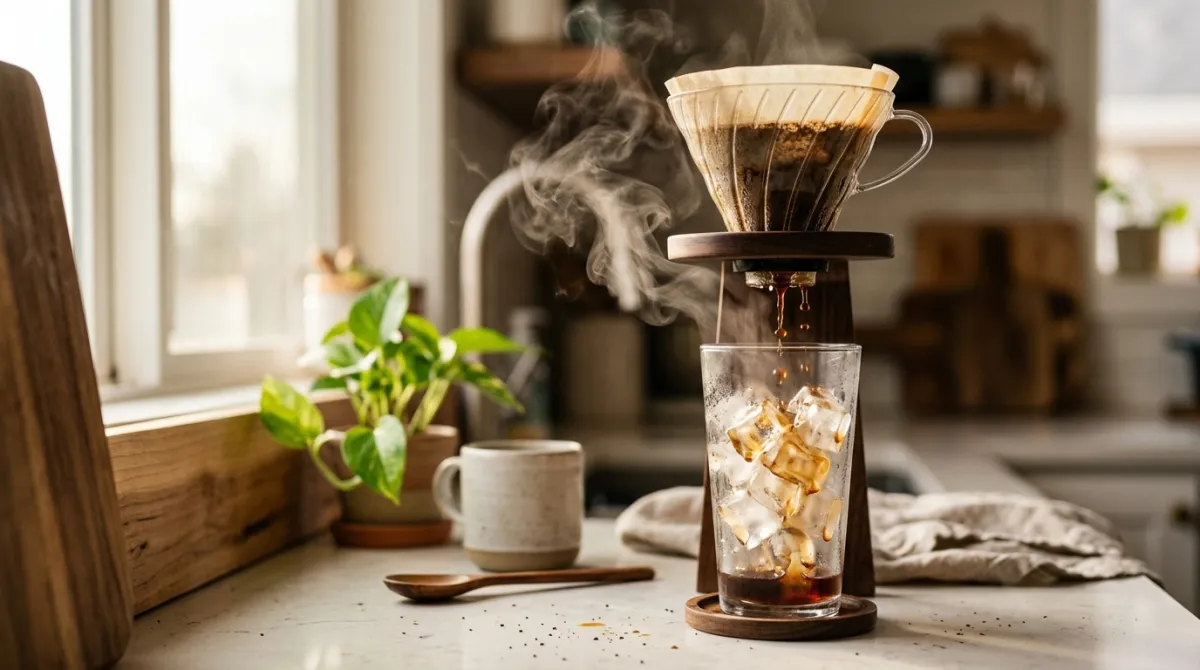
Here is the ratio trick that makes it work. A balanced cup usually lands around 1:16, meaning coffee grams equal water grams divided by 16. But melting ice adds water, so you compensate by brewing stronger up front.
Brew at about 1:12 to 1:13 instead. Say you use 30 grams of coffee. At 1:13 that is 390 grams of hot water, since 390 divided by 13 equals 30. Pour that over a tall glass of ice. As roughly 90 grams of that ice melts into the coffee, it brings the drink down to about 1:16 (390 plus 90 is 480, and 480 divided by 30 is 16), while the rest of the ice keeps it cold.
Brew the coffee itself hot as usual, with water around 195 to 205°F, the range the National Coffee Association suggests for extraction (National Coffee Association). In my experience, a medium roast ground slightly finer than usual gives the cleanest result. Grind, bloom for 30 seconds, then pour steadily. The whole thing takes about three minutes, and you drink it cold right away.
Iced coffee vs cold brew: which should you make?
Choose iced coffee when you want speed and brightness, and choose cold brew when you want smooth and low-acid. Iced coffee is brewed hot then chilled, so it is ready in minutes and tastes lively. Cold brew steeps ground coffee in cold water for 12 to 18 hours, which mellows acidity but demands patience.

They are genuinely different drinks, not two names for one thing. I keep both going in summer: flash-chilled iced coffee for busy mornings, and a jar of cold brew in the fridge for afternoons when I want something rounder.
Cold brew also concentrates well, so you can dilute it to taste with water or milk. If you want to go that route, here is how to make cold brew coffee and the exact cold brew coffee ratio I use.
The short version? Iced coffee rewards good beans and a fast hand. Cold brew forgives almost everything except forgetting to start it the night before.
How to make iced coffee without watering it down
The best way to make iced coffee without watering it down is to freeze leftover coffee into ice cubes. As those cubes melt, they add coffee instead of plain water, so your glass stays strong from first sip to last. It is the single upgrade that fixed weak iced coffee for me years ago.
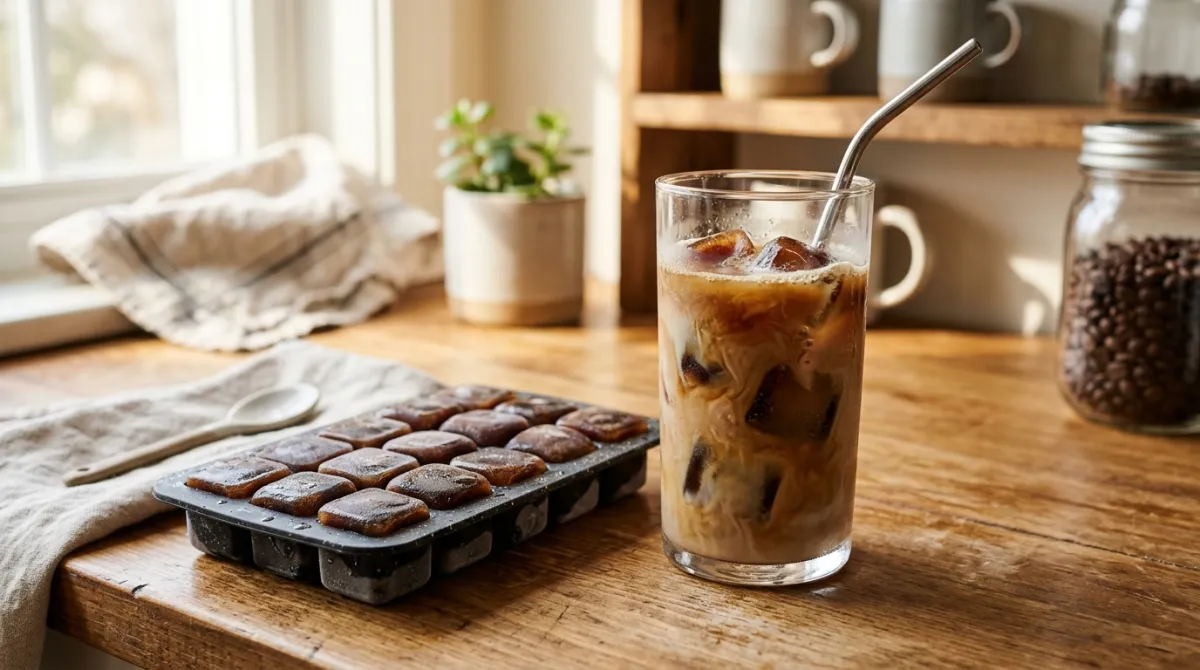
You have three reliable options, and you can stack them:
Use coffee ice cubes. Pour cooled leftover coffee into an ice tray and freeze overnight. Next day, brew over those cubes and nothing dilutes.
Brew stronger. Push your ratio to 1:12 or 1:13 so there is extra strength to absorb the melt, exactly like the flash-chill method above.
Chill in the fridge first. Brew a batch, cool it in the refrigerator for an hour or two, then pour over just a few cubes. Less ice means less dilution.
I usually combine coffee cubes with a slightly stronger brew. That combination keeps the flavor steady even if the glass sits on my desk for twenty minutes while I get distracted.
Flavors, milk, and sweeteners that work
Cold coffee needs a little more help than hot coffee, because chilling mutes sweetness and aroma. That is why an iced coffee recipe often tastes flat unless you adjust. A splash of milk, a simple syrup, or a pinch of salt brings it back into balance fast.
Reach for simple syrup rather than granulated sugar. Sugar will not dissolve in cold liquid, so it sits at the bottom. Simple syrup is just equal parts sugar and warm water, stirred and cooled, and it mixes instantly.
For milk, whole milk and oat milk both hold up well over ice without turning watery. Skim tends to disappear. If you like flavor, a drop of vanilla extract or a little cinnamon in the grounds before brewing works better than syrupy store bottles.
One thing I have learned: add dairy after the ice, not before. Pouring hot coffee onto cold milk can curdle it, and nobody wants that in a glass they were looking forward to.
Common iced coffee mistakes to avoid
The most common iced coffee mistake is brewing at normal strength and letting the ice water it down. A regular 1:16 brew over a full glass of ice ends up tasting like coffee-flavored water within minutes. Brewing stronger, or using coffee cubes, prevents almost every disappointing glass.
A few other traps I see often:
Skipping fresh grounds. Stale or pre-ground coffee tastes dull hot and worse cold. Grind right before you brew if you can.
Under-extracting. Cold hides sweetness, so slightly finer grounds or a touch longer contact time helps the flavor come through.
Too little ice. A half-full glass of ice melts faster and dilutes more. Fill it up so the cubes stay cold and melt slowly.
Waiting too long. Iced coffee is at its best right after brewing. Drink it while the aroma is still there, since flash chilling exists to capture exactly that freshness.
Get these right and your iced coffee at home will beat most drive-through versions, for a fraction of the cost.
Frequently asked questions
How do you make iced coffee with regular coffee?
Brew your regular coffee a little stronger than usual, then pour it hot directly over a full glass of ice. The ice chills it instantly and dilutes the extra strength back to a balanced cup. For best results, use fresh grounds and fill the glass with ice rather than a few cubes.
Is iced coffee just hot coffee with ice?
Basically, yes, but the method matters. Iced coffee is hot-brewed coffee cooled quickly over ice, known as flash chilling. Simply adding ice to a normal-strength cup waters it down fast. Brewing at about 1:12 to 1:13, or using coffee ice cubes, keeps the flavor strong and prevents that thin, watery taste.
How do you make iced coffee not watery?
Freeze leftover coffee into ice cubes so melting adds coffee, not water. You can also brew stronger at a 1:12 to 1:13 ratio, or chill the coffee in the fridge first and use fewer cubes. Combining coffee cubes with a stronger brew keeps every sip full, even if the glass sits a while.
What is the difference between iced coffee and cold brew?
Iced coffee is brewed hot then chilled quickly, so it is bright, fast, and ready in minutes. Cold brew steeps ground coffee in cold water for 12 to 18 hours, producing a smoother, lower-acid drink. Iced coffee suits busy mornings; cold brew suits anyone willing to plan a day ahead.
Ready to keep leveling up your home setup? Explore more brewing guides for ratios, gear, and techniques that make every cup, hot or iced, taste better.
Keep brewing
Dial in your next cup with Brew Better Co.
Tested ratios, methods, and gear notes from a real home kitchen. New guides added regularly.
Explore all guides