milk drinks
What Is a Breve? The Rich Half-and-Half Espresso Drink
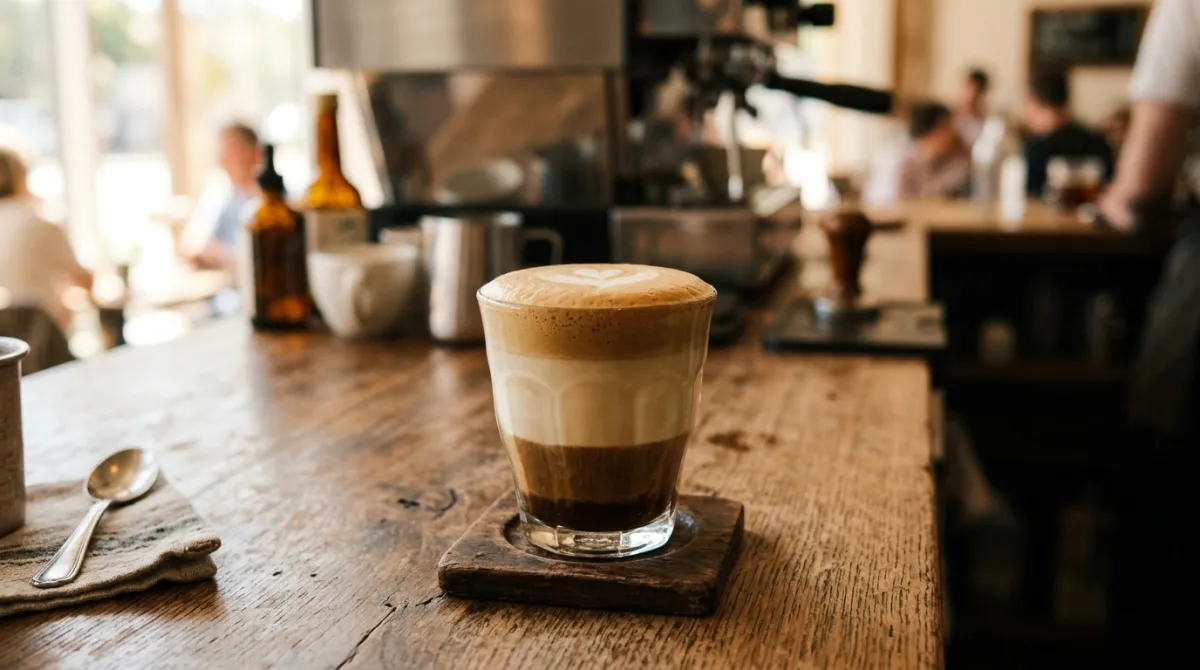
A breve, or caffè breve, is an espresso drink made with steamed half-and-half instead of milk. It’s built exactly like a latte, espresso plus steamed dairy and a little foam, but swapping milk for half-and-half makes it richer, thicker, and far more decadent. I’ve been brewing daily for over a decade, and the breve is the drink I reach for when I want dessert in a cup. If you love a creamy, velvety texture, this one is worth learning.
Key Takeaways
- A breve uses steamed half-and-half (a blend of milk and cream) in place of milk.
- It’s assembled like a latte: espresso, steamed half-and-half, then a thin foam layer.
- The higher fat content froths thicker and gives a heavier, more luxurious mouthfeel.
- A breve carries more fat and calories than a latte made with whole milk.
- Half-and-half needs gentler, more patient steaming to stay silky and controlled.
What is a breve, exactly?
A breve is an American café creation that takes a standard latte and replaces the milk with half-and-half. Half-and-half is a pre-blended mix of whole milk and light cream, so it sits somewhere between milk and heavy cream in richness. The drink keeps the espresso base but gains a thicker, glossier texture that coats your tongue.
The name comes from “caffè breve,” and you’ll often see it written simply as “breve” on café menus in the United States. It isn’t a traditional Italian drink, which is why you rarely find it in Europe. In my experience, most first-timers are surprised by how much heavier it feels compared to their usual latte.
Texture is the whole point here. Because half-and-half carries more fat, it steams into a denser, more stable foam than milk does. That foam holds its shape longer and gives the drink a custard-like quality. If you’ve ever wanted a coffee that feels closer to a treat, this is the reason the breve exists.
How do you make a breve at home?
You make a breve the same way you’d build a latte, just with steamed half-and-half in place of milk. Pull a double espresso, steam your half-and-half to a silky microfoam, then combine them. A double espresso runs roughly 36 mL from about 18 grams of coffee, which gives you a solid, concentrated base that stands up to the rich dairy.
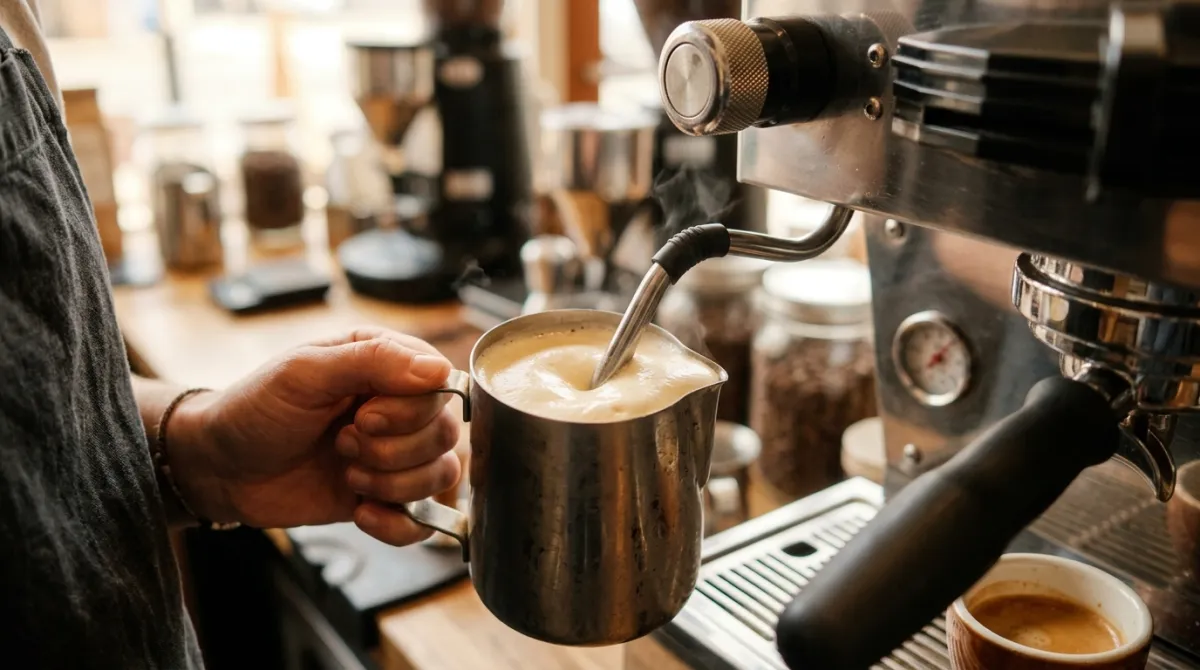
Here’s the process I use every morning.
Pull the espresso
Start with a double shot. Grind about 18 grams of fresh coffee, tamp evenly, and pull until you get roughly 36 mL in the cup. A strong base matters, because half-and-half is heavy and can bury a weak, under-extracted shot. If your espresso tastes sour or thin on its own, fix that before you add any dairy.
Steam the half-and-half
Pour cold half-and-half into a chilled steaming pitcher, filling it no more than a third of the way. Introduce a short burst of air at the start, then submerge the wand tip to build a smooth whirlpool. Half-and-half froths thicker than milk because of its higher fat, so go slower and stop sooner than you think. For a full walkthrough, see our guide on how to steam milk.
Combine and serve
Pour the steamed half-and-half into your espresso, holding back the foam with a spoon, then spoon the thicker foam on top. You won’t get crisp latte art easily, since the foam is denser and less fluid. That’s normal. The reward is a plush, spoonable layer that feels indulgent from the first sip.
Breve vs latte: what’s the difference?
The difference between a breve and a latte comes down entirely to the dairy. A latte uses steamed milk, while a breve uses steamed half-and-half. Both start with the same espresso and the same basic assembly, but the fat content changes everything about how the finished drink tastes and feels.
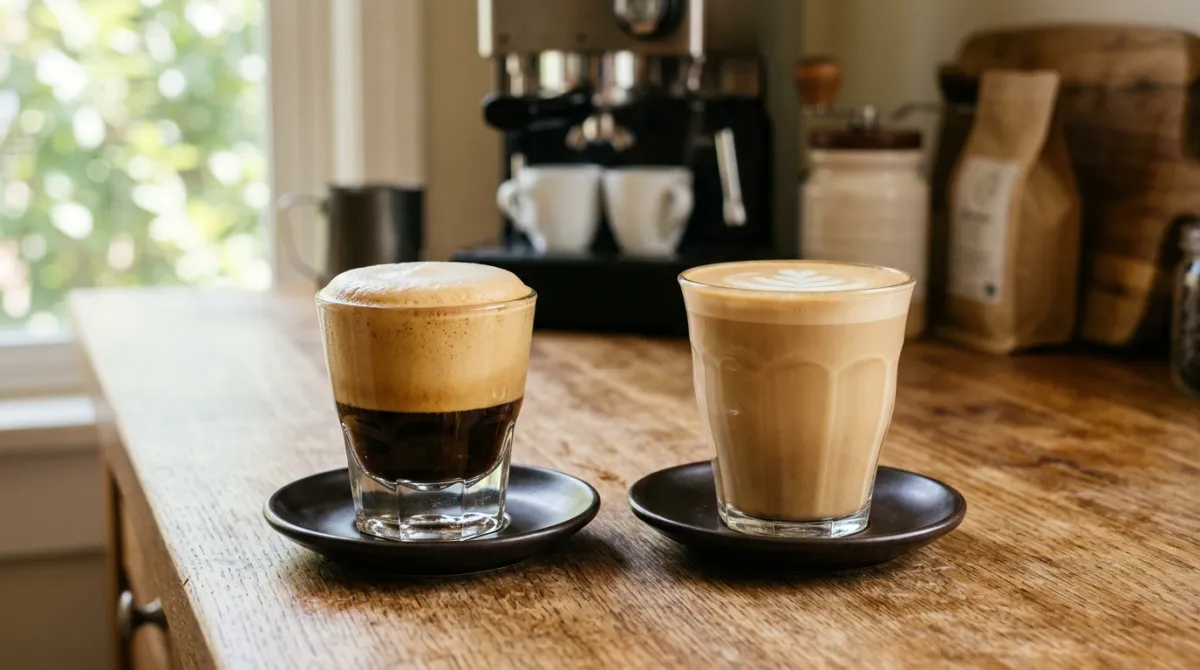
A latte is lighter and lets more of the espresso’s flavor come through. The milk adds sweetness and body without overwhelming the coffee. If you want the balanced, familiar café drink, the latte is your pick, and you can follow our step-by-step on how to make a latte to nail it.
A breve, by contrast, leans heavily into richness. The extra cream mutes some of the espresso’s brightness and replaces it with a thick, dessert-like smoothness. In my experience, people who find lattes a little thin usually love a breve, while those who want to taste the coffee itself tend to prefer the latte.
Breve vs cappuccino: how do they compare?
A breve and a cappuccino differ in both dairy and proportion. A cappuccino uses roughly equal parts espresso, steamed milk, and a thick cap of airy foam, so it drinks light and foam-forward. A breve uses half-and-half and follows latte proportions, meaning more steamed dairy and a thinner foam layer.
The textures could hardly be more different. A cappuccino’s foam is dry and pillowy, sitting high above a modest amount of liquid. A breve’s foam is dense and wet, folding into the drink rather than perching on top. One tastes crisp and coffee-forward, the other tastes creamy and heavy.
If you enjoy comparing café classics, our breakdown of cappuccino vs latte covers the milk-based side in detail. Think of the breve as the richest cousin in that whole family, the one that trades balance for pure indulgence. It’s not an everyday drink for most people, and that’s part of its appeal.
Is a breve worth trying?
A breve is absolutely worth trying if you love creamy, rich coffee drinks. It delivers a mouthfeel that no milk-based drink can match, thanks to the extra fat in half-and-half. That said, it carries more fat and calories than a standard latte, so most people treat it as an occasional indulgence rather than a daily habit.
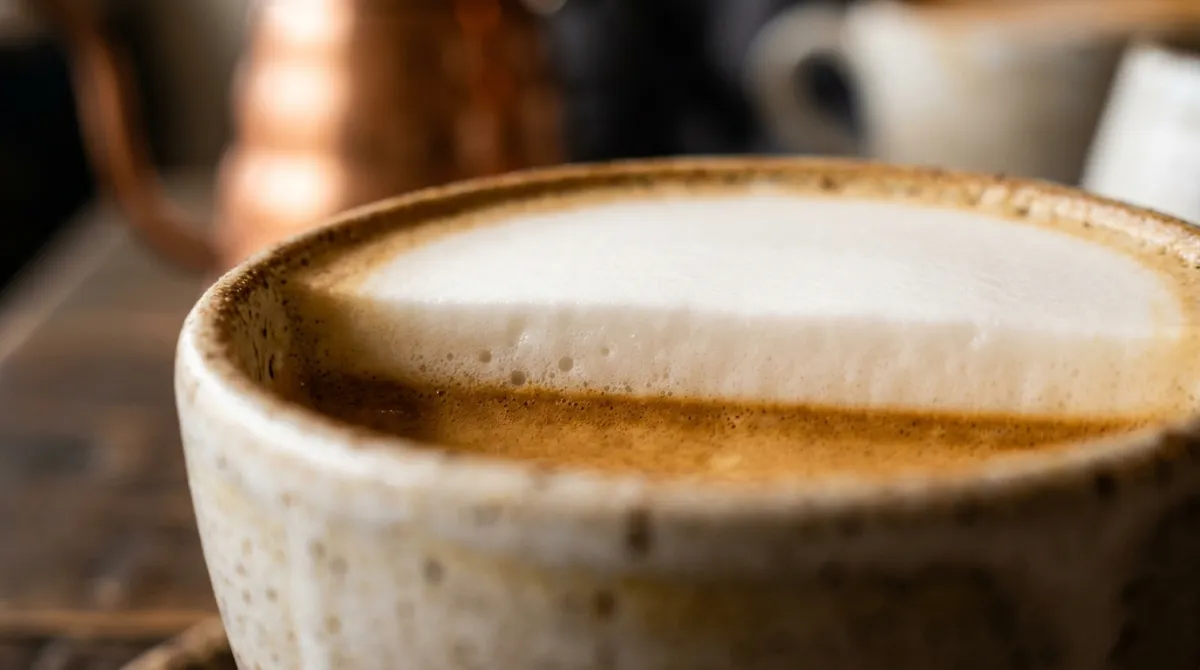
I’d suggest ordering or making one when you want something closer to dessert. Pair it with a lighter roast if you want the coffee to cut through the cream, or a darker roast if you want a deeper, bolder result. Either way, keep your recipe consistent so you learn how the drink behaves.
If the full richness feels like too much, you have gentler options. A cortado uses a small amount of steamed milk and keeps the espresso front and center. Starting there and working up to a breve is a good way to find your personal sweet spot without committing to the heaviest drink on the menu.
Frequently asked questions
Is a breve the same as a latte?
No, a breve is not the same as a latte, though they’re built the same way. A latte uses steamed milk, while a breve swaps in steamed half-and-half. That single change makes the breve noticeably richer, thicker, and heavier, with a denser foam and a more decadent mouthfeel than any standard latte.
What is half-and-half in a breve?
Half-and-half is a pre-blended mix of whole milk and light cream, sitting between the two in richness. In a breve, it replaces the milk you’d normally steam for a latte. Because it holds more fat, it froths into a thicker, more stable foam and gives the finished drink its signature velvety, custard-like texture.
Does a breve have more caffeine than a latte?
No, a breve doesn’t have more caffeine than a latte with the same number of shots. Caffeine comes from the espresso, not the dairy. A breve built on a double shot has roughly the same caffeine as a double-shot latte. The difference is entirely in richness, fat, and mouthfeel, not in the coffee dose.
Can you make a breve without an espresso machine?
You can approximate a breve without a machine, though it takes improvising. Brew a strong, concentrated coffee using a moka pot or AeroPress as your base. Then heat and froth half-and-half with a handheld frother or by shaking it warm in a sealed jar. It won’t match café results exactly, but it captures the creamy character well.
Once you’ve made your first breve, you’ll understand why it has such a devoted following among people who love rich, creamy coffee. Start with a strong double shot, steam your half-and-half patiently, and adjust from there until the texture feels right. When you’re ready to expand your repertoire, explore more brewing guides.
Keep brewing
Dial in your next cup with Brew Better Co.
Tested ratios, methods, and gear notes from a real home kitchen. New guides added regularly.
Explore all guides