milk drinks
What Is a Macchiato? Espresso Stained With Milk

A macchiato is an espresso “stained” with a small amount of milk. The word “macchiato” means “stained” or “spotted” in Italian, and that single dollop of milk is the whole idea. You keep the espresso in charge and let the milk soften its edge.
I have pulled this drink most mornings for years, and it still surprises people. They expect something big and creamy. Instead they get a tiny, intense cup that tastes mostly of coffee, with just enough milk to round off the bitterness.
Key Takeaways
- A macchiato is espresso marked with just a small dollop of steamed or foamed milk, well under equal parts.
- “Macchiato” is Italian for “stained” or “spotted,” which describes the milk mark on the espresso.
- A latte macchiato flips the recipe: mostly steamed milk stained with a shot of espresso.
- A caramel macchiato is a sweeter, layered Starbucks-style drink, not a traditional macchiato.
- You can make a real espresso macchiato at home in under three minutes with one shot and a spoonful of foam.
What does “macchiato” actually mean?
“Macchiato” is the Italian past participle of “macchiare,” which means to stain or to spot. Baristas started calling the drink a macchiato to signal a clear difference from a plain espresso. The milk leaves a visible mark on the crema, so the name is literal, not poetic.
In Italy, if you order a “caffe macchiato,” you get an espresso with a spot of milk. That is it. The drink stays small because the espresso is meant to lead. The milk plays a supporting role, cutting acidity and bitterness without turning the cup into a milk drink.
A close relative is worth knowing here. If you like small, espresso-forward drinks with a touch more milk, read what is a cortado, which sits one step up the milk scale from a macchiato.
There is one more term to keep straight. A “latte macchiato” reverses the roles, which I cover further down. For now, remember the core idea: a traditional macchiato is espresso first, milk second, and the milk is a small stain rather than a base.
How much milk goes in a real espresso macchiato?
A traditional espresso macchiato uses a very small amount of milk, roughly one to two teaspoons of steamed milk or foam per shot. That is well under equal parts, far less milk than espresso, which keeps the drink small at under about two ounces total. Anything more, and you drift toward a cortado.
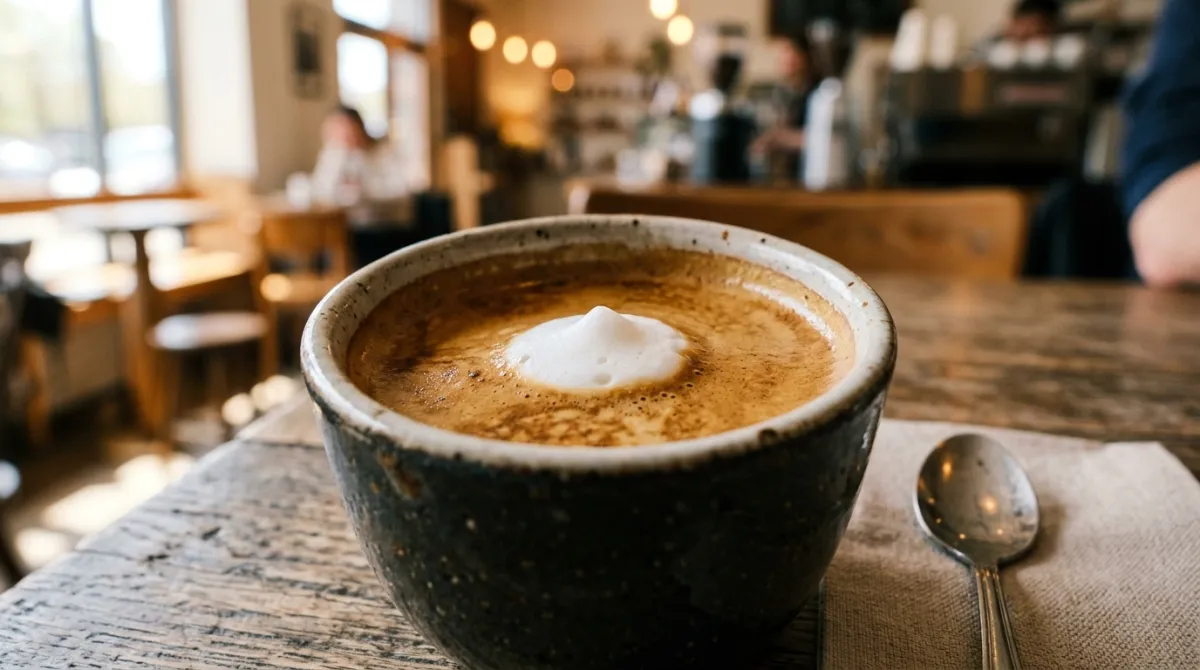
Here is the build I use at home. Pull a double espresso, about 36 mL from roughly 18 grams of coffee. Steam a small amount of milk, then spoon a single dollop onto the shot. You want a coin-sized mark of foam sitting on the crema, not a full pour.
Most home brewers overshoot the milk on their first try. In my experience, the fix is to steam milk for a different drink and simply borrow a spoonful, rather than steaming a tiny pitcher that never textures well. Small volumes of milk are hard to foam evenly, so a shared pitcher gives better results.
There are two common styles. A “dry” macchiato uses mostly foam, so the milk feels light and airy. A “wet” macchiato uses a little steamed milk under the foam, so it tastes slightly rounder. Both stay small, and both keep the espresso dominant.
Espresso macchiato vs latte macchiato vs caramel macchiato?
These three drinks share a name but differ wildly in size, ratio, and flavor. An espresso macchiato is espresso-forward and tiny. A latte macchiato is milk-forward and tall. A caramel macchiato is a sweetened, layered coffee shop creation. Confusing one for another is the most common macchiato mistake I see.

The gap comes down to what leads the drink. In a traditional macchiato, espresso leads and milk stains it. In a latte macchiato, milk leads and espresso stains it. In a caramel macchiato, vanilla syrup and caramel lead, with espresso and milk built around the sweetness.
Espresso macchiato
The espresso macchiato is the original. One shot, or a double, marked with a small dollop of foam. Total volume stays near two ounces, and the taste is bold coffee softened at the edges. If you love espresso but find a straight shot too sharp, this is your drink.
Latte macchiato
A latte macchiato inverts the recipe. You start with a tall glass of steamed milk, then pour a shot of espresso through the foam so it “stains” the milk. The result is mostly milk, mild and creamy, with a coffee streak running through it. It looks layered because the espresso settles between the milk and the foam.
If a latte macchiato sounds close to a regular latte, you are not wrong. The difference is order and layering. A latte blends espresso and milk together, while a latte macchiato keeps the espresso as a visible stain on top. For the classic blended version, see my guide to making a latte, and for the milk foam contrast read cappuccino vs latte.
Caramel macchiato
The caramel macchiato is a different animal. It is a Starbucks-style drink built from vanilla syrup, steamed milk, espresso, and a caramel drizzle on top. It is sweet, layered, and much larger than any traditional macchiato. The “macchiato” name here refers to the espresso marking the milk, but the added syrup and caramel put it in its own dessert-leaning category. If that is the one you love, I walk through it in how to make a caramel macchiato.
How do you make an espresso macchiato at home?
You can make a solid espresso macchiato at home in under three minutes with an espresso machine and a little milk. The whole build rests on one shot and one spoonful of foam. No latte art skills required, which is why I recommend it to beginners learning to steam milk.
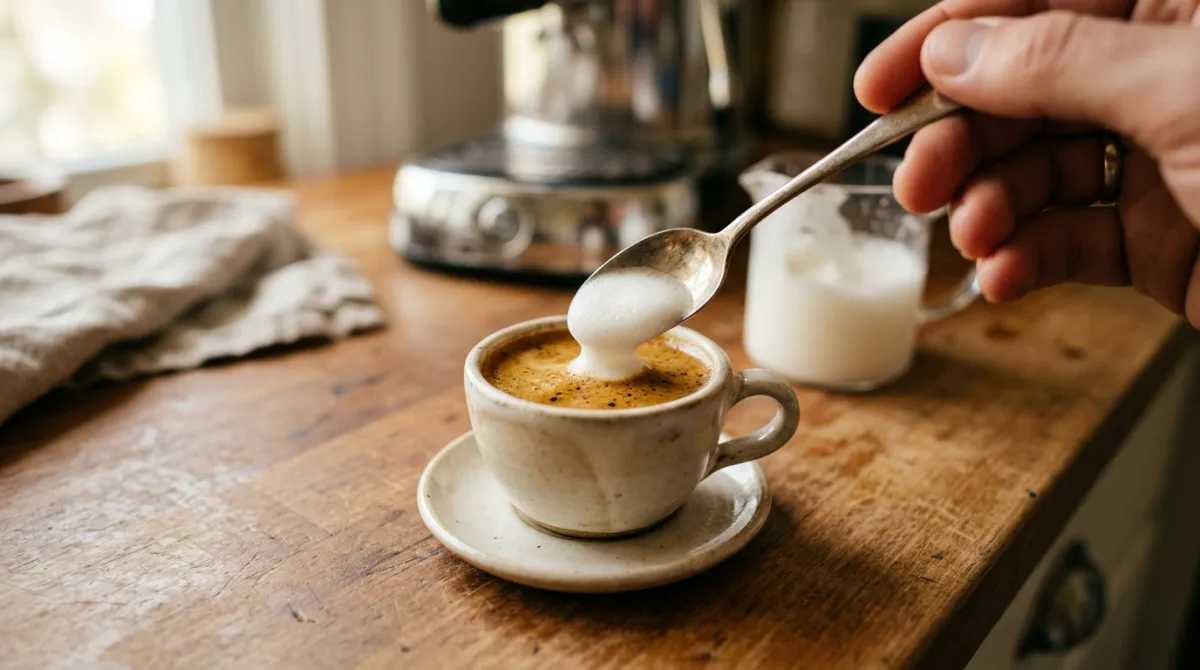
Follow these steps for a clean result:
- Grind and dose about 18 grams of coffee for a double shot.
- Pull the espresso into a small warmed cup, aiming for around 36 mL.
- Steam a small pitcher of milk until it has a glossy microfoam.
- Tap and swirl the pitcher, then spoon one dollop of foam onto the crema.
- Serve immediately, while the crema still holds the milk mark.
The step people skip is swirling the pitcher before spooning. If you let steamed milk sit, the foam and liquid separate fast, and you end up with either flat milk or dry bubbles. A quick swirl keeps the texture even, so your single dollop looks and tastes right.
If you do not own an espresso machine, a moka pot plus a handheld frother gets you close. The coffee is stronger and less sweet than true espresso, but the stained-milk concept still works well.
Is a macchiato stronger than other coffee drinks?
A macchiato tastes stronger than a latte or cappuccino because it contains far less milk to dilute the espresso. The caffeine, though, depends on the number of shots, not the milk. A single-shot macchiato and a single-shot latte carry the same caffeine; the macchiato simply tastes more intense.
This trips people up constantly. Strength of flavor and caffeine content are two different things. A macchiato concentrates flavor into a small cup, so each sip hits harder. A latte spreads the same shot across much more milk, so it tastes mellow even with identical caffeine.
If you want more caffeine, add a shot rather than reaching for a bigger milk drink. A double espresso macchiato gives you the punchy taste and the extra kick, all while staying compact enough to finish in a few sips.
Frequently asked questions
Is a macchiato just an espresso with milk?
Essentially, yes, but the proportion matters. A traditional espresso macchiato is a shot of espresso marked with a small dollop of steamed milk or foam, roughly a teaspoon or two. The milk stains the coffee rather than filling the cup, so the drink stays espresso-forward and small, unlike a latte or flat white.
What is the difference between a macchiato and a latte?
A latte blends a shot of espresso with a large volume of steamed milk, so it tastes creamy and mild. A macchiato keeps the espresso dominant and adds only a small dollop of milk. The latte is a milk drink with coffee, while the macchiato is a coffee drink with a milk stain.
Why is a Starbucks caramel macchiato so different?
The caramel macchiato is a sweetened, layered drink rather than a traditional macchiato. It combines vanilla syrup, steamed milk, espresso, and a caramel drizzle, so it is much larger and sweeter. It borrows the name because the espresso marks the milk, but the added syrup and caramel move it toward the dessert end of the menu.
Does a macchiato have more caffeine than a latte?
Not usually. Caffeine depends on the number of espresso shots, not the milk. A single-shot macchiato and a single-shot latte hold the same caffeine. The macchiato only tastes stronger because it contains far less milk to dilute the espresso, which concentrates the flavor into a small cup.
Once you understand that a macchiato is simply espresso stained with milk, the whole family of drinks makes sense. Start with the traditional espresso version, get comfortable steaming a small amount of milk, and then branch out to the latte macchiato or the sweeter caramel style. For more recipes and technique breakdowns, browse my more brewing guides.
Keep brewing
Dial in your next cup with Brew Better Co.
Tested ratios, methods, and gear notes from a real home kitchen. New guides added regularly.
Explore all guides