grind
The Right Grind Size for Pour Over Coffee
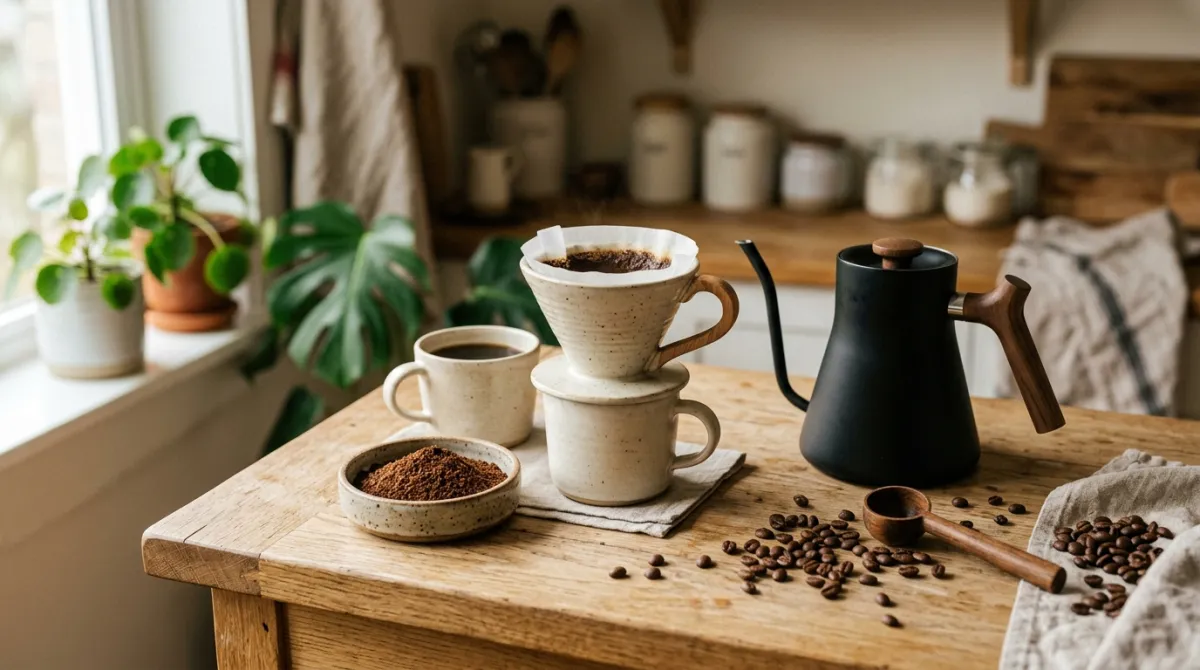
You have probably wondered why your pour over tastes thin one day and harsh the next, even with the same beans. Nine times out of ten, the culprit is grind size for pour over, not your technique or your water. Grind is the single biggest lever you control at home.
I have brewed pour over almost every morning for more than a decade, and dialing in the grind is still the first thing I check when a cup goes sideways. Get it right and everything else gets easier.
Key Takeaways
- Aim for a medium grind, roughly the texture of table salt (a touch finer for cone drippers like the V60).
- Pour over grind sits finer than French press and much coarser than espresso.
- Use brew time as your feedback signal: a single cup should finish in about 2.5 to 3.5 minutes.
- Too fast, weak, or sour means grind finer; too slow or bitter means grind coarser.
- A burr grinder gives the consistent particle size that makes pour over predictable.
What grind size is best for pour over coffee?
The best grind size for pour over is medium, about the texture of table salt, leaning a touch finer (medium-fine) for cone drippers like the V60. It should feel finer than the coarse, gritty grind you would use for French press, but much coarser than the powder-fine grind espresso needs. That middle range is your starting point.
Why does this range work so well? Pour over relies on water flowing through a bed of grounds at a steady pace. Medium-fine particles slow the water just enough to pull out sweetness and body without choking the flow. Go too coarse and water rushes through. Go too fine and it stalls.
Think of grind as a dial, not a fixed setting. Your beans, roast level, dripper, and even the day’s humidity all nudge the ideal spot. Start at medium, taste, then adjust. Pair that grind with a solid pour over coffee ratio and you have covered the two variables that matter most.
What pour over grind looks and feels like
Good pour over grounds look uniform, with grains close in size to table salt or granulated sugar. Rub a pinch between your fingers. You should feel distinct, sandy particles, not a fine flour and not chunky gravel. That tactile check is the fastest way to sanity-test your grinder before you ever brew.
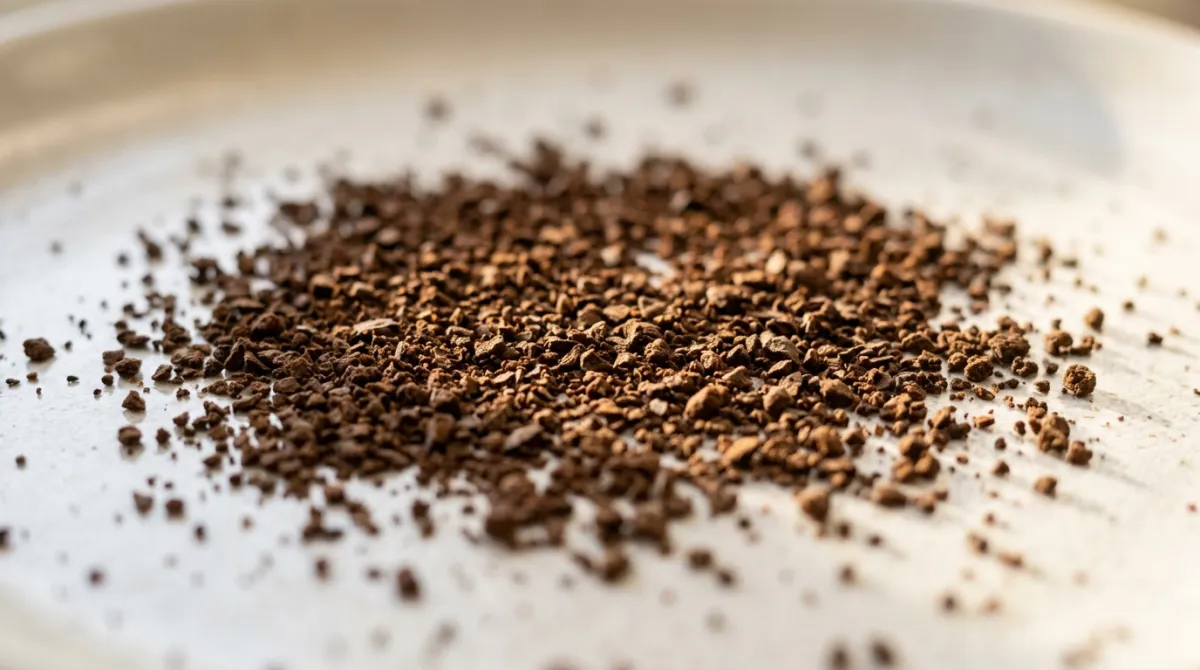
Consistency matters as much as the size itself. When particle sizes vary wildly, the small bits over-extract and turn bitter while the big ones under-extract and taste sour. You end up with both problems in one cup, which is why muddy, unbalanced pour over is so common with cheap grinders. If your cup keeps coming out harsh or sharp, why is my coffee bitter or sour breaks down both faults.
This is where equipment earns its keep. A burr grinder crushes beans between two fixed surfaces at a set distance, so the output is even. A blade grinder just chops randomly, producing dust and boulders in the same batch. The Specialty Coffee Association (Specialty Coffee Association) has long emphasized grind consistency as a foundation of good brewing, and for pour over that guidance is hard to overstate.
How grind size changes your pour over (taste and time)
Grind size controls two things at once: how fast water drains and how much flavor it extracts. Finer grinds slow the flow and pull more from the beans; coarser grinds speed it up and pull less. That is the whole relationship, and once it clicks, troubleshooting gets simple.
Here is the pattern I look for in the cup. A grind that is too coarse drains fast and tastes weak, sour, or watery because the water left before extraction finished. A grind that is too fine drains slowly and tastes bitter, harsh, or hollow because the water pulled too much and stalled in the bed.
Brew time ties it all together. For a single-cup pour over, I aim for a total time of about 2.5 to 3.5 minutes from first pour to last drip. That window is your feedback signal.
- Finishing under 2.5 minutes with a thin, sour cup? Grind finer.
- Stalling past 3.5 minutes with a bitter, heavy cup? Grind coarser.
- Landing in the window with a balanced, sweet cup? You are dialed in.
Taste and time usually agree. When they do, trust them over any chart.
How to adjust grind for your dripper
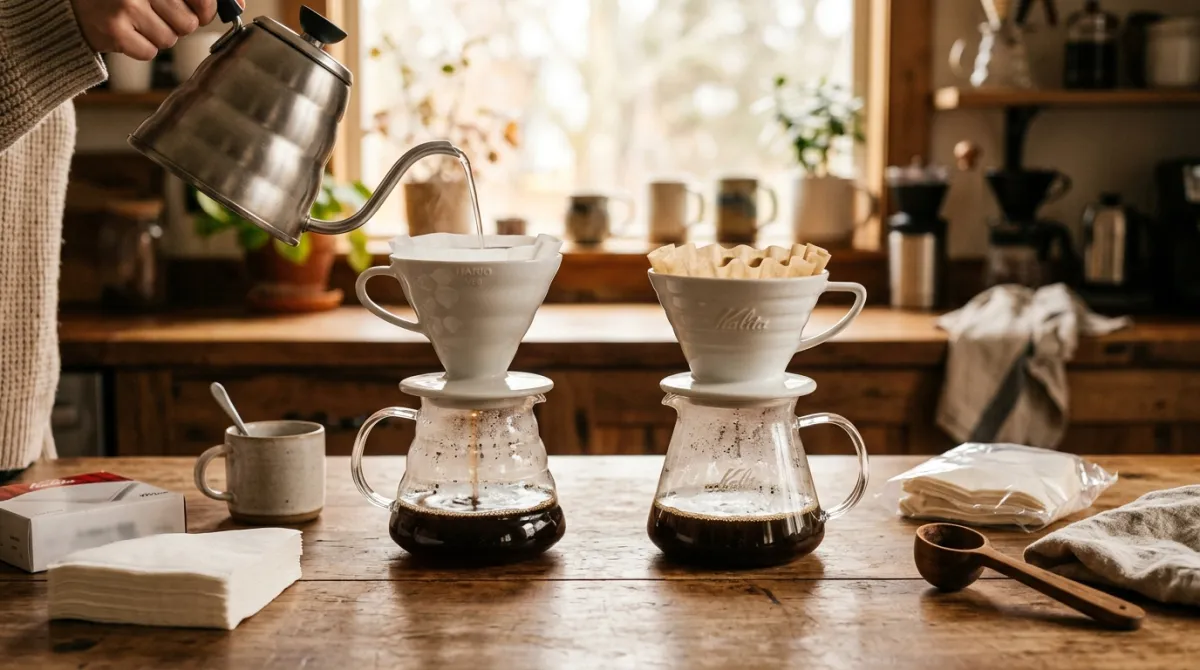
Your dripper shape changes the ideal grind, so the “perfect” setting on one brewer will not copy over to another. Cone-shaped drippers, flat-bottom drippers, and filter thickness each nudge the grind and pour in a different direction. Matching your grind to your gear removes a lot of guesswork.
Cone drippers like the V60
A cone like the V60 funnels water to a single large hole, so it drains quickly. That means V60 grind size usually runs slightly finer than other methods, paired with a steady, controlled pour to keep the water in contact long enough. If your V60 races through and tastes thin, tighten the grind a notch and slow your pour.
Flat-bottom drippers like the Kalita
A flat-bottom brewer like the Kalita Wave spreads water across a broad bed and drains through small holes, so it is more forgiving of pour inconsistencies. I grind a touch coarser here than I would for a V60. Beginners often find flat-bottoms easier to get right, since minor pour wobbles do not wreck the cup.
Filter thickness
Paper matters more than people expect. Thick, dense filters slow drainage on their own, so a slightly coarser grind keeps the brew from over-extracting during that longer contact. Thinner papers drain faster, so a hair finer helps them extract fully. When you swap filter brands, expect to re-check your grind.
How to dial in your grind step by step
Dialing in takes three or four brews, not a lab. The goal is to lock your ratio and technique, then change only the grind until the cup and the clock agree. Keeping everything else constant is what makes the process fast and repeatable.
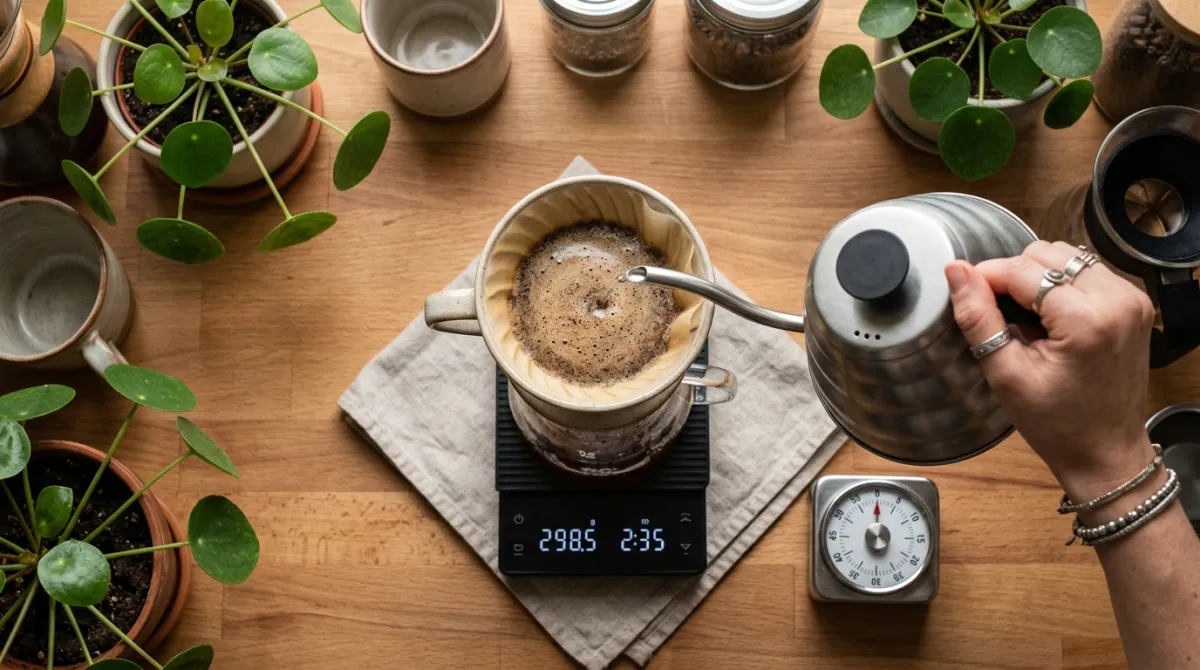
Follow this sequence:
- Fix your ratio first. Weigh your coffee and water so you are not chasing two variables at once. If you are unsure where to start, my guide to coffee to water ratio walks through the math.
- Start at medium. Set your grinder to a table-salt texture as a baseline.
- Brew and time it. Note the total time from first pour to last drip, and taste the result.
- Adjust one direction. Too fast, weak, or sour, go finer. Too slow or bitter, go coarser.
- Change grind only. Keep ratio, water temperature, and pour the same so you know what caused the shift.
- Repeat until balanced. When the cup tastes sweet and clean inside that 2.5 to 3.5 minute window, write the setting down.
One caution from experience: make small adjustments. Move a couple of clicks at a time on your grinder, not ten. Big jumps overshoot the sweet spot and you will lose track of where you started.
Common pour over grind mistakes
The most common pour over grind mistake is judging the grind by size alone and ignoring taste and time together. Your senses catch problems a number on a dial never will. I have watched people copy a stranger’s exact grinder setting and wonder why their cup tastes nothing alike.
Watch out for these traps:
- Using a blade grinder. Uneven particles guarantee a muddled cup no matter how careful your pour is.
- Chasing someone else’s number. Grinder models differ, so a “16 clicks” recommendation rarely transfers to your machine.
- Changing too many things at once. Adjust grind, ratio, and pour together and you will never know what fixed the cup.
- Ignoring the roast. Darker roasts are more brittle and grind finer at the same setting, so they often need a coarser adjustment than light roasts.
- Skipping the timer. Without brew time, you are guessing. The clock turns a vague “it tastes off” into a clear next step.
Fix the grinder and the timer first. Most pour over problems shrink once those two are handled.
Frequently asked questions
What grind size for pour over?
Use a medium grind, roughly the texture of table salt, going a touch finer for cone drippers like the V60. It should feel finer than French press but noticeably coarser than espresso. Start there, then adjust based on taste and brew time until a single cup finishes in about 2.5 to 3.5 minutes.
Is pour over grind finer than French press?
Yes. Pour over grind is finer than French press grind. French press uses a coarse, gritty grind that steeps in water for several minutes, while pour over uses a medium to medium-fine grind that water flows through faster. Grinding French-press-coarse for pour over usually gives a thin, sour cup.
Why is my pour over draining too fast?
A fast drain, under about 2.5 minutes, usually means your grind is too coarse or your pour is too aggressive. Water rushes through without extracting enough, leaving a weak or sour cup. Grind a couple of clicks finer, slow your pour, and re-check both the taste and the time.
What grind for a V60?
A V60 typically wants a medium-fine grind, slightly finer than a flat-bottom dripper, paired with a steady, controlled pour. Because the cone drains through one large hole, a marginally finer grind keeps water in contact long enough for full extraction. If your V60 tastes thin and drains fast, tighten the grind.
Grind size is the fastest fix for a disappointing pour over, and now you have a starting point plus a repeatable way to dial it in. Brew a cup, time it, taste it, and adjust one notch at a time. For more ways to sharpen your morning routine, browse my other more brewing guides and keep experimenting.
Keep brewing
Dial in your next cup with Brew Better Co.
Tested ratios, methods, and gear notes from a real home kitchen. New guides added regularly.
Explore all guides