gear
How to Descale a Nespresso: A Simple Step-by-Step Guide
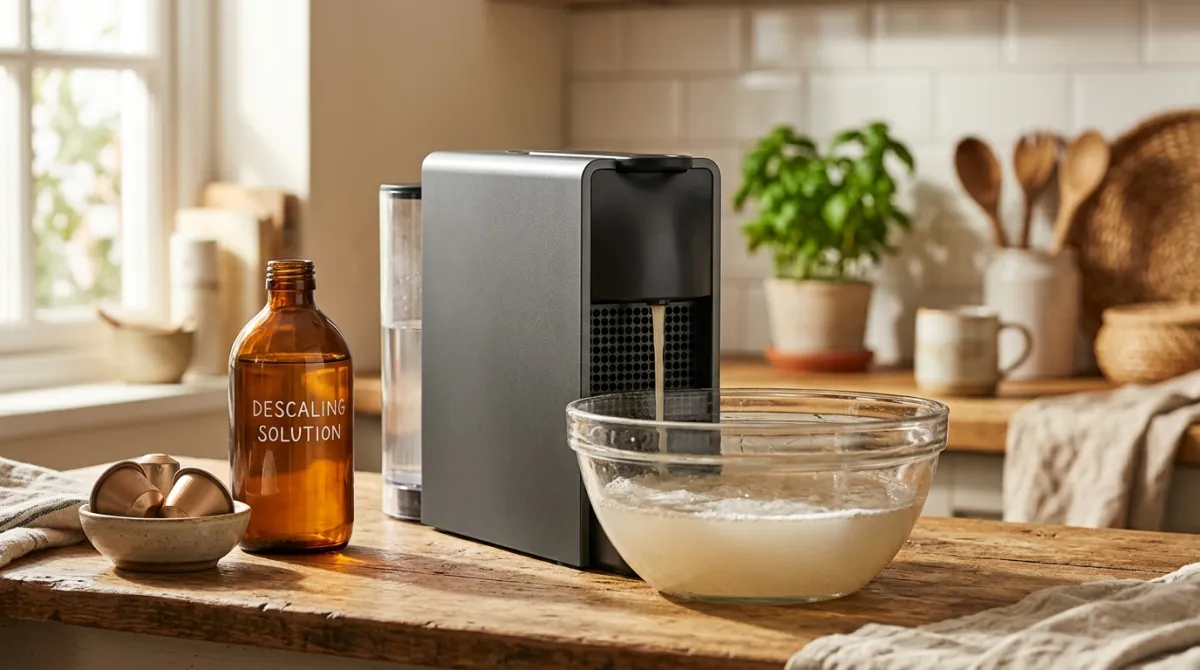
Here’s how, in brief: run a descaling solution through the machine’s descale mode, then rinse with clean water. That’s the whole job. Empty the used capsule, fill the tank with descaler and water, trigger the descale cycle, and follow it with a couple of clean rinses. I’ve done this on both my OriginalLine and my Vertuo more times than I can count, and the process is genuinely quick once you know the button trick for your model.
The part that trips most people up isn’t the descaling itself. It’s finding the right button combo, since Nespresso uses different sequences across its machines. Below I’ll walk you through both lines, what to pour in, and how often to bother.
Key Takeaways
- Descaling means flushing descaler through the machine’s descale mode, then rinsing twice with clean water.
- OriginalLine and Vertuo use different button combos to enter descale mode, so check your manual.
- Use Nespresso descaling solution or a citric-acid descaler; skip plain vinegar to protect seals.
- Descale roughly every three months, or sooner with hard water and heavy use.
- The whole cycle takes about 15 to 20 minutes, most of which is unattended.
Why does a Nespresso need descaling at all?
Every time you brew, hot water leaves behind tiny mineral deposits from your tap water. Over months, that scale builds up inside the boiler and the narrow water lines. In my experience, the first sign is always the same: the machine gets louder and slower, and my espresso comes out a touch cooler than it should.
Scale is basically limestone in miniature. It insulates the heating element, so the machine works harder to hit temperature and eventually struggles. Left long enough, it can clog the flow path entirely. I once ignored a descale warning on my Vertuo for two months, and the pour slowed to a sad trickle before I finally caved.
Descaling dissolves those deposits and washes them out. Do it on schedule and the machine keeps brewing at full pressure and proper heat. Skip it, and you’re slowly cooking the internals.
What should you use to descale a Nespresso?
Use either the official Nespresso descaling solution or a citric-acid-based descaler. Both dissolve mineral scale safely. Nespresso’s own kits come pre-measured, which takes the guesswork out, but a generic citric-acid descaler does the same chemical job for less money.
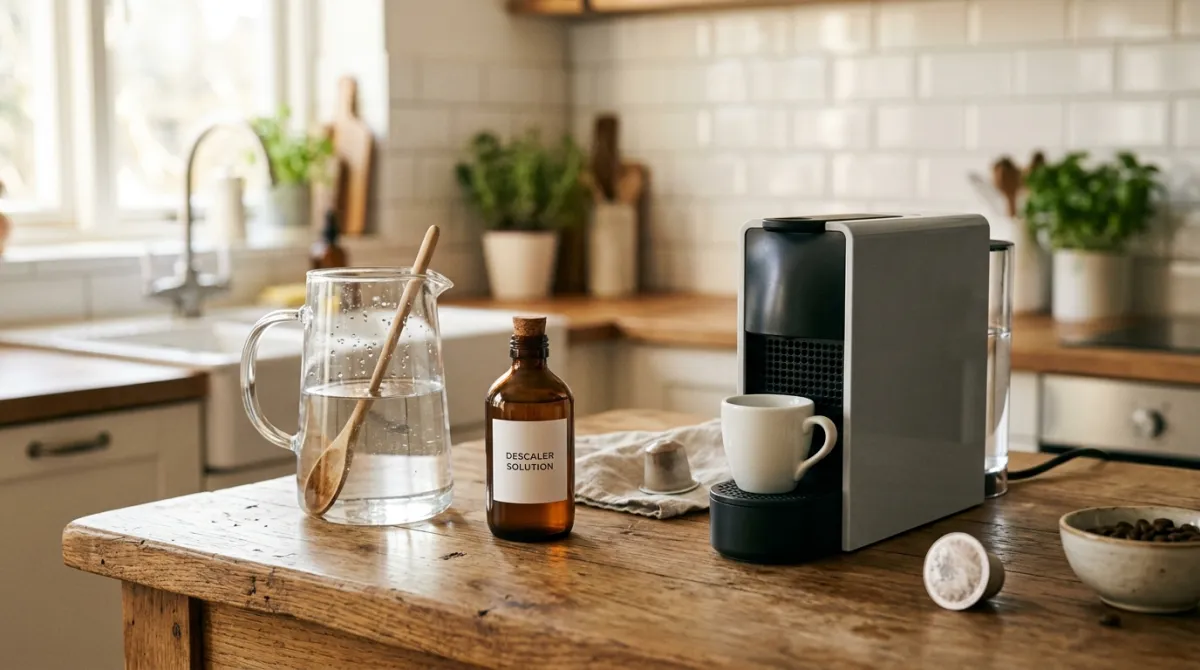
Here’s the debate you’ll run into: vinegar. Plenty of people descale everything with white vinegar, and it does cut scale. But I don’t recommend it for a Nespresso. Vinegar is acetic acid, and it can leave a stubborn odor in the water lines and, over time, degrade rubber seals and gaskets. A purpose-made descaler is formulated to avoid both problems. If you love the vinegar method for other machines, that’s fair, and I cover it in how to clean a coffee maker with vinegar, but a Nespresso deserves a gentler acid.
Whatever you choose, follow the dilution on the label. Too concentrated won’t clean faster, and it can be harder to rinse out fully.
How do you descale a Nespresso OriginalLine machine?
OriginalLine machines (Pixie, Inissia, Citiz, Essenza, and similar) share a broadly similar routine, though exact button timing varies by model. Always confirm the sequence in your manual first, since the combo below is a common one, not a universal law.
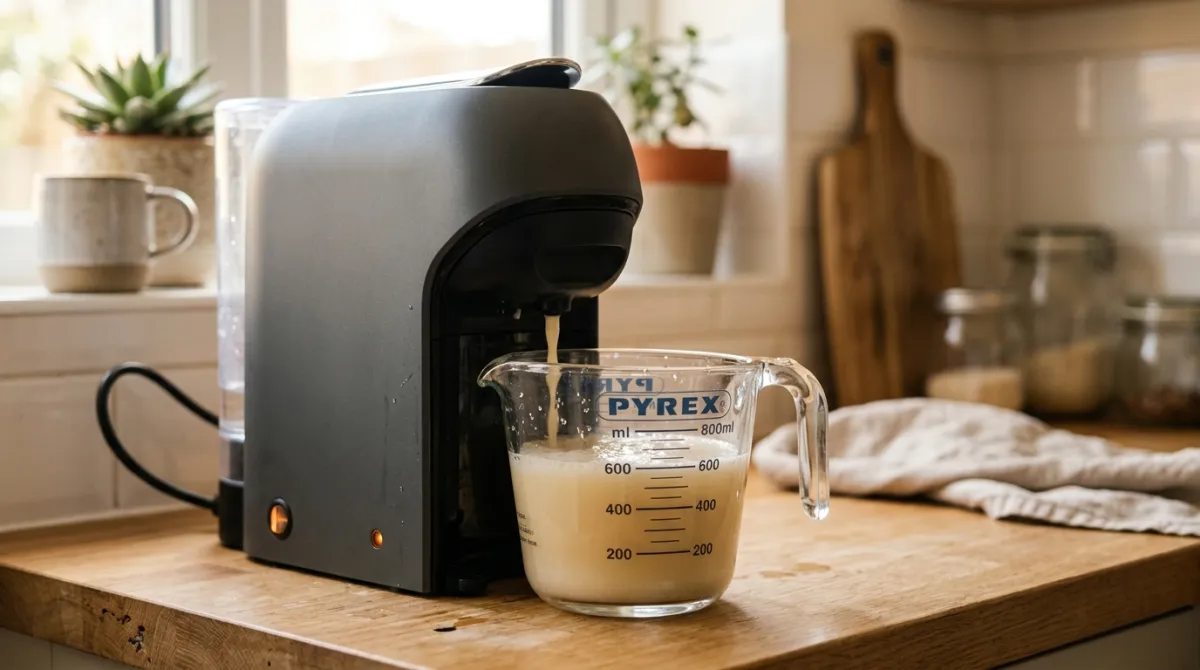
Step by step for OriginalLine
- Remove any capsule and empty the drip tray and used-capsule container.
- Fill the water tank with descaling solution, then top up with fresh water to the level your descaler specifies.
- Place a large container (at least one liter) under the coffee outlet.
- Enter descale mode. On many OriginalLine machines you turn the machine on, then press both buttons together for about three seconds. The lights will blink to confirm.
- Press a button to start the cycle. The machine pushes the solution through into your container.
- When the tank empties, pour the collected liquid back in and run it through once more if your manual calls for it.
Rinsing the OriginalLine
Now flush out every trace of descaler. Refill the tank with plain, fresh water and run one or two full cycles through the same outlet. I always do two rinses because a faint chemical taste in the next espresso is a dead giveaway you rushed this step. Finally, exit descale mode using the same button combo, wipe down the machine, and you’re done.
How do you descale a Nespresso Vertuo machine?
Vertuo machines (VertuoPlus, Vertuo Next, and the rest) use a single-button interface, so the trigger is different from OriginalLine. The cleaning chemistry is identical; only the controls change. As always, check your specific model’s manual, because the hold-time can differ slightly between Vertuo generations.
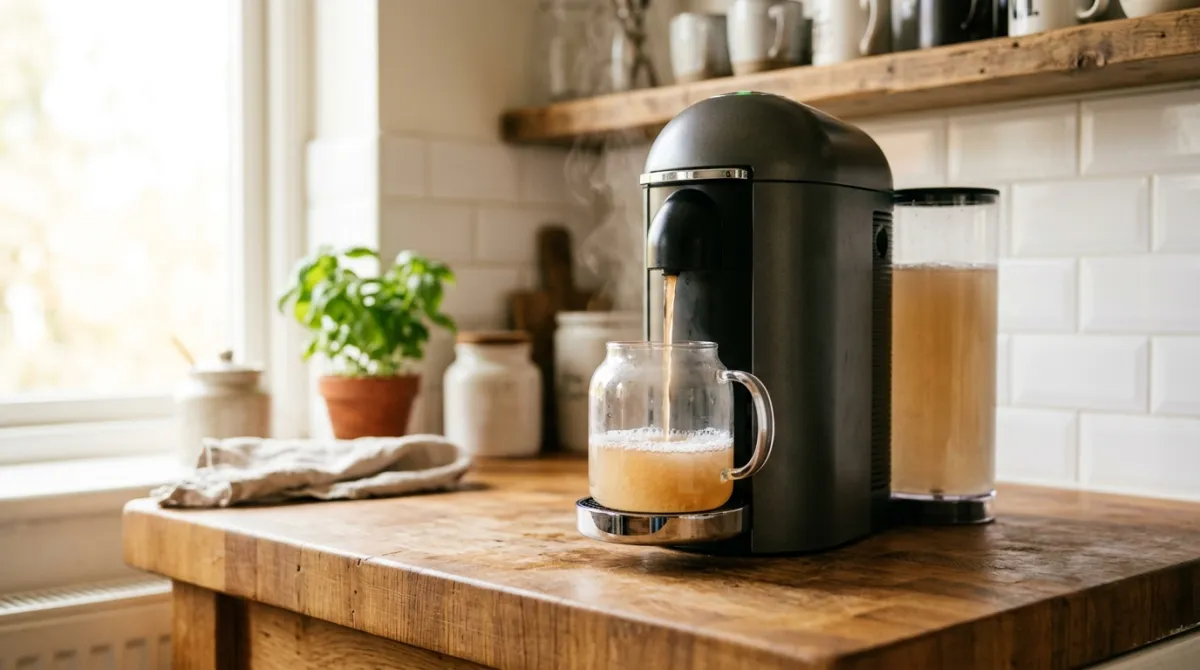
Step by step for Vertuo
- Eject and remove any used capsule, then empty and replace the drip tray.
- Fill the tank with descaling solution plus fresh water per the label, and lock the machine head shut.
- Put a large container (one liter or more) under the spout.
- Enter descale mode. On most Vertuo machines you press and hold the single button for around seven seconds until it blinks a distinct color to confirm.
- Press the button once to start. The Vertuo runs the solution through in bursts. Let it finish completely.
Rinsing the Vertuo
Empty your container, rinse it, and refill the water tank with clean water only. Run the cycle again to flush the lines, and repeat once more for good measure. Press and hold the button again to exit descale mode. On my Vertuo Next, the light returns to a steady white once it’s back in normal brewing mode, which is my cue that everything’s rinsed and ready.
How often should you descale a Nespresso?
Descale roughly every three months as a baseline. That’s the rhythm I follow, and it keeps both my machines pouring hot and fast. But three months is a guideline, not a hard rule. Your real schedule depends on two things: how much you brew and how hard your water is.
If you’re pulling four or five shots a day, or you live somewhere with very hard water, scale builds faster and you may need to descale monthly. Soft water and a shot or two a day can stretch the interval longer. Many machines also track cycles and flash a descale alert; treat that light as your reminder and don’t ignore it like I once did. The same logic applies across pod machines, and I break down the timing further in how to descale a Keurig.
One more tip: using filtered water from the start dramatically slows scale buildup, which means fewer descaling sessions overall.
Frequently asked questions
Can I use vinegar to descale my Nespresso?
You can, but I’d advise against it. Vinegar dissolves scale, yet it can leave a lingering odor in the water lines and may degrade rubber seals over repeated use. A Nespresso descaling solution or citric-acid descaler cleans just as effectively without those risks, so it’s the safer long-term choice for your machine.
Why does my coffee taste off after descaling?
Almost always, it means descaler is still in the lines. Run one or two extra clean-water rinse cycles until the taste disappears. A chemical or sour note usually signals a rushed rinse. If flavor problems persist beyond that, the issue may be your beans or extraction, which I cover in why is my coffee bitter or sour.
How long does descaling a Nespresso take?
Plan for about 15 to 20 minutes start to finish. The actual descale cycle and the two rinse cycles run mostly unattended, so your hands-on time is only a few minutes: filling the tank, positioning a container, and pressing the buttons. It’s a quick job that’s easy to fit into a morning routine.
Do I really need Nespresso’s own descaling solution?
No, not strictly. Nespresso’s kit is convenient because it’s pre-measured, but any quality citric-acid-based descaler does the same chemical work for less. Just follow the dilution instructions on the bottle and rinse thoroughly afterward. What matters is using a proper descaler rather than an improvised acid like plain vinegar.
Descaling a Nespresso is one of those five-minute habits that pays you back in better-tasting coffee and a machine that lasts years longer. Get the button combo right for your line, use a proper descaler, rinse twice, and repeat every few months. Once you’ve done it once, it becomes second nature. For more tips on keeping your gear in top shape and brewing better cups, browse my more brewing guides.
Keep brewing
Dial in your next cup with Brew Better Co.
Tested ratios, methods, and gear notes from a real home kitchen. New guides added regularly.
Explore all guides