milk drinks
How to Make a Chai Latte: 3 Easy Methods at Home

How, in brief: brew a strong batch of spiced black tea, then combine it with steamed, gently sweetened milk. That’s the whole trick. A chai latte is nothing more than masala chai, black tea simmered with warm spices, softened by hot milk. I’ve been making these most mornings for years, and I still love how forgiving the drink is. You can start from a bottled concentrate, strong tea bags, or whole spices in a pan. Each route gives you a slightly different cup, and none of them require fancy gear. Let me walk you through all three, plus the iced version I lean on in summer.
Key Takeaways
- A chai latte is spiced black tea combined with steamed, usually sweetened, milk.
- Three home routes work: bottled concentrate, strong tea bags, or whole spices from scratch.
- The classic masala chai spice mix is cardamom, cinnamon, ginger, cloves, and black pepper.
- Add a shot of espresso to turn any chai latte into a dirty chai.
- It’s caffeinated from black tea, but noticeably milder than a cup of coffee.
What exactly is a chai latte?
A chai latte is spiced black tea combined with steamed milk, usually sweetened to taste. The tea base is masala chai, meaning “mixed-spice tea” in Hindi. The spices do the heavy lifting here. A traditional blend leans on cardamom, cinnamon, fresh ginger, cloves, and black pepper, with some cooks adding star anise or nutmeg for depth.
In my experience, the word “latte” throws people off. It suggests espresso, but a standard chai latte contains no coffee at all. It’s simply tea and milk. The espresso version has its own name, the dirty chai, which I’ll cover below. If you want the full breakdown of that variation, I’ve written a separate guide on what a dirty chai is.
The balance you’re chasing is three-way: tea strength, spice warmth, and milky sweetness. Get those in proportion and the drink sings. Too much milk and it turns bland. Too little and the spices bite. I aim for a base that tastes almost too strong on its own, because the milk will mellow it considerably.
How do you make a chai latte from concentrate?
The fastest route is a bottled chai concentrate mixed with steamed milk in roughly equal parts. This is my weekday shortcut when I’m short on time. Concentrate is pre-brewed, pre-spiced, and often pre-sweetened, so the flavour work is already done. You just add heat and milk.
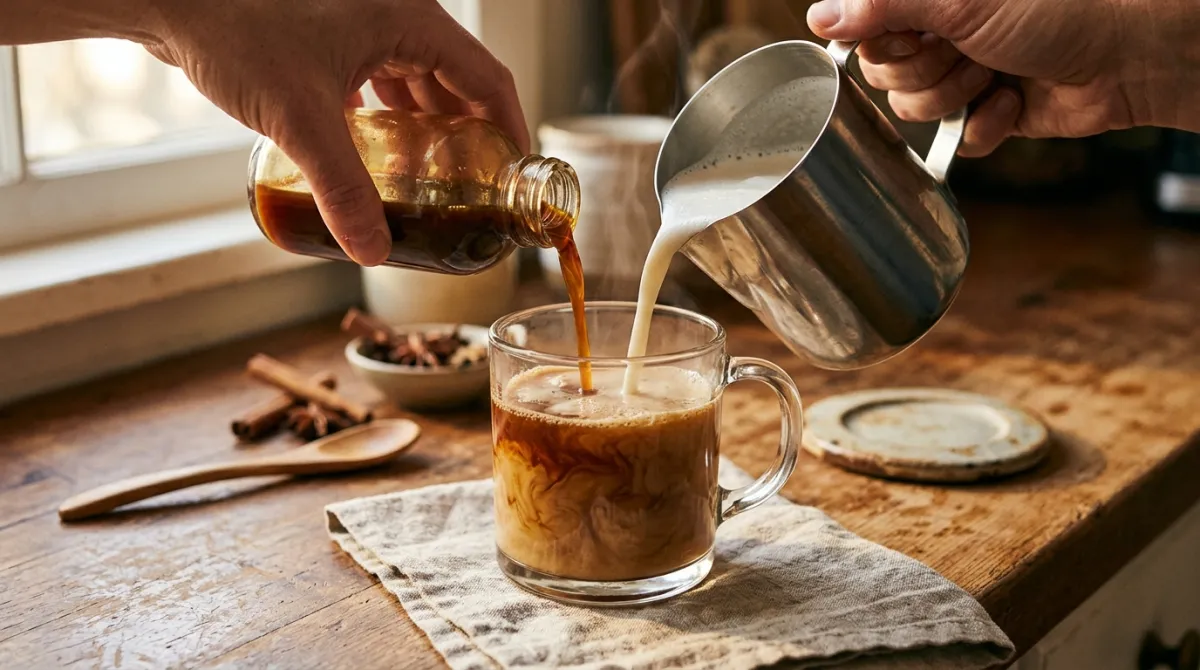
Here’s my process. Pour about half a cup of concentrate into your mug. Steam or warm the same amount of milk, then combine. If you own an espresso machine or a milk frother, steam the milk to around 60 to 65 degrees Celsius for that silky texture. No frother? Heat the milk in a saucepan and whisk it hard, or shake it in a sealed jar and microwave briefly.
Adjusting strength and sweetness
Concentrates vary wildly between brands, so taste before you commit. If the result feels weak, tip the ratio toward more concentrate and less milk. If it’s cloying, most bottled versions already carry added sugar, so skip any extra sweetener entirely. I usually cut back the milk slightly, because I like the spice to stay forward rather than getting buried.
How do you make a chai latte from tea bags?
The tea-bag method means steeping chai bags far stronger than you would for plain tea, then topping with frothed milk. This is the sweet spot for most home brewers: cheap, quick, and more flavourful than concentrate. The key word is strong. One bag in a full mug won’t cut it.
Use two chai tea bags per serving and a smaller volume of water, maybe two-thirds of a cup. Let them steep for five minutes, longer than the box suggests, so the spices fully bloom. Squeeze the bags out. Then froth your milk and pour it over the concentrated tea. For the milk side, my walkthrough on how to froth milk covers every tool from a French press to a handheld wand.
I’ve found that steeping the bags directly in a splash of hot milk, rather than water, gives a rounder, creamier result. Simmer the bags in a small pan of milk and water combined for a few minutes, then strain. It edges closer to the scratch method without the fuss of measuring spices.
How do you make chai latte from scratch with whole spices?
Making chai from scratch means simmering whole spices with black tea and milk in a pan, and it produces the deepest flavour by far. This is my weekend ritual. It takes ten minutes and fills the kitchen with an incredible smell. Whole spices release oils that pre-ground blends simply can’t match.
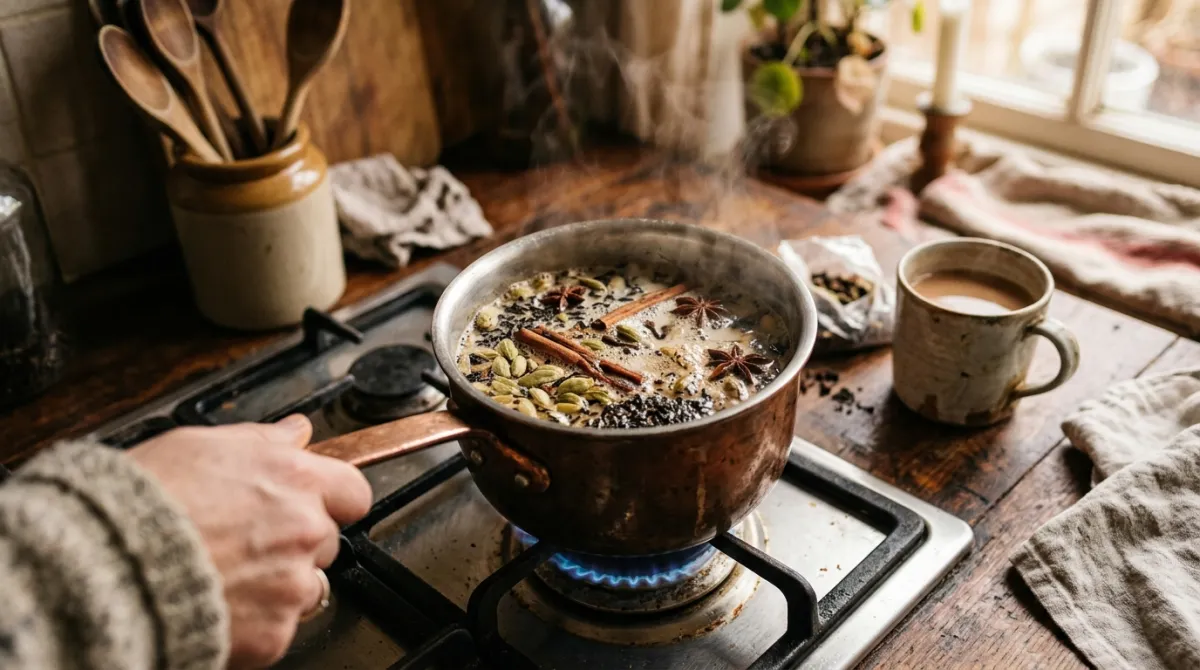
Here’s the method I use for two cups. Lightly crush four cardamom pods, a cinnamon stick, a few cloves, a couple of black peppercorns, and a thumb of sliced fresh ginger. Add them to a cup of water and bring to a gentle simmer for five minutes. Then add two teaspoons of loose black tea, such as Assam, and simmer another two minutes. Pour in a cup of milk, add sugar to taste, and heat until it just starts to rise. Strain into your mugs.
Building your own spice ratio
Cardamom is the spice that defines chai, not cinnamon, which most Western recipes over-index on. When I dialled back the cinnamon and doubled the cardamom, the drink suddenly tasted like the chai I’d had from street vendors rather than a spiced dessert. Ginger brings the heat, pepper brings the tingle, and cloves add that dark, almost medicinal note in the background. Start conservative with cloves; they dominate fast.
If you want a proper microfoam cap on your scratch chai, the same technique I use for coffee drinks applies. My guide on how to steam milk breaks down the swirl-and-stretch method that gives you that glossy texture.
How do you make an iced chai latte?
An iced chai latte is made by brewing the spiced tea extra strong, cooling it, then pouring it over milk and ice. Heat dilutes flavour once ice melts, so you have to over-brew the base. I make a batch of concentrate, whether from scratch, bags, or bottle, and keep it in the fridge for the week.

The build is simple. Fill a tall glass with ice. Add your cold chai concentrate, roughly a third of the glass. Top with cold milk. Stir. Because there’s no heat to carry the spice, cold chai can taste flat, so I sweeten iced versions a touch more than hot ones and lean on a stronger tea base. Cold-frothed milk on top is a nice finish if you have a frother that handles cold liquid.
For a dirty iced chai, pull a shot of espresso, chill it, and pour it in. The bitterness cuts through the sweetness beautifully on a hot day. That coffee-and-chai combination sits right between two of my favourite drinks, and if espresso-and-milk builds interest you, my how to make a latte guide covers the base skills.
Frequently asked questions
Does a chai latte contain caffeine?
Yes, a chai latte contains caffeine because it’s built on black tea. That said, it’s noticeably milder than coffee. A typical serving carries roughly a third to half the caffeine of a similar cup of drip coffee, depending on how strong you brew the tea and how long you steep it. The spices and milk contribute none.
What’s the difference between a chai latte and a dirty chai?
A dirty chai is a chai latte with a shot of espresso added. That’s the only difference. The espresso brings coffee bitterness and a caffeine boost, cutting through the sweet, milky spice. Order it “double dirty” and you get two shots. Everything else, the tea base, spices, and steamed milk, stays exactly the same.
Can I make a chai latte without dairy milk?
Absolutely. Oat milk is my top pick because its natural sweetness and body suit the spices well, and it froths reliably. Almond and soy work too, though soy can occasionally split when it hits hot, acidic tea. Warm plant milk gently and add it to the tea rather than boiling the two together to avoid curdling.
How much sugar should I add to a chai latte?
Start with about one teaspoon per cup and adjust from there. Traditional masala chai runs fairly sweet, which balances the peppery spice. Bottled concentrates often arrive pre-sweetened, so taste before adding anything. I prefer honey or a little brown sugar over white, since the caramel notes complement the cinnamon and cloves in the blend.
Once you’ve nailed the base recipe, the fun is in tuning it: shifting the spice ratio, trying different milks, or going dirty with a shot of espresso. There’s no single correct cup, only the one you keep coming back to. Brew a batch, taste as you go, and adjust. For more drinks like this one, browse my collection of more brewing guides.
Keep brewing
Dial in your next cup with Brew Better Co.
Tested ratios, methods, and gear notes from a real home kitchen. New guides added regularly.
Explore all guides