milk drinks
How to Make an Iced Latte at Home (Barista Method)

To make an iced latte, pull a shot of espresso, then pour it over a glass of cold milk and ice. That’s the whole drink. No steaming, no thick foam, just strong coffee meeting cold milk. I aim for roughly one part espresso to four or five parts milk, then adjust to taste. After ten years of daily brewing, this is still the quickest cafe-quality drink I make at home.
Key Takeaways
- An iced latte is espresso plus cold milk over ice, with no steamed foam.
- A good starting ratio is 1 part espresso to about 4-5 parts cold milk.
- A double shot is about 36 mL of espresso pulled from roughly 18 grams of coffee.
- No espresso machine? Use strong moka pot, AeroPress, or cold brew concentrate instead.
- Cool your shot or use plenty of ice so the drink doesn’t turn watery.
What is an iced latte, exactly?
An iced latte is chilled espresso combined with cold milk and ice. Unlike a hot latte, there’s no steamed microfoam sitting on top. The milk stays cold and pourable, which keeps the drink light and refreshing. It’s one of the simplest coffee builds you can master, and it forgives small mistakes.
The magic is the contrast. Bitter, concentrated espresso hits sweet, cold milk, and the ice keeps everything crisp. In my experience, people who find hot lattes too heavy often love the iced version because the cold mutes some of the bitterness. If you already know how to make a latte, you’re most of the way there. You just skip the steaming step and add ice.
Here’s a question worth asking early: does the milk need to be foamed? No. A little cafe foam is optional and cosmetic. The core drink is espresso, milk, and ice, full stop.
How is an iced latte different from iced coffee?
An iced latte uses espresso as its base, while iced coffee uses regular brewed coffee. That single difference changes the flavor, the strength, and the texture. Espresso is concentrated and syrupy, so a latte tastes richer and creamier. Brewed coffee is more diluted, so iced coffee tastes lighter and more, well, coffee-forward.
People mix these two up constantly, and cafes don’t always help. A latte is espresso plus milk. Iced coffee is brewed coffee, often served black or with a splash of milk. If you want the diluted, all-day-sipping style, my guide on how to make iced coffee at home covers that route.
Milk ratio is the other tell. An iced latte leans milky, usually four to five parts milk to one part espresso. Iced coffee usually keeps milk minimal, letting the brewed coffee lead.
Which one should you make?
Choose an iced latte when you want something creamy, dessert-adjacent, and satisfying. Choose iced coffee when you want a lighter, more hydrating drink you can refill all afternoon. I brew iced coffee for hot mornings when I’m working, and I make an iced latte when I want a treat with lunch.
How do you make an iced latte step by step?
Making an iced latte takes about four minutes once your grinder and machine are ready. The core steps: pull a double espresso, fill a glass with ice and cold milk, pour the shot over the top, then stir. That’s it. Below is the exact routine I run every day.
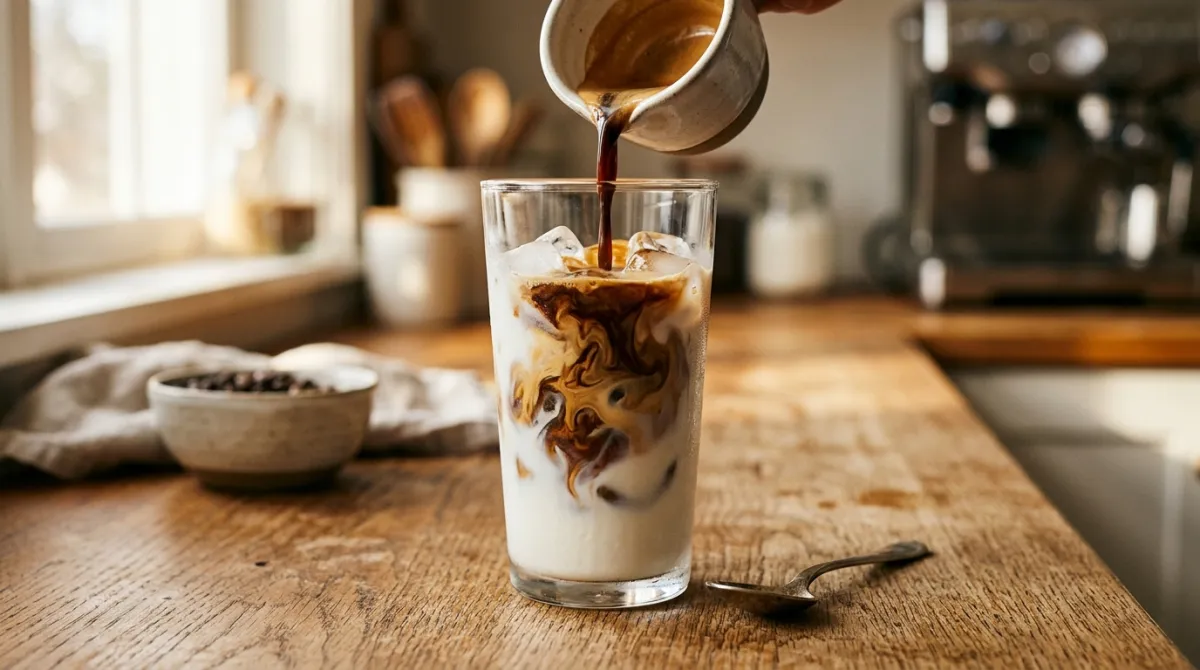
What you need:
- 18 grams of coffee, ground fine for espresso
- Cold milk of your choice (about 180 mL)
- A tall glass and plenty of ice
- Optional: a scale and a shaker
Follow these steps in order:
- Grind and pull a double shot. Aim for about 36 mL of espresso from your 18 grams. This is your flavor base, so dial it in until it tastes balanced, not sour or burnt.
- Fill a tall glass with ice, right to the top. More ice means slower melting and less dilution.
- Pour in your cold milk, roughly 180 mL, or about four to five parts milk to one part espresso.
- Pour the espresso over the milk and ice. Watch it swirl. That layered look is half the fun.
- Stir well and taste. Too strong? Add milk. Too milky? Pull a bit more espresso next time.
Should you cool the espresso first?
Hot espresso over ice melts it fast, and melted ice waters down your drink. I handle this two ways. Either I pull the shot directly over a full glass of ice so it chills instantly, or I pull it into a small cup, stir it for fifteen seconds to knock the heat down, then pour. Both work. On busy mornings, I just pour straight over lots of ice and move on.
What milk works best?
Whole milk gives the creamiest, most cafe-like result, and it’s my default. Oat milk is my favorite non-dairy option because the barista versions blend smoothly and stay glossy. Almond and skim milk both work but taste thinner. Whichever you pick, use it cold, straight from the fridge. Cold milk keeps the drink crisp and helps the espresso layer instead of muddying together instantly.
How do you make an iced latte without an espresso machine?
You can absolutely make an iced latte without an espresso machine by brewing a strong, concentrated coffee base instead. The trick is concentration. Regular drip coffee is too weak and will taste watery over ice and milk. You need something punchy enough to stand up to cold milk.
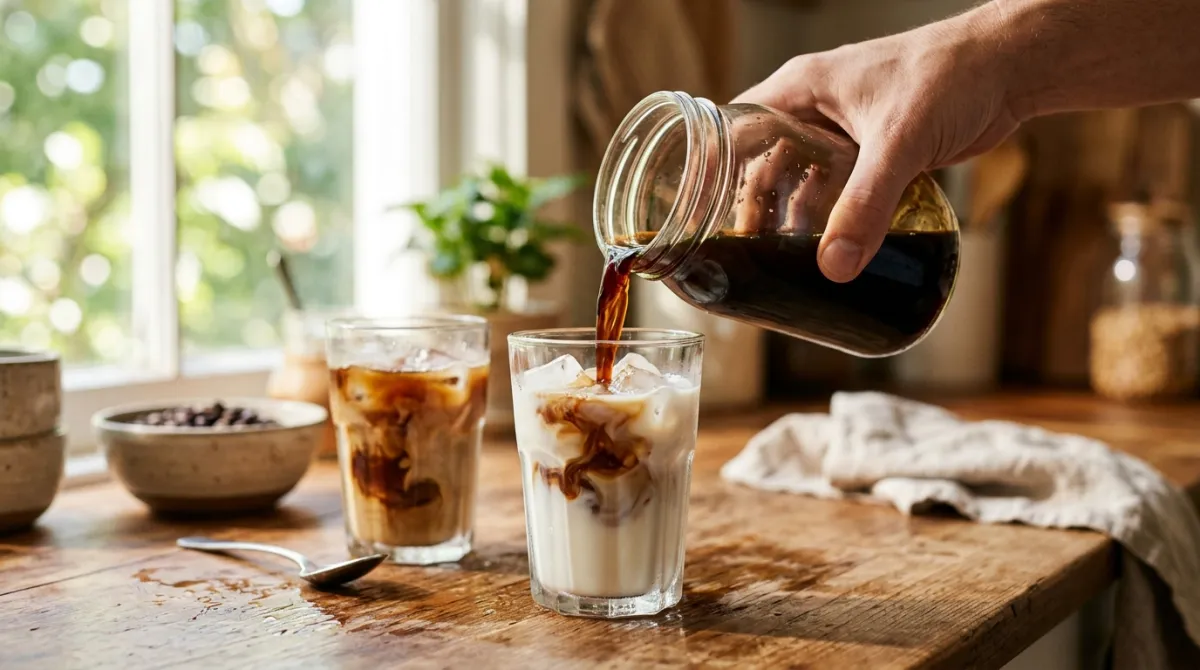
Three reliable methods, all of which I’ve used for years:
- Moka pot: This stovetop brewer makes a thick, intense coffee that’s close to espresso in strength. Brew a batch, let it cool, and use it as your base. It’s my top no-machine pick.
- AeroPress: Brew a concentrated cup using a fine grind and less water. Push it strong. One AeroPress shot roughly stands in for a single espresso.
- Cold brew concentrate: Steep coarse coffee in cold water for 12 to 18 hours, then strain. The concentrate is smooth, low in acidity, and keeps in the fridge for days.
Once you have your concentrate, the build is identical. Fill a glass with ice, add cold milk, pour the concentrate over the top, and stir. If you’re brewing the moka pot fresh, cool it first or your ice vanishes. I usually make a batch and keep it chilled so an iced latte is thirty seconds away.
Getting the strength right
Because these methods vary, taste as you go. Start with about 60 mL of your concentrate to 180 mL of cold milk. If it tastes flat, use less milk or more concentrate. Cold brew concentrate especially can be strong, so lean on your palate rather than fixed numbers.
What flavor and syrup variations can you add?
Flavored syrups turn a plain iced latte into a cafe-style treat, and you only need a small amount. I add the syrup to the milk before the espresso so it mixes evenly. Start with a single teaspoon or pump, taste, and build from there. Most cafe drinks are sweeter than people realize, so a little goes a long way at home.

My go-to variations:
- Vanilla: The classic. A splash of vanilla syrup rounds out the espresso beautifully. If this is your favorite, I have a full breakdown on how to make a vanilla latte.
- Caramel: Rich and dessert-like. Drizzle a little inside the glass for looks, too.
- Cinnamon: Stir a pinch into the milk for warmth without sugar.
- Hazelnut or mocha: Add nutty depth, or stir in a spoon of chocolate for an iced mocha.
Want a small barista flourish? You can lightly froth a couple tablespoons of cold milk and float it on top for a foam cap. It isn’t required, but it looks great. My guide on how to steam milk explains the texture side if you want to go further with hot drinks later.
A note on homemade syrups
Making simple syrup at home is easy and cheaper than buying bottles. Dissolve equal parts sugar and hot water, then add vanilla extract or a cinnamon stick as it cools. Store it in the fridge. In my kitchen, a jar of homemade vanilla syrup has replaced every store-bought bottle, and I control exactly how sweet each drink gets.
Frequently asked questions
Can I use instant coffee for an iced latte?
Yes, in a pinch. Mix a heaped teaspoon of instant coffee with a small splash of hot water to make a concentrated base, then stir until fully dissolved. Pour it over ice and cold milk. It won’t match espresso for body or crema, but it’s fast, and honestly better than a watery drink when you’re short on gear.
Why is my iced latte watery?
Watered-down iced lattes almost always come from melting ice. Pouring hot espresso over too little ice melts it quickly, diluting everything. Fix it by filling the glass with ice, cooling your shot before pouring, or using more coffee concentrate. Cold milk instead of room-temperature milk helps too, since warm ingredients speed up melting in the glass.
How much caffeine is in an iced latte?
A standard iced latte made with a double espresso contains roughly the caffeine of two shots, similar to a hot latte of the same size. If you want less, use a single shot or decaf beans. If you want more punch without more milk, add a third shot rather than changing your milk ratio, which keeps the drink balanced.
Can I make an iced latte ahead of time?
Partly. I recommend prepping your coffee base ahead, whether that’s cold brew concentrate or cooled moka pot coffee, and storing it in the fridge. Assemble the drink fresh over ice when you want it. A fully built iced latte left sitting will dilute as the ice melts and can separate slightly, so build it to order for the best texture.
Once you’ve nailed the basic build, an iced latte becomes the easiest way to bring cafe quality into your own kitchen. Play with your ratio, try oat milk against whole, and dial in a syrup you love. That’s really all there is to it. If you’re ready to expand your cold-coffee lineup and sharpen your technique, explore more more brewing guides and keep experimenting.
Keep brewing
Dial in your next cup with Brew Better Co.
Tested ratios, methods, and gear notes from a real home kitchen. New guides added regularly.
Explore all guides