methods
How to Make Drip Coffee: A Simple Home Guide
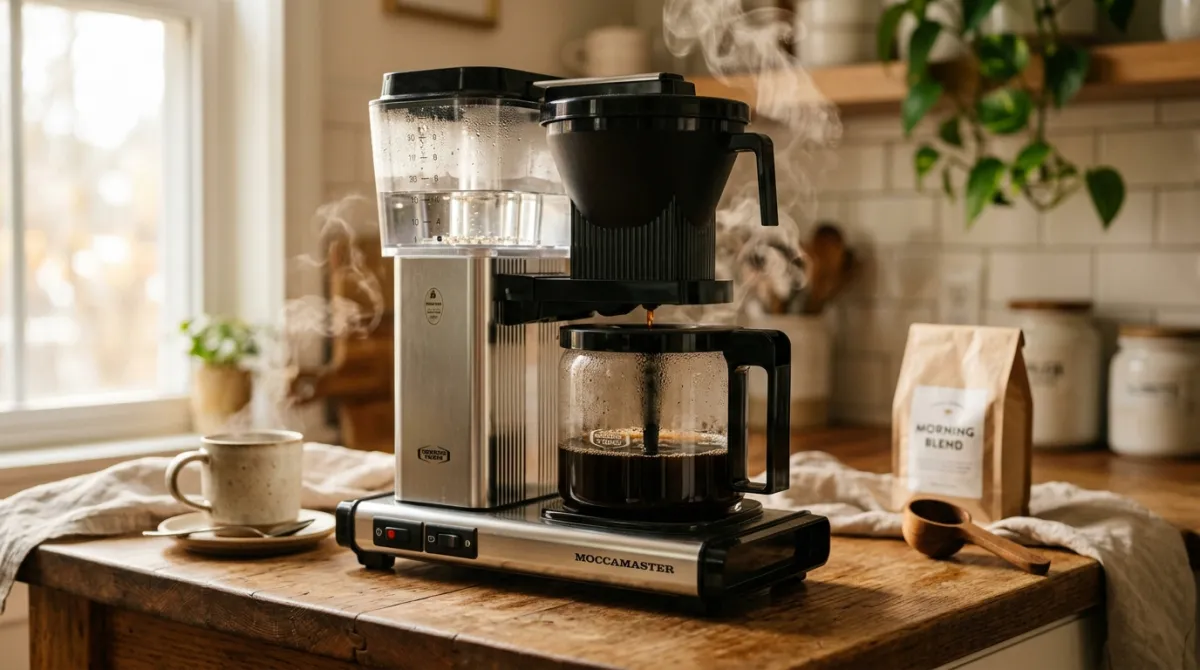
To make drip coffee, measure your grounds, add fresh water to the reservoir, and let the machine drip a full pot. That is the whole job in one sentence. But the details decide whether you get a bright, balanced cup or a bitter, watery letdown. After ten years of brewing a pot almost every morning, I have learned that drip coffee lives or dies on three things: a fresh medium grind, an accurate coffee-to-water ratio, and a genuinely clean machine. Get those right and even a modest automatic drip maker will beat most cafe coffee. Below I walk through my exact routine, the numbers I actually weigh out, and the small mistakes that quietly ruin an otherwise good pot.
Key Takeaways
- Use a coffee-to-water ratio near 1:16 by weight for a balanced, clean cup.
- A medium grind and fresh, filtered water at roughly 195 to 205°F do most of the work.
- Roughly 15 g (about 3 level tablespoons) of coffee suits one 8 oz cup.
- Level the grounds, use a clean filter, and never leave the pot on the hot plate.
- Stale pre-ground coffee is the single most common reason home drip tastes flat.
What Do You Need to Make Drip Coffee?
Drip coffee needs surprisingly little gear: an automatic drip machine, a filter, fresh coffee, and clean water. That is genuinely it. The machine heats water, showers it over the grounds, and gravity pulls the brew through a filter into the carafe. Your job is to feed it good inputs.
Here is what I keep on the counter. A drip maker with a decent shower head that wets the whole bed evenly. Paper or reusable mesh filters. A bag of whole-bean coffee, ideally roasted within the last three or four weeks. And a small kitchen scale, which is the upgrade that changed my coffee the most.
Why a scale beats the scoop
For years I used the plastic scoop that came with the machine, and my coffee was inconsistent from day to day. The reason is simple: a scoop measures volume, but roast level and grind size change how much coffee fits in that space. Weighing removes the guesswork. A cheap scale that reads to one gram costs less than two bags of beans and pays you back every single morning.
If you prefer to keep using a spoon, that is fine, just be aware the numbers drift a little between roasts. I cover the conversion in detail in my guide to how many tablespoons of coffee per cup, which is handy when you do not want to fetch the scale.
What Is the Best Coffee-to-Water Ratio for Drip?
The best drip ratio sits between 1:15 and 1:17 by weight, and 1:16 is the safe default most palates enjoy. That means 1 gram of coffee for every 16 grams of water. It brews a cup with body and sweetness but without the muddy heaviness you get when you overload the filter basket.
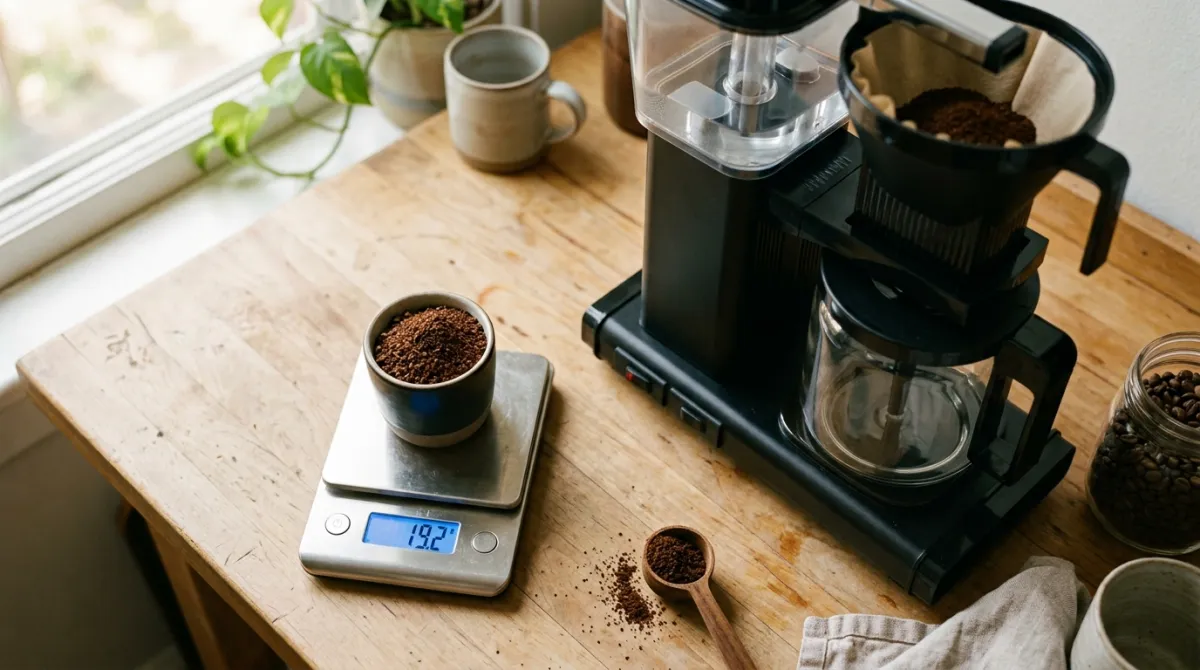
Let me put real numbers on it, because ratios feel abstract until you weigh them. Water is easy: 1 milliliter weighs 1 gram, so a level cup of water is close to 237 g. At 1:16, that 8 oz cup wants about 15 g of coffee, which is roughly 3 level tablespoons. Want a full pot? Scale it up. For 1,000 g of water (about 34 oz), weigh 60 to 65 g of coffee.
A quick reference you can trust
From my own brew log across dozens of pots, here is the range I keep coming back to. Keep the tablespoon and gram figures consistent by remembering one anchor: 1 level tablespoon of ground coffee weighs roughly 5 g. Everything else scales from there.
| Batch size | Water | Coffee | Tablespoons |
|---|---|---|---|
| One 8 oz cup | 237 g | 15 g | 3 tbsp |
| Two 8 oz cups | 474 g | 30 g | 6 tbsp |
| Smaller 6 oz cup | 178 g | 11 g | 2¼ tbsp |
If you want to go deeper on dialing this in, I break down the full method in my dedicated coffee to water ratio guide.
What Grind Size Works Best for Drip Coffee?
Automatic drip machines want a medium grind, roughly the texture of coarse sand or table salt. This is the grind that lets water pass through the bed at the right speed. Too fine and the water stalls, over-extracts, and turns bitter. Too coarse and it rushes through, leaving a thin, sour cup.
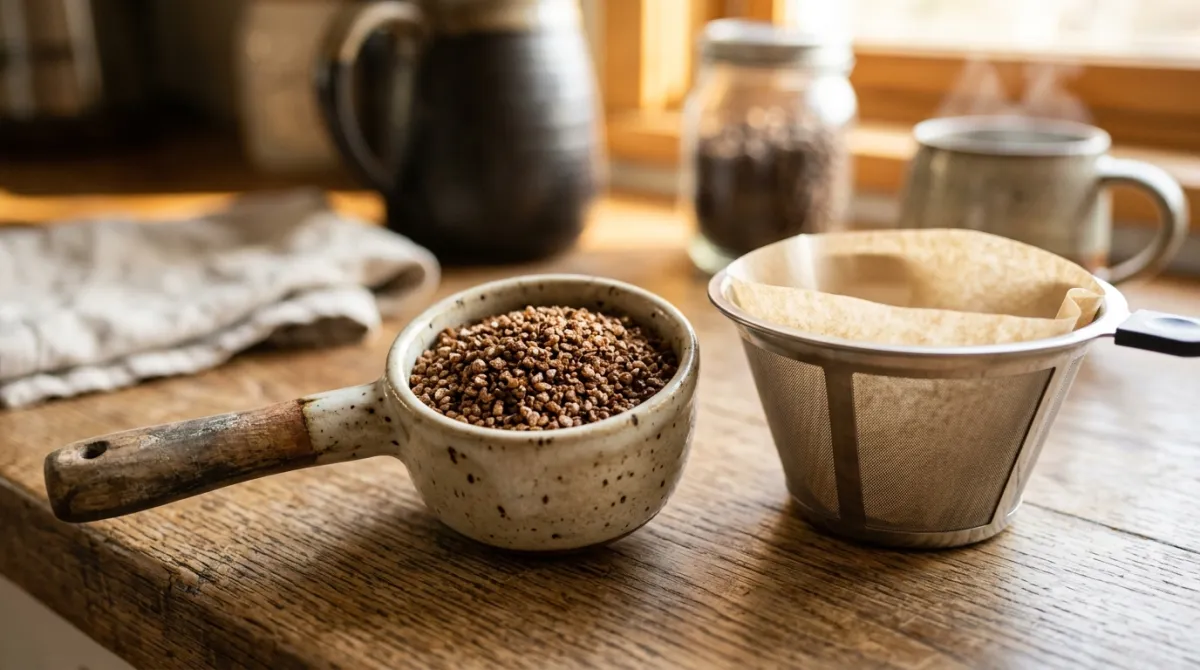
Grind fresh if you possibly can. Whole beans hold their aromatic oils until you break them open, and those oils fade fast once ground. In my experience the difference between beans ground that morning and a week-old open bag is night and day, easily bigger than switching machines.
Reading your cup to adjust the grind
You do not need lab gear to tune grind. Taste tells you everything. Sharp, sour, and thin usually means the grind is too coarse or the water passed through too quickly, so go finer. Harsh, bitter, and drying on the tongue points to over-extraction, so go coarser. Change one variable at a time and give each pot a fair taste before adjusting again.
Most drip-coffee advice obsesses over the machine, but I have found that fixing the grind fixes more complaints than any hardware upgrade. People blame a cheap brewer for bitterness that a slightly coarser grind would have solved in one morning. The machine sets the ceiling; the grind decides whether you reach it.
How Do You Make Drip Coffee Step by Step?
A full pot of drip coffee takes about five minutes of hands-on work and roughly the same again for the machine to brew. The sequence below is exactly what I do every morning, and it removes almost every common failure point before it happens.
The step-by-step method
- Start with fresh, filtered water. Fill the reservoir with cold, filtered water. Coffee is roughly 98 percent water, so if your tap tastes off, your coffee will too.
- Insert a clean filter. Seat a paper filter in the basket. A quick rinse with hot water removes any papery taste and warms the machine.
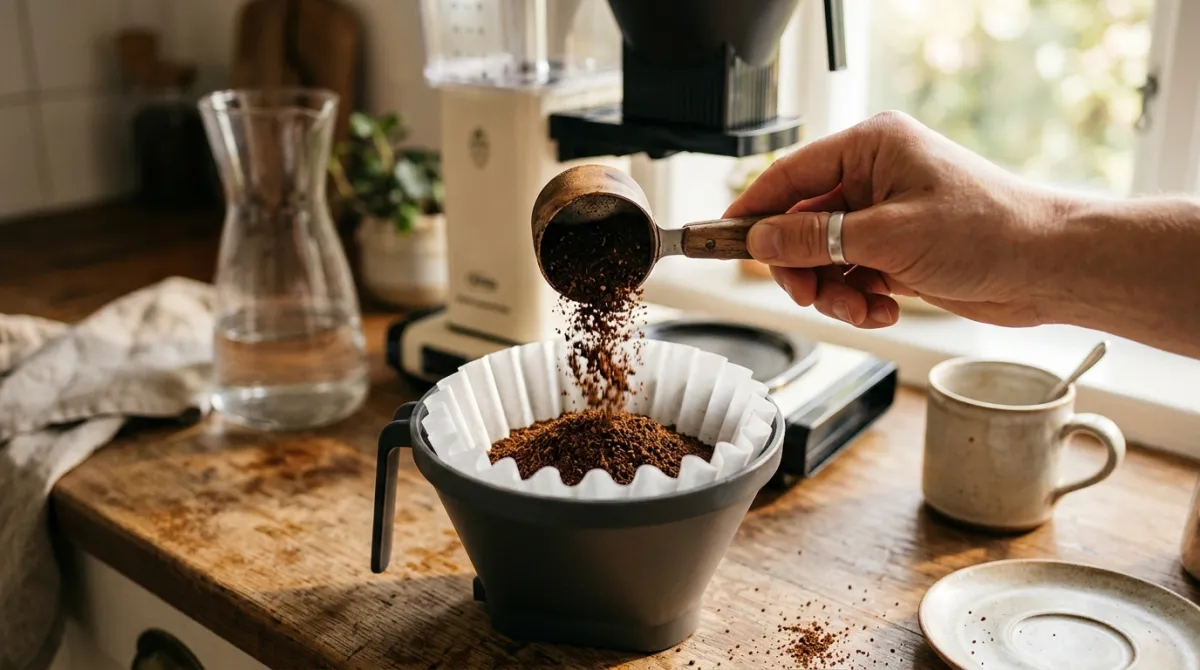
- Weigh and add the grounds. For a 1:16 cup, weigh 15 g per 8 oz of water. Grind medium if you are grinding fresh.
- Level the bed. Give the basket a gentle shake so the grounds sit flat. An even bed means water wets all the coffee equally instead of channeling.
- Brew. Start the machine. A good drip maker heats water to about 195 to 205°F, the sweet spot for extraction.
- Decant and serve. Once brewing finishes, pour and drink. Do not leave the carafe stewing on the hot plate.
Good machines reach that 195 to 205°F window on their own, hot enough to pull out sugars and acids without scorching the grounds. Many budget models brew cooler, which is a common and sneaky cause of weak, sour coffee at home.
Where drip differs from other methods
Drip is hands-off, which is its charm. If you prefer the fuller, heavier body of an immersion brew, the trade-offs are worth understanding before you commit to one machine. I lay them out in my comparison of French press vs drip coffee.
What Are the Most Common Drip Coffee Mistakes?
The most common drip mistakes are using stale coffee, brewing at the wrong ratio, and neglecting to clean the machine. Any one of these can wreck a pot even when everything else is perfect. The good news is that all three are easy and cheap to fix once you know to look for them.
Here are the culprits I see most often, and how to shut each one down.
Stale or pre-ground coffee
Ground coffee goes flat within days because the exposed surface lets aromatics escape and oxygen move in. Buy whole beans, grind per pot, and store them in an airtight container away from heat and light. This one change rescues more cups than anything else on this list.
The wrong ratio or a dirty machine
Guessing the amount with a scoop leads to weak or overpowering coffee, so weigh instead. And oils and mineral scale build up inside the machine over time, souring the flavor and slowing the brew. I descale mine roughly monthly, and my full routine lives in this guide on how to clean a coffee maker with vinegar.
Leaving coffee on the hot plate
A hot plate keeps cooking your coffee, and within twenty minutes it turns bitter and stewed. If you are not drinking it right away, pour the pot into an insulated carafe. Your last cup will taste like your first.
Frequently asked questions
How much coffee do I use per cup of drip?
Use about 15 g of coffee, roughly 3 level tablespoons, for one 8 oz cup at a 1:16 ratio by weight. As a rough volume shortcut, count on 2 tablespoons per smaller 6 oz cup. Weighing beats scooping because roast and grind change how much coffee fits in a spoon, which quietly shifts your strength.
Is drip coffee weaker than other brewing methods?
Not inherently. Drip coffee strength depends entirely on your ratio, not the method. A 1:16 brew tastes full and balanced, while a 1:18 or higher ratio tastes noticeably thinner. If your drip coffee seems weak, add more grounds or grind slightly finer before blaming the machine, since both raise extraction and body.
What water temperature should drip coffee brew at?
Drip coffee brews best between 195 and 205°F. Below that range, water under-extracts and the cup tastes sour and weak. Above it, you risk scorched, bitter flavors. Good automatic machines reach this window on their own, but many budget models brew cooler, which is a frequent hidden cause of disappointing coffee at home.
How often should I clean my drip coffee maker?
Rinse the removable parts after every brew, and descale the machine roughly once a month with vinegar or a descaling solution. Mineral scale and old coffee oils build up fast, souring flavor and slowing the drip. In hard-water areas, lean toward the more frequent end of that schedule to keep the water hot and the taste clean.
Drip coffee rewards small, repeatable habits far more than expensive equipment. Weigh your coffee near a 1:16 ratio, grind medium and fresh, brew with clean filtered water in the 195 to 205°F range, and keep the machine clean. Do that consistently and your morning pot will be reliably good rather than a daily gamble. Start with the ratio, since it delivers the biggest jump in quality, then refine your grind by taste over a week of pots. Once your drip routine feels automatic, it is worth exploring how the same beans behave in other brewers. For that, browse more brewing guides and try one new method this month.
Keep brewing
Dial in your next cup with Brew Better Co.
Tested ratios, methods, and gear notes from a real home kitchen. New guides added regularly.
Explore all guides