espresso drinks
Red Eye Coffee: What It Is and How to Make One
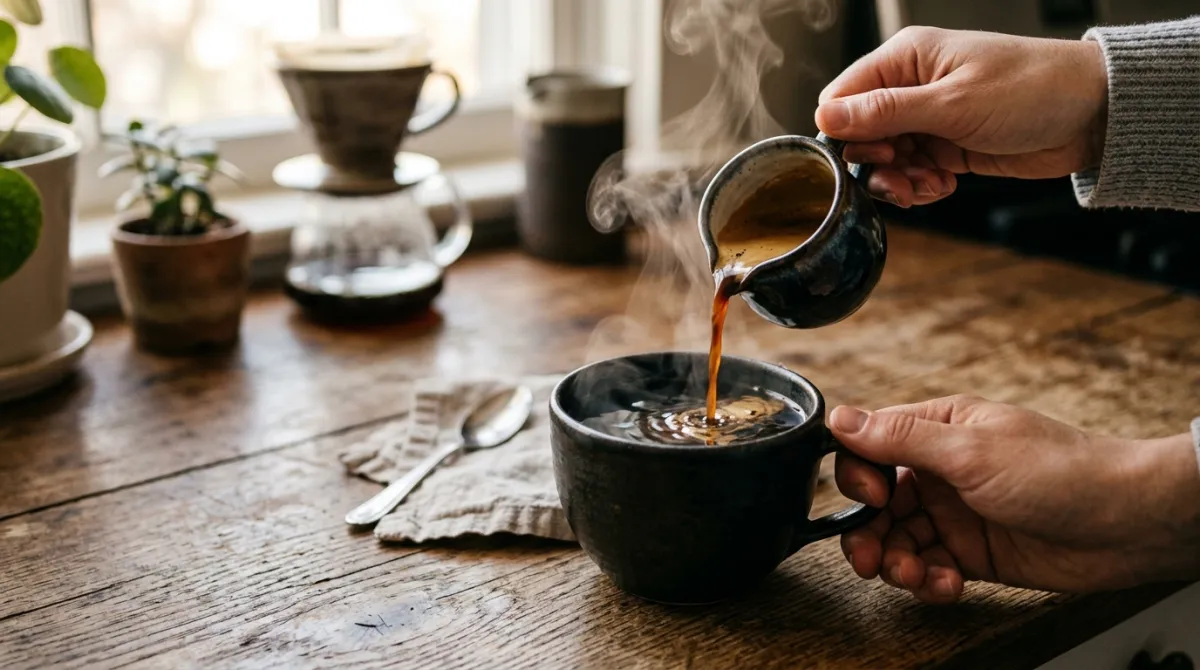
A red eye is a cup of drip coffee with a shot of espresso added. That’s the whole idea. You brew a normal mug of coffee, pull one espresso shot, and stir the two together for a drink that hits harder than either one alone.
I’ve been brewing daily for more than ten years, and the red eye is still my go-to on the mornings I need to move fast. It tastes like coffee, not like a milky cafe treat, and it wakes you up.
Key Takeaways
- A red eye is drip coffee plus one shot of espresso in the same cup.
- Add two shots and it becomes a black eye; add three and it’s a dead eye (also called a green eye).
- It differs from an americano, which is espresso and hot water with no drip coffee at all.
- A red eye layers roughly one espresso shot’s worth of caffeine on top of your regular drip.
- You can make one at home with any drip brewer and any espresso maker or capable moka pot.
What is a red eye coffee?
A red eye coffee is a full cup of brewed drip coffee with a single shot of espresso poured in. The base is ordinary drip or filter coffee, the kind you’d make in a batch brewer or pour-over. The espresso sits on top of that, adding body, a deeper roast note, and a real jolt of energy.
The name is folklore, not fact. Most people trace it to red-eye overnight flights, the ones that leave you groggy and desperate for caffeine when you land. The drink was built to fight that exact feeling.
In my experience, the red eye works because it keeps the volume of a normal mug. You still get a satisfying amount to sip, unlike a straight espresso that’s gone in two swallows.
How do you make a red eye coffee at home?
Making a red eye at home takes two steps: brew your drip coffee, then pull an espresso shot and combine them. You don’t need a fancy setup. Any drip machine or pour-over paired with an espresso maker or a good moka pot will do the job.
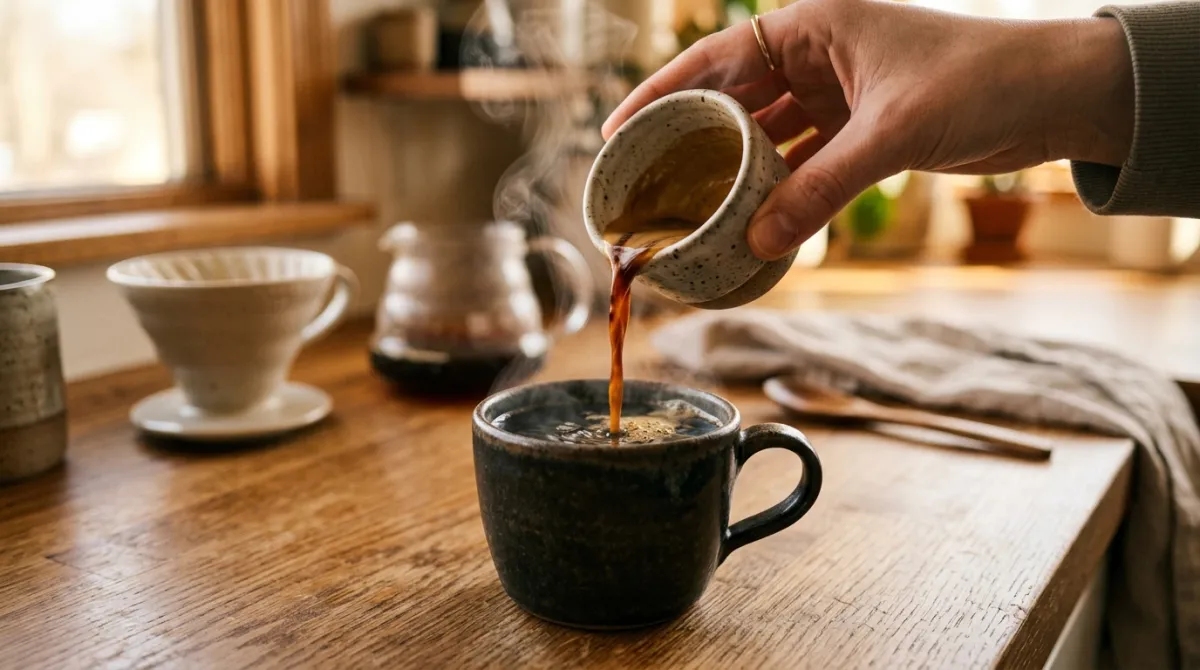
Here’s the method I use most mornings.
Step 1: Brew the drip base
Brew a standard mug of drip coffee, around 240 to 300 mL. Use whatever ratio you already like for filter coffee. A medium or medium-dark roast gives the best backbone for a red eye, since it stands up to the espresso instead of getting buried.
Step 2: Pull the espresso shot
Pull one shot of espresso while the drip is still hot. A single is fine, though many home baristas, myself included, default to a double for more punch. A double espresso is roughly 36 mL pulled from about 18 g of ground coffee. If you’re dialing in your shot, my espresso ratio guide walks through the numbers.
Step 3: Combine and drink
Pour the espresso straight into the mug of drip coffee and give it a gentle stir. Drink it black. A red eye is meant to be taken without milk or sugar, though nobody’s going to arrest you for adding a splash of cream.
What’s the difference between a red eye, black eye, and dead eye?
The difference is simply the number of espresso shots. A red eye gets one shot, a black eye gets two, and a dead eye gets three. Each name marks another step up the caffeine ladder, all built on the same cup of drip coffee.

Think of it as a family of drinks that scale with how tired you are.
Red eye: one shot
The red eye is the entry point. One espresso shot on top of drip coffee. It’s balanced enough to enjoy the flavor and strong enough to notice the lift.
Black eye: two shots
A black eye doubles the espresso to two shots. This is where the drink starts to taste noticeably darker and denser. I reach for a black eye on genuinely rough mornings.
Dead eye: three shots
A dead eye, sometimes called a green eye, piles three espresso shots into the drip base. It’s the strongest of the group and, honestly, more caffeine than most people need in one sitting. Treat it with respect.
Naming does drift between cafes, so it never hurts to confirm shot counts when you order. The pattern of one, two, three shots is the version most baristas recognize.
Is a red eye the same as an americano?
No, a red eye and an americano are different drinks. A red eye is drip coffee with espresso added. An americano is espresso diluted with hot water, and it contains no drip coffee at all. The base liquid is the key difference between them.
That base changes the whole character. An americano tastes clean and espresso-forward because water only dilutes the shot. A red eye tastes fuller and rounder because you’re drinking actual brewed coffee underneath the espresso.
One thing I’ve noticed over the years: people who find americanos a little thin often prefer the red eye. The drip coffee gives it a weight that plain water can’t. If you want to compare, here’s how to make an americano properly.
Caffeine-wise, the two can land in a similar range depending on shot counts, but the flavor experience is not the same.
How much caffeine is in a red eye?
A red eye adds roughly one espresso shot’s worth of caffeine on top of your regular drip coffee. So you’re getting the caffeine of a normal mug plus the caffeine of that added shot. The exact amount swings with your beans, roast, grind, and how big your drip pour is.
I avoid quoting precise milligram figures because they vary so much cup to cup. A dark roast pulled loose behaves differently from a tight, dialed-in shot. What’s reliable is the direction: a red eye sits clearly above a plain cup of coffee.
If you want to understand the moving parts, my breakdown of how much caffeine is in a cup of coffee covers roast and brew method. For a cooler, slower-release option, caffeine in cold brew is worth a read too.
The practical takeaway: start with a single-shot red eye, see how it treats you, then scale up only if you need to.
When should you drink a red eye?
Drink a red eye when you need a strong, no-fuss caffeine boost without the sweetness of a cafe drink. It suits early starts, long drives, jet lag, and any morning where a normal cup won’t cut it. The whole point of the drink is efficient, honest energy.

I keep it as a workhorse rather than a treat. On a slow weekend I’ll do a careful pour-over and sip it black. But when the alarm feels personal and the day is stacked, a red eye is the fastest route to feeling human.
Just be sensible about timing. Because it carries the caffeine of coffee plus an extra shot, an afternoon red eye can follow you into the night. I keep mine to the first half of the day.
Frequently asked questions
Why is it called a red eye coffee?
The name most likely comes from red-eye flights, the overnight journeys that leave passengers exhausted and short on sleep. The drink was made to counter that specific kind of tiredness with a heavy dose of caffeine. It’s coffee-shop folklore rather than a documented origin, but the flight connection is the story you’ll hear most often.
Can I make a red eye without an espresso machine?
Yes. A moka pot brews a strong, concentrated coffee that works well as the espresso element in a red eye. It won’t be a true espresso with crema, but it gets you close enough for a homemade version. An AeroPress pushed for a concentrated shot can also stand in for the espresso on top of your drip base.
Is a red eye stronger than regular coffee?
Yes, a red eye is stronger than a plain cup of drip coffee. You’re drinking a normal mug of coffee and then adding roughly one espresso shot’s worth of caffeine on top. The flavor is bolder too, since espresso brings a deeper, more roast-forward note that a standard filter cup usually lacks.
What’s the best coffee to use for a red eye?
I get the best results from a medium to medium-dark roast for the drip base and a shot pulled from a balanced espresso blend. The drip needs enough body to stand up to the espresso rather than vanish beneath it. Use fresh beans, grind right before brewing, and keep both parts hot when you combine them.
Once you’ve got the red eye dialed in, it’s an easy drink to make part of your routine. Brew good drip, pull one solid shot, and combine. From there you can climb to a black eye or dead eye whenever the day demands it, or branch out into other espresso builds entirely. For more recipes and technique, browse more brewing guides.
Keep brewing
Dial in your next cup with Brew Better Co.
Tested ratios, methods, and gear notes from a real home kitchen. New guides added regularly.
Explore all guides