caffeine
How Much Caffeine Is in Cold Brew?
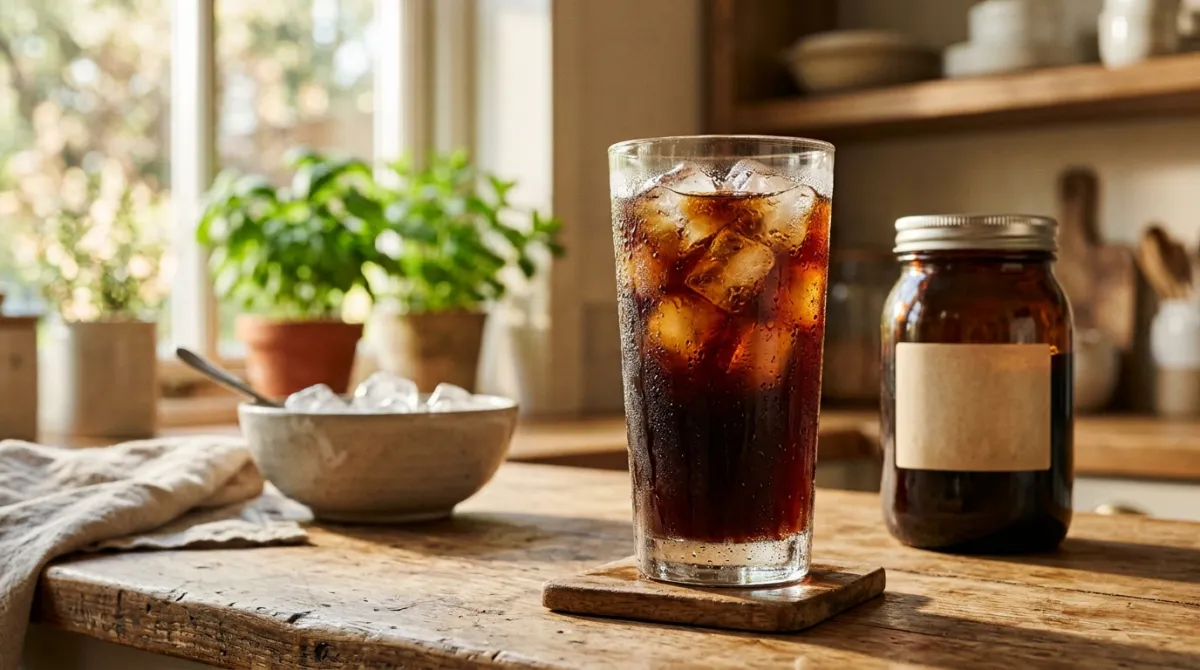
The short answer on caffeine in cold brew is that it usually packs more than regular hot coffee, sometimes noticeably more. That surprises people, since cold water sounds gentler than hot. The strength comes from two things: cold brew typically uses a lot of coffee relative to water, and it steeps for 12 to 24 hours.
I have made cold brew in my kitchen through more summers than I can count, and the caffeine level is almost entirely in your hands. The same jug can be a gentle iced coffee or a jolt that keeps you up past midnight, depending on your ratio and how much you dilute it.
Key Takeaways
- Cold brew often has more caffeine than hot coffee, driven by its high coffee-to-water ratio and long steep, not by temperature.
- A concentrate is strong; how much you dilute it before drinking sets the caffeine per cup.
- Steep time, coffee amount, grind, and bean type (robusta vs arabica) all move the number.
- You control the strength: use less coffee, steep shorter, or dilute more for a lighter cup.
How much caffeine is in cold brew?
Cold brew generally has more caffeine per serving than the same size cup of hot drip coffee, mainly because it is brewed as a concentrate with a high ratio of coffee to water and a long steep. Once diluted for drinking, a typical glass tends to land at or above the strength of regular hot coffee, though the exact amount swings widely with how you make it.
Here is the honest truth I have learned over years of brewing: there is no single caffeine number for cold brew. A homemade batch and a coffee-shop cup can differ dramatically. What matters is understanding the levers, because they let you dial the caffeine up or down on purpose.
For rough orientation, a standard 8-ounce cup of brewed hot coffee is commonly cited at around 95 milligrams of caffeine. Cold brew concentrate, before you add water, sits well above that. After you cut it with water or milk, the per-cup caffeine depends entirely on your dilution.
So when someone asks me “how strong is cold brew,” I answer with a question: how are you making it? The recipe is the real variable, not the label.
Why cold brew often has more caffeine than hot coffee
The reason cold brew hits harder comes down to the recipe, not the cold water itself. Two factors do the heavy lifting: a high coffee-to-water ratio and a long steeping time. Together they pull a lot of caffeine into the finished concentrate.
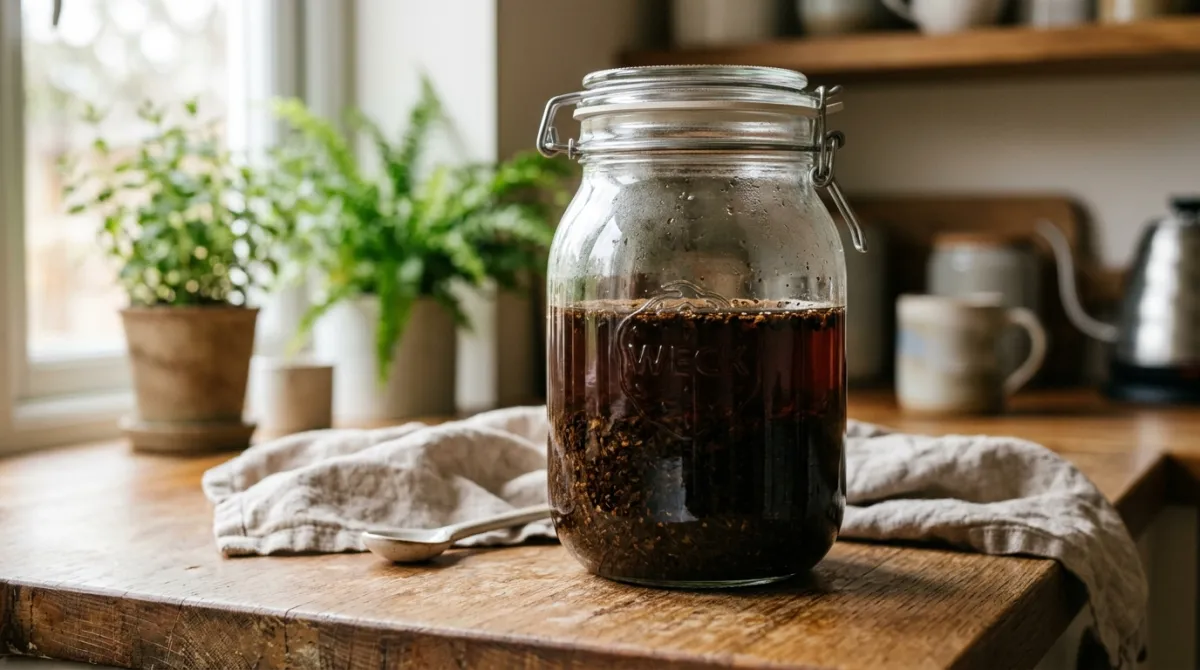
Temperature is the part people get wrong. It is true that hot water extracts caffeine faster, but cold brew compensates by steeping far longer. Twelve to twenty-four hours of contact gives cold water plenty of time to dissolve caffeine, even without heat. Time replaces temperature.
The bigger driver is the ratio. Most cold brew is made as a concentrate, using something like 1 part coffee to 4 or 5 parts water by weight, which is far more coffee than a standard hot brew. That coffee-heavy start is exactly why the concentrate is so potent. For the exact numbers I use, see my cold brew coffee ratio guide.
Then comes dilution, and this is the twist. That concentrate is meant to be watered down. If you drink it neat, it is intense. Cut it 1:1 with water or milk, and the caffeine per cup drops to something closer to, or a bit above, regular coffee. The concentrate is strong; your glass is whatever you make it.
What affects the caffeine level in your cold brew
Several variables shape how much caffeine ends up in your cup, and once you know them, you can tune your brew like a dial. These are the four I pay attention to most when I want a specific strength.
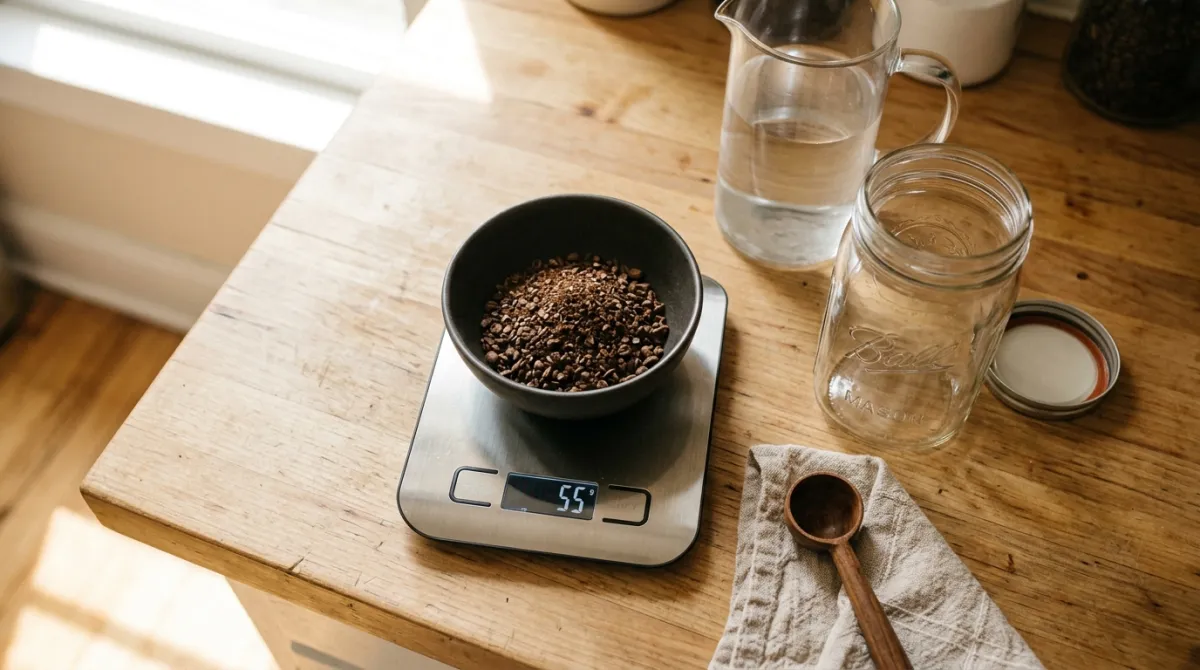
Coffee-to-water ratio
This is the biggest lever by far. More coffee relative to water means more caffeine extracted, full stop. A concentrate brewed at 1:4 will be far stronger than a ready-to-drink batch made at 1:8. If you want a mellower jug, simply start with less coffee.
Steep time
Longer steeping pulls more caffeine, up to a point. A 12-hour steep extracts less than an 18- or 24-hour one. I find the sweet spot for flavor and strength usually sits between 14 and 18 hours; beyond about 24 hours you gain little caffeine and risk a woody, over-extracted taste.
Grind size and bean type
A coarse grind is standard for cold brew, and finer grinds extract a bit faster and stronger, though they also muddy the filter. Bean choice matters even more: robusta beans carry roughly double the caffeine of arabica. If you want maximum kick, a robusta or robusta-heavy blend delivers it. My arabica vs robusta guide breaks down that gap.
Dilution before drinking
Even a strong concentrate becomes a gentle drink if you dilute it heavily. Pouring concentrate over a full glass of ice and topping with water or milk stretches the caffeine across more volume. This is the easiest last-minute adjustment, and it is how I make the same batch work for both a big morning cup and a lighter afternoon one.
How to make cold brew stronger or milder
Adjusting your cold brew’s caffeine is genuinely simple once you know the levers, and you rarely need to change more than one at a time. Reach for the ratio and the dilution first, since they give you the most control with the least fuss.
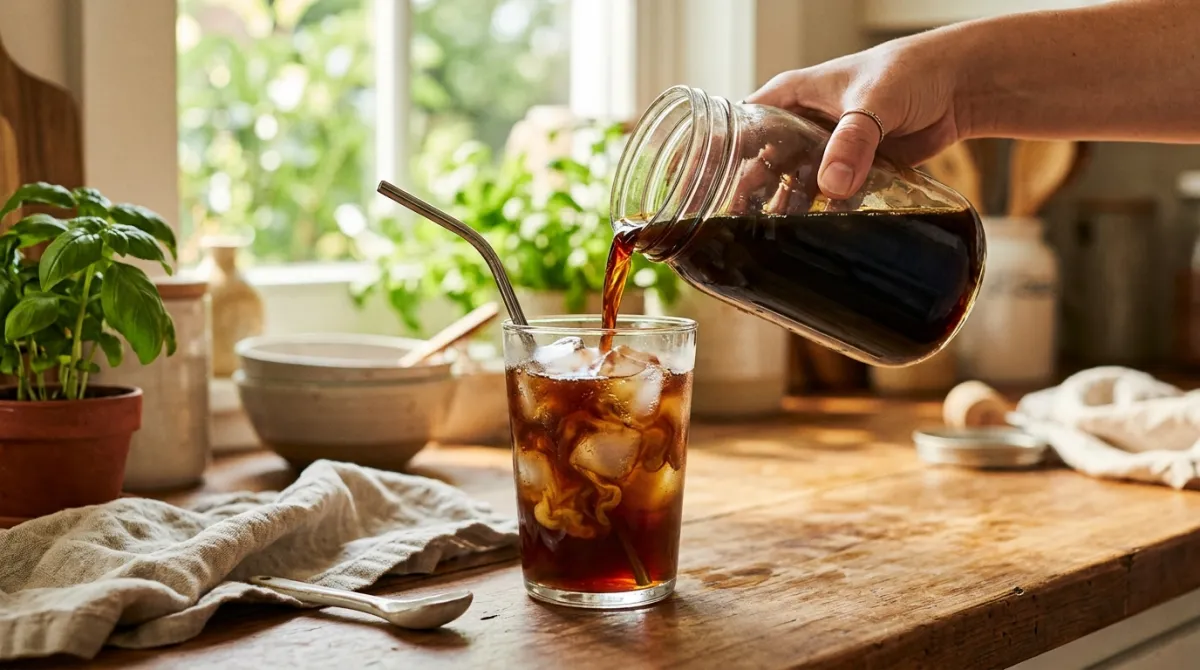
To make it stronger, use more coffee (push toward a 1:4 ratio), steep a little longer (up to about 18 hours), and dilute less when you serve. Choosing a robusta-heavy bean adds another jump in caffeine if that is your goal. Stack these and you get a serious concentrate.
To make it milder, do the reverse: use less coffee (toward 1:6 or 1:8), keep the steep around 12 to 14 hours, and dilute generously with water, milk, or extra ice. An arabica bean keeps the caffeine on the lower side. This is my go-to for an easy-sipping summer batch.
One practical tip from experience: brew a strong concentrate and adjust in the glass rather than committing the whole jug to one strength. A potent concentrate keeps well in the fridge, and diluting per cup lets you decide the caffeine level moment to moment. For how long that jug stays good, see how long does cold brew last. If you are brewing your first batch, start with my full walkthrough on how to make cold brew coffee.
Frequently asked questions
Does cold brew have more caffeine than regular coffee?
Usually yes, cold brew tends to have more caffeine per serving than regular hot coffee. The difference comes from its high coffee-to-water ratio and long steep time, which produce a strong concentrate. Once you dilute that concentrate, the caffeine per cup lands at or above typical hot coffee, though it depends heavily on how much water you add.
Is cold brew stronger than espresso?
By volume, cold brew concentrate can rival or exceed espresso in total caffeine, but that is misleading. Espresso is served in a tiny 1 to 2 ounce shot, while cold brew fills a large glass. Ounce for ounce, espresso is far more concentrated. A big cold brew simply contains more total caffeine because you drink much more of it.
Does a longer steep mean more caffeine?
Yes, up to a point. Steeping longer extracts more caffeine, so a 24-hour brew holds more than a 12-hour one. But the gains flatten out, and steeping much past 24 hours adds little caffeine while risking a bitter, woody flavor. For most batches, 14 to 18 hours balances good strength with clean taste.
How can I lower the caffeine in my cold brew?
Use less coffee relative to water, steep for a shorter time, and dilute the concentrate more heavily when you serve. Choosing an arabica bean over robusta also lowers caffeine, since arabica has roughly half as much. The simplest fix is to make a strong concentrate and just add more water, milk, or ice to each glass.
Caffeine in cold brew is not a fixed number; it is a recipe you control. Adjust your ratio, steep time, and dilution, and you can brew anything from a gentle iced coffee to a powerful concentrate. Want to keep refining your cold cup? Explore more brewing guides for the next tweak worth trying.
Keep brewing
Dial in your next cup with Brew Better Co.
Tested ratios, methods, and gear notes from a real home kitchen. New guides added regularly.
Explore all guides