caffeine
How Much Caffeine in a Cup of Coffee? A Brewer's Guide
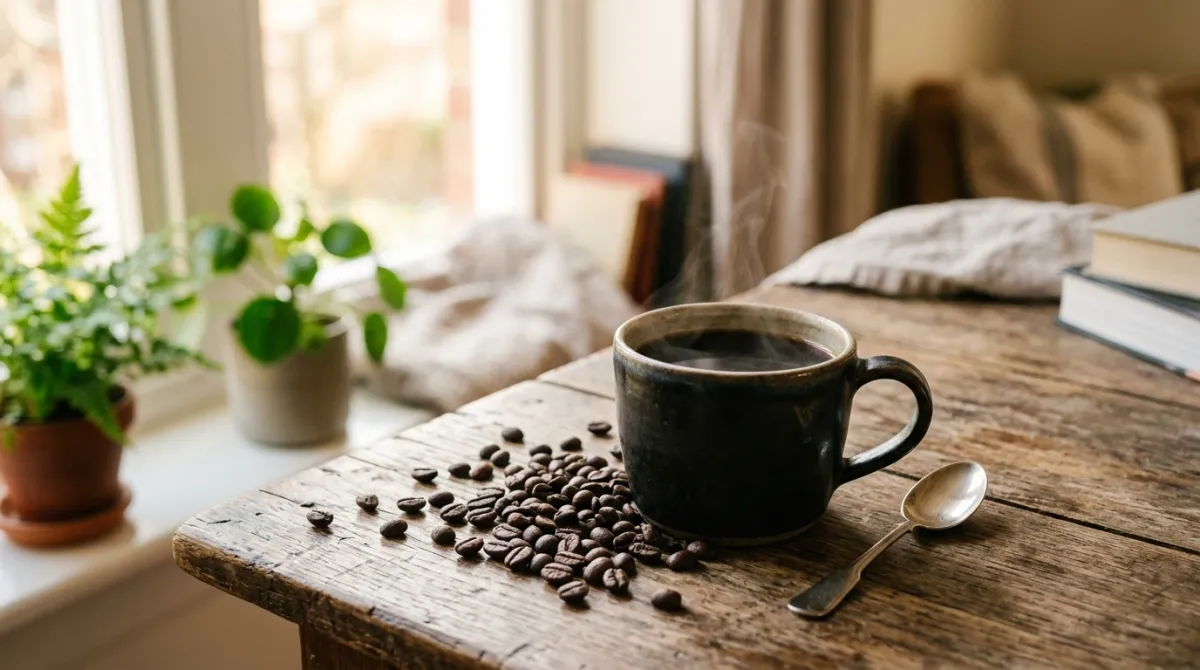
A standard 8 oz cup of brewed coffee has roughly 95 mg of caffeine, though that number moves around a lot in real kitchens. Depending on your beans, roast, grind, and brew method, a single cup can land anywhere from about 70 to 140 mg.
I’ve been brewing daily for over a decade, and I can tell you the “one number” answer hides a surprising amount of variation. Two cups from the same bag can differ, and a big mug is not the same as a small cup.
Key Takeaways
- An 8 oz cup of drip coffee averages about 95 mg of caffeine, with a typical range of roughly 70 to 140 mg.
- Bean type matters most: robusta carries roughly twice the caffeine of arabica.
- Cup size is the sneakiest factor - a 16 oz mug can easily double the dose.
- Espresso is strong per ounce but small per shot, often near 60 to 80 mg.
- Up to about 400 mg per day is commonly cited as moderate for most healthy adults.
How much caffeine is really in one cup of coffee?
The commonly published figure for an 8 oz cup of brewed coffee is about 95 mg of caffeine. That’s an average, not a fixed rule. In practice, a normal cup ranges from roughly 70 mg on the lighter, weaker side to about 140 mg when the beans, dose, and method all push upward.
Here’s the catch most charts skip. An “8 oz cup” is a measuring standard, not what most of us actually drink. My everyday mug holds closer to 12 oz, and a big travel tumbler can hit 16 or 20 oz. Scale the caffeine to the real volume and the number climbs fast.
So when someone asks how much caffeine in a cup of coffee, the honest answer is a range. The 95 mg figure is a solid anchor. From there, your beans and your brewing decide whether you land under or over it.
Why the number varies so much
Four things drive most of the variation: the bean species, how much coffee you use per cup, the grind size, and the contact time with water. Each one nudges caffeine up or down. Stack a few in the same direction and the swing gets large.
Roast plays a smaller role than people expect. By weight, light and dark roasts hold nearly equal caffeine. The confusion comes from how you measure, which I’ll unpack below.
How much caffeine is in different coffee drinks?
Different drinks deliver very different doses, and per-ounce strength can be misleading. Espresso is concentrated but served small, so one shot often lands near 60 to 80 mg. Cold brew, by contrast, uses a lot of grounds and long steeping, so it frequently runs higher than regular drip per serving.
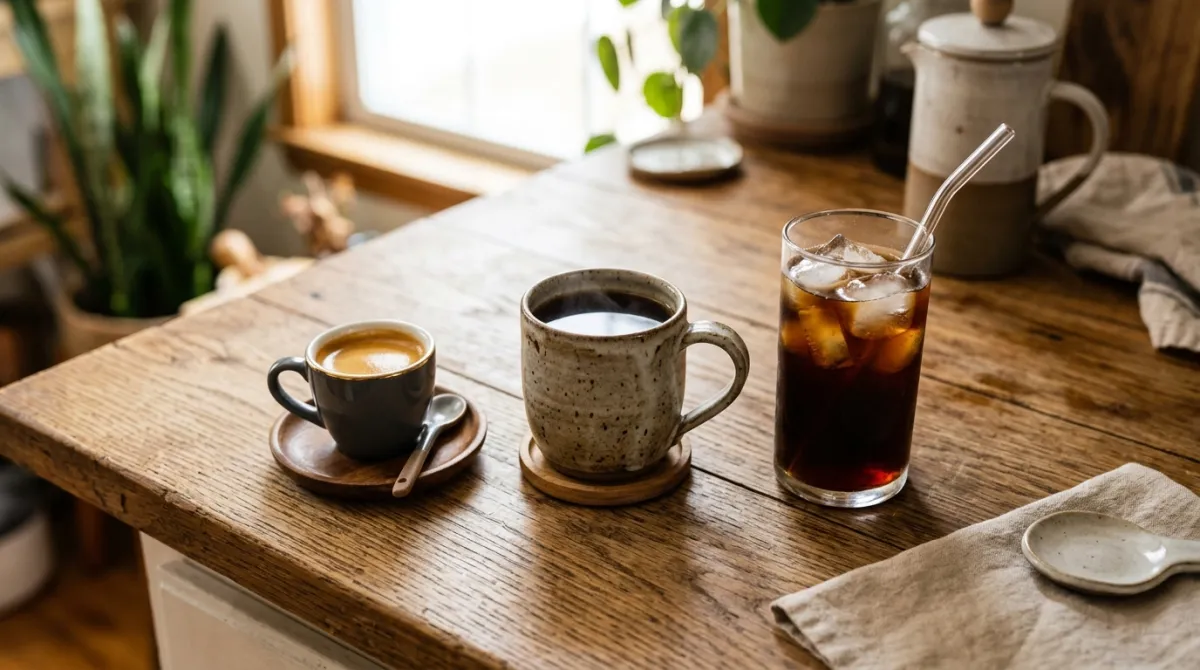
The table below shows commonly cited general ranges. Treat every figure as approximate, since real numbers depend on your recipe, beans, and pour size.
| Drink | Typical serving | Approx. caffeine (general range) |
|---|---|---|
| Drip / brewed coffee | 8 oz | ~70-140 mg (avg ~95 mg) |
| Espresso | 1 shot (~1 oz) | ~60-80 mg |
| Cold brew | 8 oz (varies widely) | ~100-200 mg |
| Instant coffee | 8 oz | ~30-90 mg |
| Decaf coffee | 8 oz | ~2-15 mg |
Notice that decaf is not caffeine-free. It’s reduced, not zero, so a couple of decaf cups can still add up to a small dose. If you’re highly sensitive, that detail matters more than the label suggests.
The most common self-reported “coffee is keeping me up” mistake I hear isn’t a strong roast. It’s cold brew treated like regular coffee. People sip a 16 oz cold brew as casually as a small drip, not realizing the concentration and volume can stack into a much bigger dose. If cold brew is your thing, read up on caffeine in cold brew before you make it a daily double.
Does the type of bean change caffeine levels?
Bean species is the single biggest lever on caffeine content. Robusta beans carry roughly twice the caffeine of arabica beans. Most specialty and grocery coffee is arabica, but robusta shows up in many espresso blends, instant coffees, and budget-friendly bags, which quietly raises the dose.
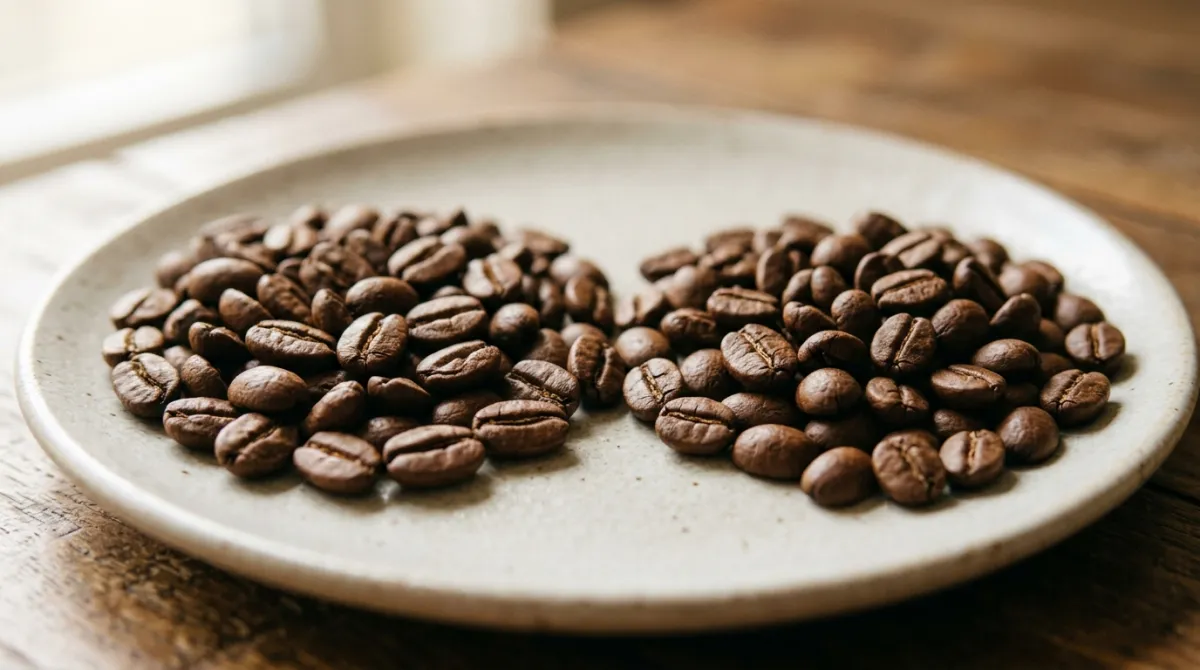
If your goal is a stronger morning kick, a blend with some robusta will get you there. If you want to ease off, look for 100% arabica on the label. I keep both in my cupboard and genuinely feel the difference on a robusta-heavy espresso morning.
Want the full breakdown of how these two species differ in flavor and strength? I cover it in detail in arabica vs robusta. The short version: arabica tastes smoother and milder, robusta hits harder and more bitter, and that bitterness tracks loosely with the higher caffeine.
Does roast level matter?
Roast level barely changes caffeine when you measure by weight. Light and dark roasts hold nearly the same amount per gram. The myth that dark roast is “stronger” comes from flavor intensity, not caffeine, and from how you scoop.
Here’s the twist. Dark roast beans are less dense because roasting drives off moisture and puffs the bean up. So if you measure by scoop or volume, you fit more light-roast mass into the same spoon, nudging its caffeine slightly higher. Measure by weight on a scale and the gap mostly disappears. If you’re curious which suits your taste, see light roast vs dark roast.
How does brew method affect caffeine?
Brew method shifts caffeine through two levers: how much coffee you use and how long water contacts the grounds. Longer contact and finer grinds extract more. That’s why cold brew, steeped for 12 to 24 hours, often runs high, while a quick espresso pull is concentrated but brief.
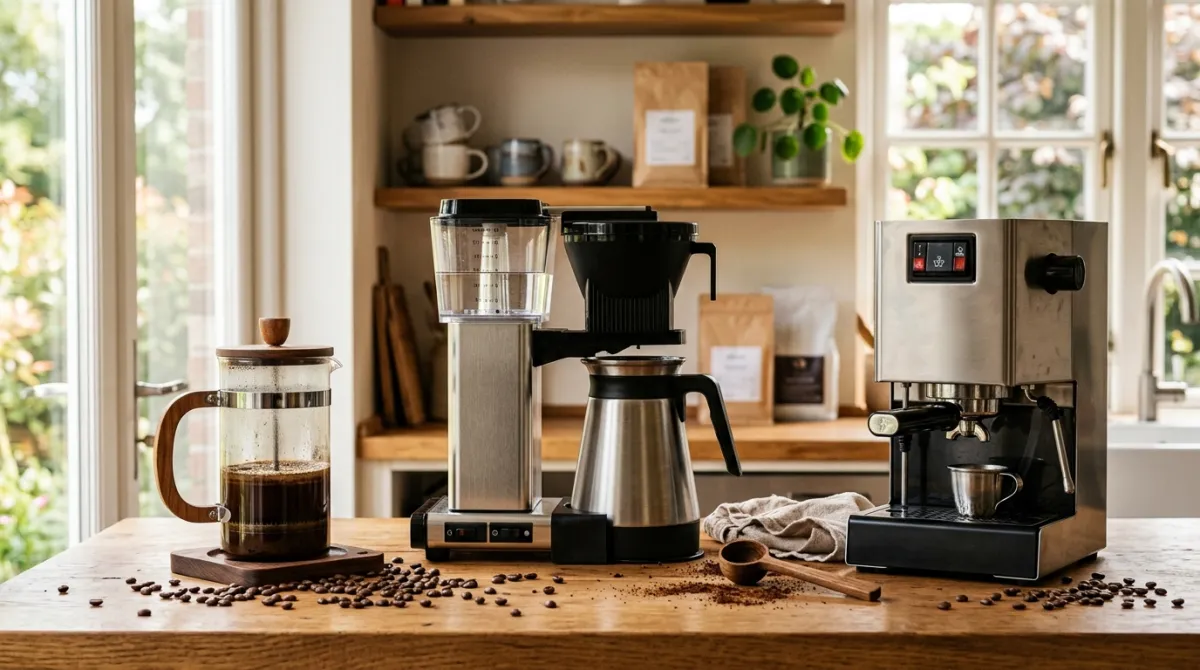
Your coffee-to-water ratio does a lot of heavy lifting here. Use more grounds per cup and you extract more caffeine, full stop. This is exactly why dialing in your recipe matters. If you brew espresso, my espresso ratio guide walks through dose and yield, which directly shapes how much caffeine ends up in the cup.
Grind size matters too. A finer grind exposes more surface area, so water pulls out caffeine faster. That’s part of why espresso, ground very fine, gets so much from so little in under 30 seconds. Change your grind and you quietly change your dose.
How can you moderate your caffeine intake?
Common health guidance holds that up to about 400 mg of caffeine per day is moderate for most healthy adults. That’s roughly four 8 oz cups of average drip coffee. This is general information, not medical advice, and personal tolerance varies with body weight, medications, pregnancy, and sensitivity.
To dial your intake down without quitting, a few practical moves work well. I use these myself when I’ve had a heavy stretch of tastings.
Practical ways to lower your dose
- Shrink the cup. Drink 8 oz instead of a 16 oz mug and you roughly halve the caffeine.
- Switch some cups to decaf. Even one swap trims your daily total meaningfully.
- Choose 100% arabica. It carries less caffeine than robusta-heavy blends.
- Time your last cup. Caffeine lingers for hours, so an early cutoff protects sleep.
The highest-leverage change is almost never the roast or the bean. It’s cup size and count. People obsess over light versus dark while pouring themselves two giant mugs. Fix the volume first, then fine-tune the beans. If you’re sorting out your own limit, talk to your doctor, especially if you’re pregnant, on medication, or unusually caffeine-sensitive.
Frequently asked questions
How much caffeine is in a single 8 oz cup of coffee?
An 8 oz cup of brewed coffee averages about 95 mg of caffeine. In real life it ranges from roughly 70 to 140 mg depending on your beans, dose, grind, and brew method. Treat 95 mg as a useful anchor, then adjust up or down based on how strong you brew and how big your actual cup is.
Does dark roast have more caffeine than light roast?
By weight, dark and light roasts hold nearly equal caffeine, so neither is clearly stronger per gram. The difference shows up when you measure by scoop. Denser light-roast beans pack more mass into the same spoon, so a volume scoop of light roast can carry slightly more caffeine. Weigh your dose and the gap mostly vanishes.
Is decaf coffee completely caffeine-free?
No, decaf is reduced, not zero. An 8 oz cup of decaf typically holds about 2 to 15 mg of caffeine. That’s a small fraction of regular coffee, but it isn’t nothing. If you’re very sensitive or drinking several decaf cups a day, those milligrams can quietly add up, so it’s worth keeping in mind.
How much coffee is too much per day?
Common guidance cites up to about 400 mg of caffeine daily as moderate for most healthy adults, roughly four 8 oz cups of average drip coffee. Your own limit may be lower depending on body weight, medications, pregnancy, or sensitivity. This is general information, not medical advice, so check with your doctor about what’s right for you.
Caffeine in coffee isn’t one fixed number, it’s a range you can steer. Anchor on about 95 mg per 8 oz, then remember that beans, roast measurement, grind, brew method, and especially cup size all move the needle. Once you know which levers matter, you can brew a cup that fits your morning and your tolerance. For more on dialing in your daily cup, browse our more brewing guides.
Keep brewing
Dial in your next cup with Brew Better Co.
Tested ratios, methods, and gear notes from a real home kitchen. New guides added regularly.
Explore all guides