espresso drinks
Ristretto vs Espresso: What's Actually Different
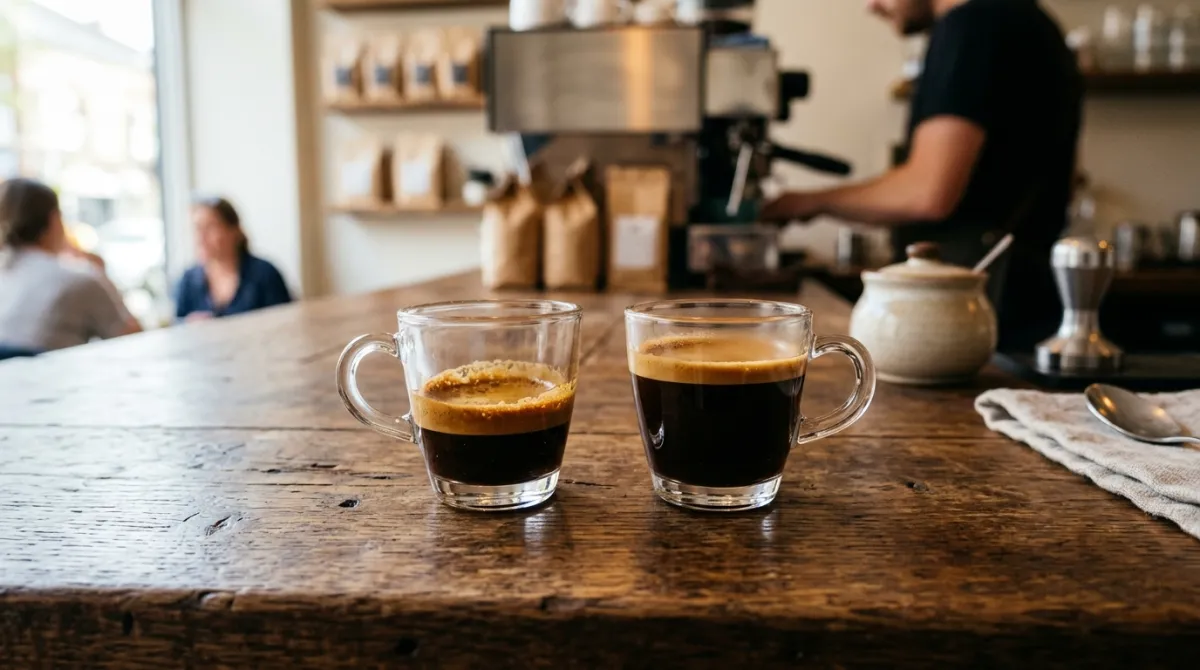
A ristretto is a “restricted” espresso pulled with less water for a smaller, sweeter, more concentrated shot. That is the whole idea in one sentence. Same coffee, same grinder, same portafilter, but you stop the shot early so less liquid ever makes it into the cup.
Espresso and ristretto are close cousins, not different drinks. I have pulled both back to back on my home machine for years, and the gap between them is smaller than most people expect. The dose stays the same. What changes is how much water you push through and when you cut it off.
Key Takeaways
- A ristretto uses the same coffee dose as espresso but a shorter yield, so it tastes sweeter and more concentrated.
- Espresso runs roughly a 1:2 ratio (about 18 g in, 36 g out); a ristretto runs closer to 1:1 (about 18 g in, 18 to 20 g out).
- A lungo is the opposite of a ristretto, using more water for a longer, more bitter shot at around 1:3 or more.
- Ristretto stops before the harsher, more astringent compounds extract, which is why it reads sweet and low in bitterness.
- Caffeine per shot is similar to a full espresso, often slightly less, since a ristretto uses less water overall.
What is the difference between ristretto and espresso?
The core difference between ristretto and espresso is water volume, not coffee. Both start from the same dry dose, usually around 18 grams for a double. A ristretto stops early at roughly a 1:1 ratio, while an espresso runs to about 1:2. Less water means a smaller, denser cup.
Think of it as a spectrum, not two separate categories. You load the portafilter the same way every time. Then you decide how long to let the pump run. Cut it short and you get a ristretto. Let it finish and you get a standard espresso.
In my experience, this is the easiest “new” drink you can add at home, because you already own everything you need. No extra gear, no different beans. You just watch your scale and stop pouring sooner. That one change shifts the flavor more than most people believe.
The name helps it stick. “Ristretto” means restricted in Italian, and “restricted water” is exactly what you are doing.
How much water and coffee does each use?
For a double, both drinks use about 18 grams of ground coffee, but the liquid yield differs sharply. A ristretto pulls a short yield of roughly 18 to 20 grams out, near a 1:1 ratio. A standard espresso runs about 36 grams out, near 1:2. The dry dose stays identical.
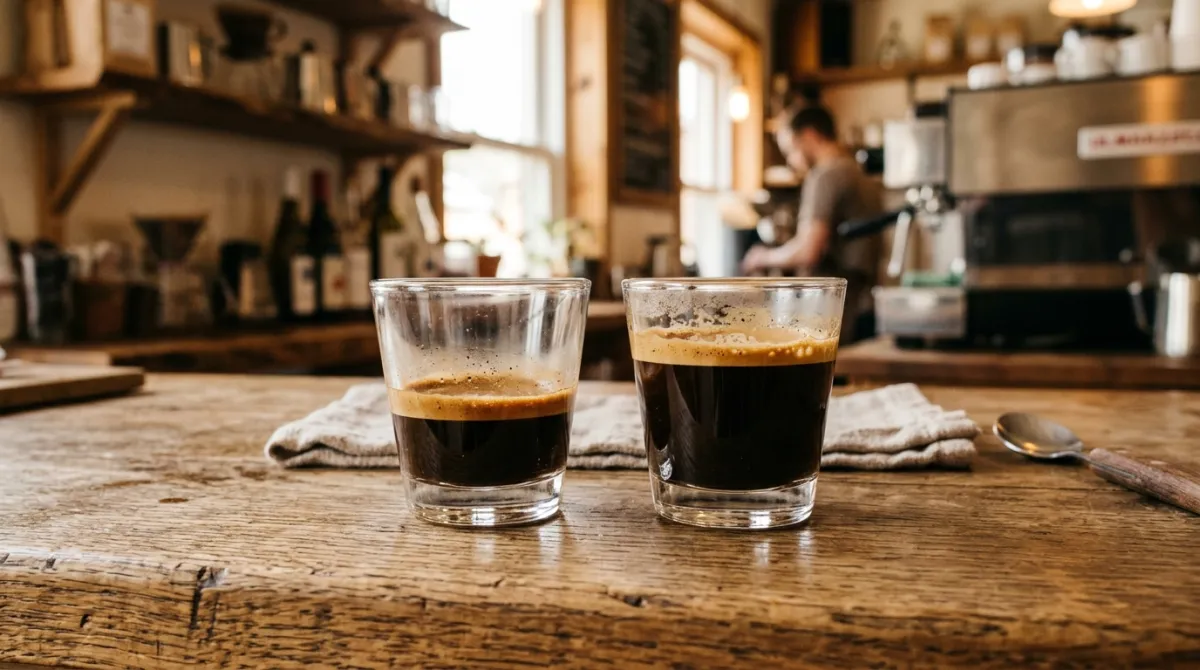
That is the part people get wrong. They assume a ristretto uses less coffee. It does not. You grind and tamp the same 18 grams either way. The only variable is how much water passes through the puck before you stop the shot.
Because the water is restricted, a ristretto also tends to run a slightly finer grind. I nudge my grinder a step finer so the shorter shot still hits a proper time, usually in the 25 to 30 second window. If you keep the exact same grind as your espresso, a ristretto can gush out too fast and taste weak. Dialing this in is the same skill covered in my guide to grind size for espresso.
Weighing your shot matters here. Eyeballing a short pour is tough, so a small scale under the cup makes ristretto far more repeatable.
Ristretto vs espresso vs lungo comparison table
Across the three shots, dose stays flat while yield climbs. A ristretto sits at about 1:1, espresso at about 1:2, and a lungo at 1:3 or longer. As yield rises, sweetness fades and bitterness grows. The table below lines up the numbers I use as starting points at home.
| Factor | Ristretto | Espresso | Lungo |
|---|---|---|---|
| Dose (in) | ~18 g | ~18 g | ~18 g |
| Yield (out) | ~18-20 g | ~36 g | ~54 g or more |
| Ratio | ~1:1 | ~1:2 | ~1:3+ |
| Taste | Sweet, syrupy, concentrated | Balanced, full-bodied | Longer, more bitter, thinner |
| Caffeine | Similar, often slightly less | Full shot | Similar to slightly more |
These are starting points, not rules. Lighter roasts often want a touch more yield, while dark roasts can shine pulled tighter. Once you can hit espresso’s 1:2 reliably, sliding toward a ristretto or lungo becomes simple. For a deeper look at the numbers, see my full espresso ratio breakdown.
The row that surprises most beginners is caffeine. We will get to why the short shot does not mean a big caffeine drop.
Why does ristretto taste sweeter than espresso?
Ristretto tastes sweeter because you cut the shot before the harsher compounds extract. Coffee gives up its flavors in an order: sweet and fruity notes come out first, then acids, then the bitter and astringent compounds arrive late. Stop early, at a 1:1 ratio, and you capture mostly the sweet front end.
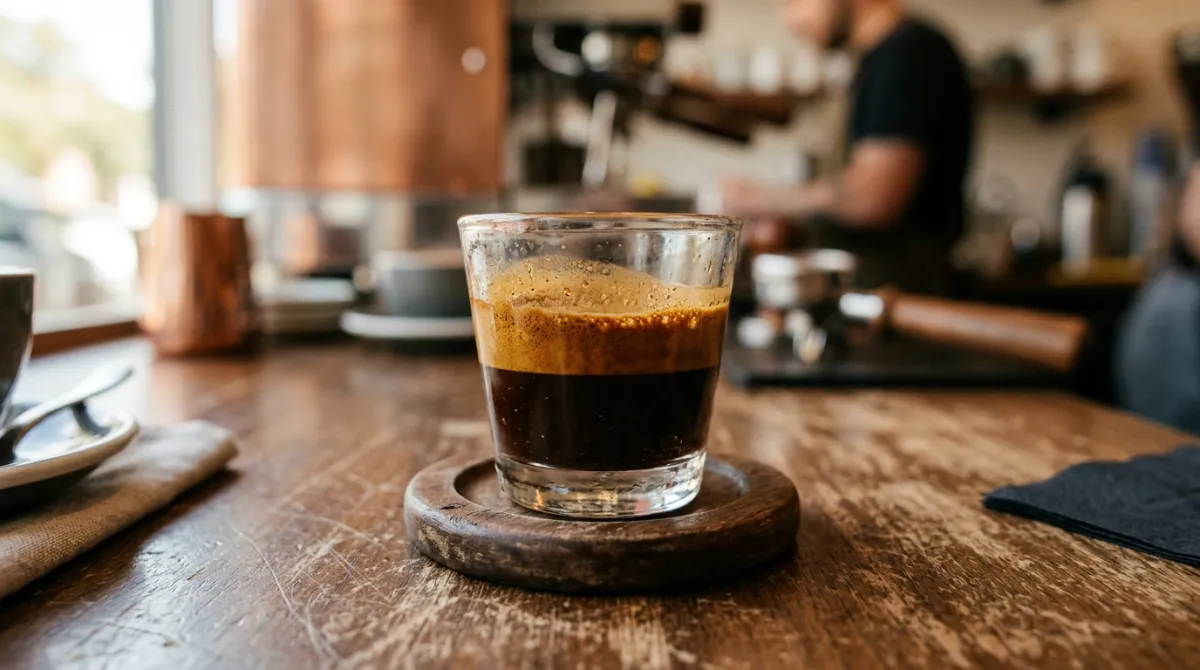
This is the part I find genuinely fun to demonstrate. Pull an espresso to a full 1:2 and taste it. Then pull a ristretto from the same bag and taste that. The ristretto reads rounder, denser, almost like coffee syrup, with far less of that drying, bitter finish.
There is a tradeoff, though. Because you are leaving flavor in the puck, a ristretto can taste under-developed or flat if your grind is too coarse. The shot runs too fast, and you miss the sweetness you were chasing. That is why grind and ratio always move together.
Crema also shows up thick and tight on a good ristretto, since the concentrated liquid holds more of those emulsified oils and gases. If you want to understand that golden layer, I break it down in what is crema.
Does ristretto have more or less caffeine?
A ristretto has a similar amount of caffeine to a full espresso, often slightly less, because both start from the same dose but the ristretto uses less water. Water is what pulls caffeine out of the grounds. Less water means slightly less caffeine extracted, even though the smaller cup tastes far more intense.
This trips people up constantly. The ristretto is stronger in flavor and concentration, so folks assume it packs more caffeine. It usually does not. Concentration and total caffeine are two different things. A tiny, intense shot can hold about the same caffeine as a larger, milder one from the same dose.
I avoid quoting exact milligram figures, because they swing wildly with bean type, roast, grind, and machine. The honest answer is: close to your espresso, give or take a little. If you want a bigger, longer drink instead, dilute a shot with hot water for an Americano, which I cover in how to make an Americano.
So chasing a caffeine hit? A ristretto is not your shortcut.
When should you pull a ristretto instead of espresso?
Pull a ristretto when you want intensity and sweetness in a small package, or when a coffee tastes too bitter as a full espresso. Because the short shot skips the harsh late compounds, it can rescue a dark roast that turns acrid at 1:2. It also shines under milk, holding its flavor in a small latte or cortado.
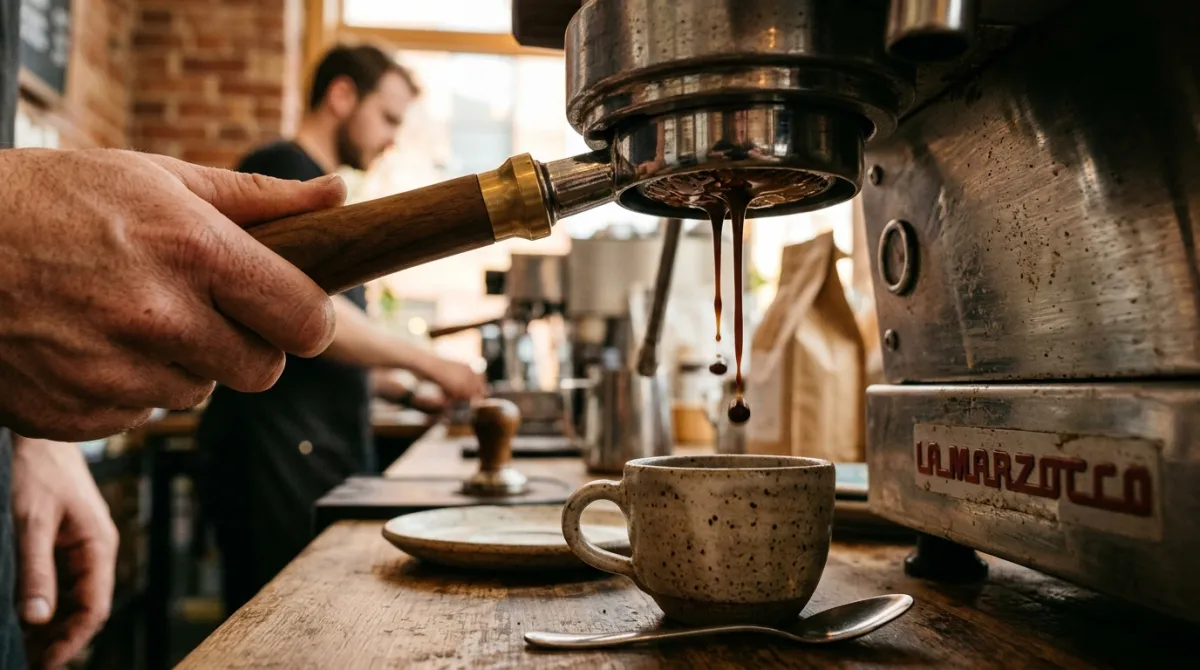
In my kitchen, I reach for a ristretto with punchy, chocolatey dark roasts that otherwise bully the cup. The tighter ratio tames them. I stay with a standard espresso for balanced medium roasts, where the full 1:2 already tastes clean and sweet.
Milk drinks are where ristretto earns its keep. A short, concentrated shot cuts through steamed milk without disappearing, so your flat white or cortado still tastes like coffee. Many cafes actually build milk drinks on ristretto for exactly this reason.
Straight up, it is a demitasse sipper. Small, sweet, and best enjoyed slowly rather than knocked back like a wake-up gulp.
Frequently asked questions
Is ristretto stronger than espresso?
A ristretto is stronger in flavor and concentration but not necessarily in caffeine. It packs the same coffee dose into less liquid, so each sip tastes denser and sweeter. Total caffeine stays close to a full espresso, often slightly less, since a ristretto uses less water to extract the grounds.
Can I make a ristretto without an espresso machine?
Not a true ristretto, no. It relies on pressurized extraction that only an espresso machine delivers. A moka pot or AeroPress can make a strong, concentrated coffee, but it is not the same drink. If you lack a machine, aim for a strong concentrate rather than trying to copy a real ristretto shot exactly.
What is a lungo compared to a ristretto?
A lungo is the opposite of a ristretto. It uses the same coffee dose but more water, running a longer yield at about a 1:3 ratio or more. That extra water pulls out more bitter, astringent compounds, so a lungo tastes longer, thinner, and more bitter than either a ristretto or a standard espresso.
Do I need to change my grind for a ristretto?
Usually yes, a small step finer. Because a ristretto stops at a short yield, a finer grind slows the flow so the shot still runs a proper 25 to 30 seconds. Keep your espresso grind and the shorter shot can gush out too fast and taste weak. Adjust gradually and taste as you dial it in.
Ristretto and espresso are two settings on the same machine, split by one choice: how much water you let through. Same dose, shorter pour, sweeter cup. Once you can pull a clean 1:2 espresso, a ristretto is only a scale and a few seconds away, and it is one of the most satisfying tweaks you can make at home. Try both from the same bag this week, taste them side by side, and let your own palate decide. Ready to keep dialing in your shots? Explore more brewing guides.
Keep brewing
Dial in your next cup with Brew Better Co.
Tested ratios, methods, and gear notes from a real home kitchen. New guides added regularly.
Explore all guides