espresso drinks
What Is Crema? The Golden Foam on Every Espresso Shot
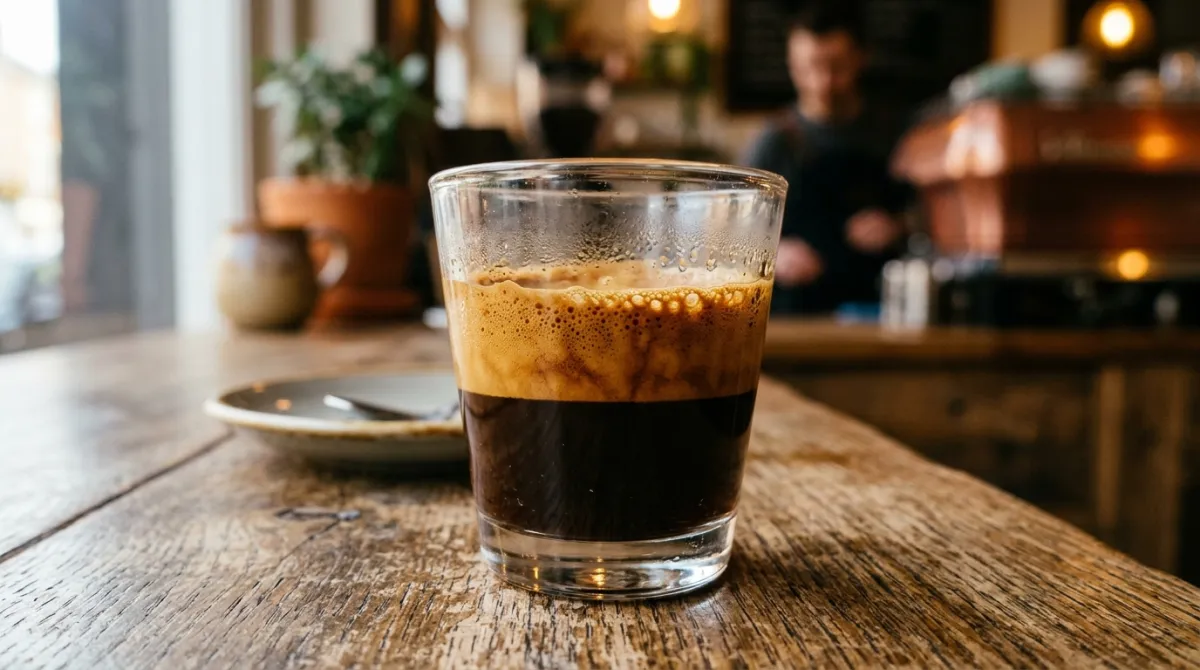
Crema is the golden-brown foam layer that sits on top of a shot of espresso. It forms when hot water is forced through finely ground coffee under high pressure, trapping carbon dioxide, coffee oils, and dissolved solids into a fine, stable foam.
I have pulled espresso almost every morning for more than ten years, and crema is the first thing my eyes go to when a shot lands in the cup. It tells me a lot in a single glance, though it does not tell me everything.
Key Takeaways
- Crema is a foam of CO2 gas, coffee oils, and dissolved solids formed under espresso’s roughly 9 bar of pressure.
- Fresh, recently-roasted beans still degassing CO2 produce more crema; stale beans produce very little.
- Robusta beans, darker roasts, and a fresh, fine grind all boost crema.
- Thick crema signals freshness and pressure, but it is not proof of a great-tasting shot.
- A standard double espresso is roughly 36 mL pulled from about 18 g of coffee.
What is crema, exactly?
Crema is an emulsion. When espresso machines push near-boiling water through a compacted puck of coffee at around 9 bar of pressure, the water strips oils and dissolved solids from the grounds and forces trapped carbon dioxide out of solution. That gas whips the oils and water into thousands of tiny bubbles, and the result floats to the top as a reddish-brown cap.
Only espresso makes crema. Drip coffee, French press, and pour-over never build the pressure needed to create it. That is why crema is one of the defining visual signatures of a real espresso shot, whether it comes from a café lever machine or a home setup on your kitchen counter.
What causes crema to form?
The two big drivers are pressure and gas. High pressure pulls oils and solids into the water, and carbon dioxide provides the bubbles that hold everything together. Fresh beans matter here, because roasting fills coffee with CO2 that slowly escapes over days and weeks. This slow release is called degassing.
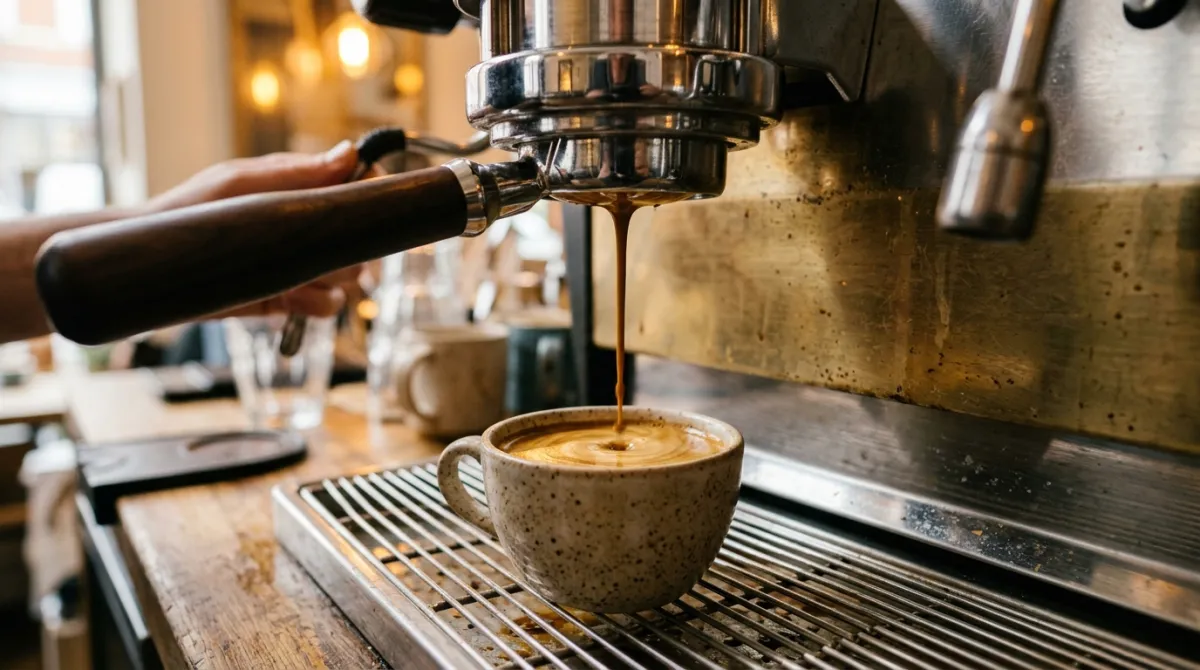
In my experience, beans roasted within the last two or three weeks give the most reliable crema. Coffee that has been sitting open for a month or two has lost most of its gas, so even a perfect shot comes out looking flat and thin. If your crema has vanished, freshness is usually the first suspect, before you blame the machine.
The role of grind and freshness
A fresh, fine grind exposes more surface area and helps the water extract oils and gas efficiently. Grinding right before you brew keeps CO2 in the coffee instead of letting it drift off in a bag of pre-ground powder. If you want to go deeper on dialing this in, see my guide on grind size for espresso.
Bean type and roast level
Robusta beans naturally produce more crema than arabica, thanks to their higher levels of certain solids. Darker roasts also tend to give thicker crema because roasting develops more CO2 and soluble material. Many classic Italian espresso blends add a little robusta for exactly this reason. I break down the differences in arabica versus robusta.
What does good versus bad crema look like?
Good crema is thick, even, and a warm golden or hazelnut brown, often with faint reddish tones. It should hold for a minute or two and spring back slowly when you drag a spoon through it. A little mottling, sometimes called tiger striping, is a good sign that shows even extraction across the puck.
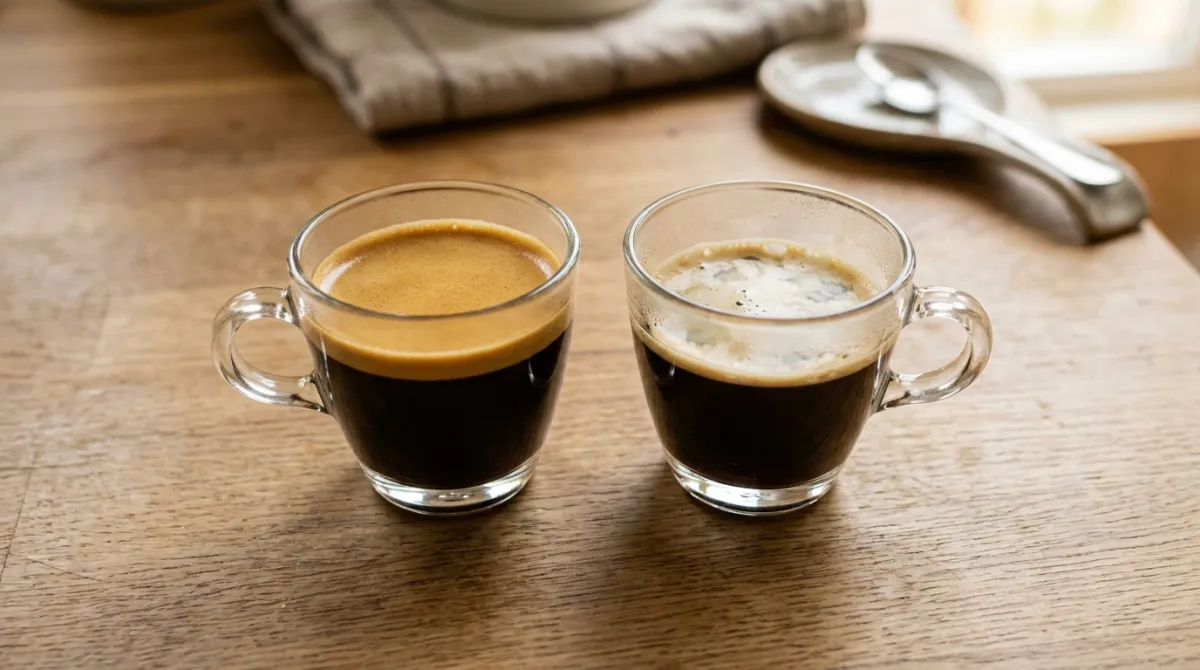
Thin, pale, or fast-disappearing crema usually points to stale beans, too coarse a grind, or low brew pressure. Very dark, almost burnt-looking crema with a bitter smell can mean the grind is too fine or the water is too hot. When I see a shot with almost no crema at all, I check the roast date on my bag before touching any machine settings.
Reading the color
The color of crema hints at your extraction. Pale, blonde crema often means the shot ran too fast and came out under-extracted and sour. Very dark crema with a scorched edge can mean over-extraction and bitterness. If your shots keep landing on either extreme, my notes on why coffee tastes bitter or sour will help you troubleshoot.
How do you get more crema at home?
Start with fresh beans. Nothing else moves the needle as much as coffee roasted within the last few weeks and stored in an airtight container away from light and heat. This single change fixes more thin-crema problems than any gadget I have ever bought.
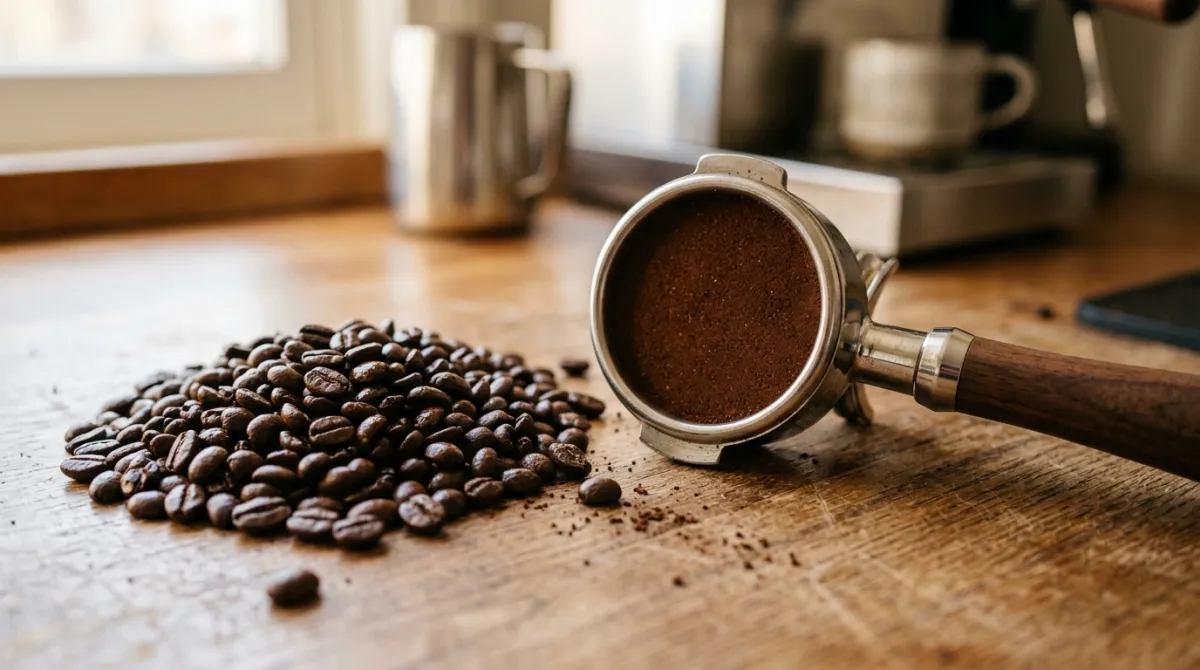
Next, tighten your process. Grind fine and grind fresh, distribute the grounds evenly, and tamp with steady, level pressure. Aim for a consistent dose, around 18 g for a double, pulled to about 36 mL of liquid. Keep your machine at proper pressure and temperature. If you want a repeatable target, my espresso ratio guide walks through dose and yield step by step.
A quick checklist I run through when crema goes missing:
- Check the roast date. Beans older than a month rarely produce good crema.
- Grind finer. A coarse grind lets water rush through without building pressure.
- Grind fresh. Pre-ground coffee loses its gas fast.
- Tamp evenly. An uneven puck creates channels that ruin the foam.
- Confirm your pressure. Aim for roughly 9 bar at the group.
Does crema equal quality?
Here is the honest, slightly contrarian part: crema is not proof of a great shot. It is a strong sign of freshness and correct pressure, but it says nothing directly about how the coffee actually tastes. I have pulled gorgeous, thick crema from cheap robusta-heavy blends that tasted harsh, and thinner crema from delicate single-origin arabicas that were delicious.
Crema itself tends to taste bitter and slightly harsh on its own. That is why many baristas stir it into the shot before drinking, blending its aroma back through the liquid. So treat crema as one piece of feedback among several. Freshness and technique matter, but your palate is the final judge, not the foam. A beautiful cap on a badly balanced shot is still a badly balanced shot.
Frequently asked questions
Why does my espresso have no crema?
The most common cause is stale beans that have finished degassing, so there is little CO2 left to form foam. Other culprits include a grind that is too coarse, low machine pressure, or using pre-ground coffee. Start by checking the roast date, then grind finer and fresher before adjusting anything else.
Should you stir crema into your espresso?
Yes, stirring is usually a good idea. Crema tastes bitter and harsh on its own, and it carries much of the shot’s aroma. Gently stirring it back into the liquid blends those aromatics through the whole cup and evens out the flavor. Many baristas do this automatically before their first sip.
Does more crema mean better coffee?
Not necessarily. Thick crema shows your beans are fresh and your pressure is right, but it does not guarantee good taste. Robusta and dark roasts produce lots of crema regardless of quality. Judge a shot by how it tastes in the cup, using crema as a helpful clue rather than a final verdict.
How long should crema last on a shot?
Good crema should hold for at least one to two minutes before fully dissolving back into the espresso. If it collapses within seconds, your beans are likely stale or your extraction was off. Long-lasting, stable crema that clings to the sides of the cup is a reliable sign of fresh coffee and solid technique.
Crema is a window into your espresso: it reflects your beans’ freshness, your grind, and your machine’s pressure, all in one golden layer. Learn to read it, but let your taste buds have the final say. For more ways to sharpen your setup, browse my more brewing guides.
Keep brewing
Dial in your next cup with Brew Better Co.
Tested ratios, methods, and gear notes from a real home kitchen. New guides added regularly.
Explore all guides