grind
Burr vs Blade Grinder: Which Should You Buy?
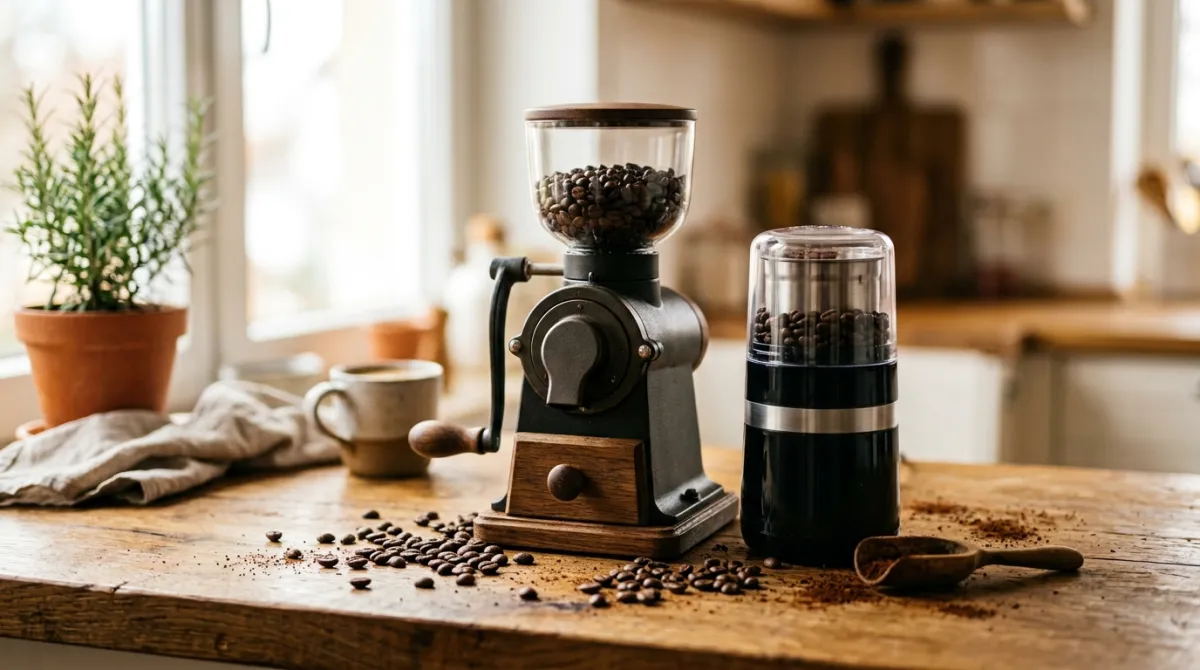
The core difference in the burr vs blade grinder debate is simple: burr grinders crush beans to a uniform size between two abrasive burrs, while blade grinders chop them unevenly with a fast spinning blade. That single distinction changes everything about how your coffee tastes. After ten years of daily brewing, I can tell you the grinder matters more than the machine you pour water through. Uneven grounds pull unevenly in the water, so you end up tasting bitterness and sourness in the same cup. If you only upgrade one thing this year, make it the grinder. Let me walk you through exactly how each type works and which one deserves your money.
Key Takeaways
- Burr grinders produce uniform particles for even extraction; blade grinders create mixed fines and boulders.
- Uneven blade grinding causes bitter and sour flavors at once, because grounds extract at different rates.
- Burrs offer precise, repeatable grind settings; blades only give crude control through timing.
- Conical and flat burrs both grind evenly, with subtle differences in flow and workflow.
- A quality burr grinder is the single biggest upgrade you can make for cup quality.
How does a burr grinder work?
A burr grinder forces beans through the gap between two hardened, abrasive surfaces called burrs, crushing them into particles of a consistent, adjustable size. This is why serious home baristas swear by them. You set a specific distance between the burrs, and every particle gets crushed to roughly that same dimension. Consistency is the whole point.
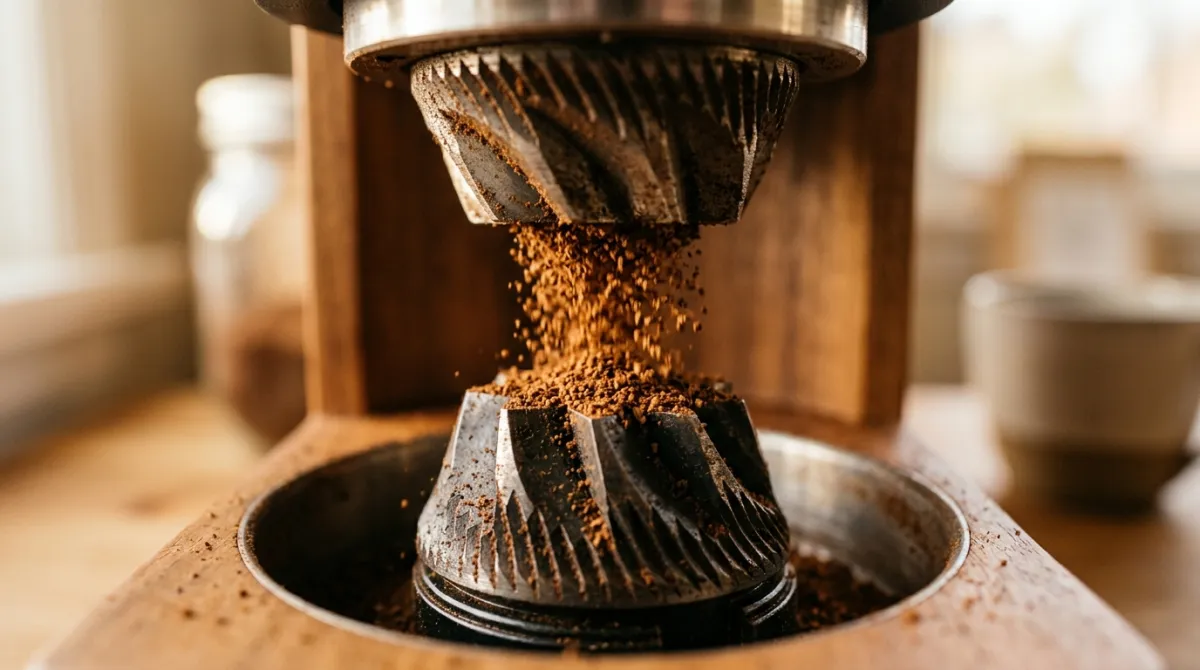
Because the particle size stays uniform, water extracts flavor from each ground at the same rate. That gives you even extraction and a clean, balanced cup. You also get precise control: most burr grinders offer dozens of stepped or infinite settings, so you can dial in a coarse grind for a French press or a fine grind for espresso.
When I switched from timing my old chopper to setting an exact burr position, my morning pour-overs finally tasted repeatable. Same setting, same result, every single day. That reliability is worth more than any fancy brewer, and it makes dialing in fine espresso settings far less of a guessing game.
How does a blade grinder work?
A blade grinder chops beans with a spinning propeller blade, smashing them into wildly uneven pieces rather than crushing them to a set size. Think of it less like grinding and more like a blender for coffee. The blade whirls, beans bounce around, and you get whatever fragments happen to result.
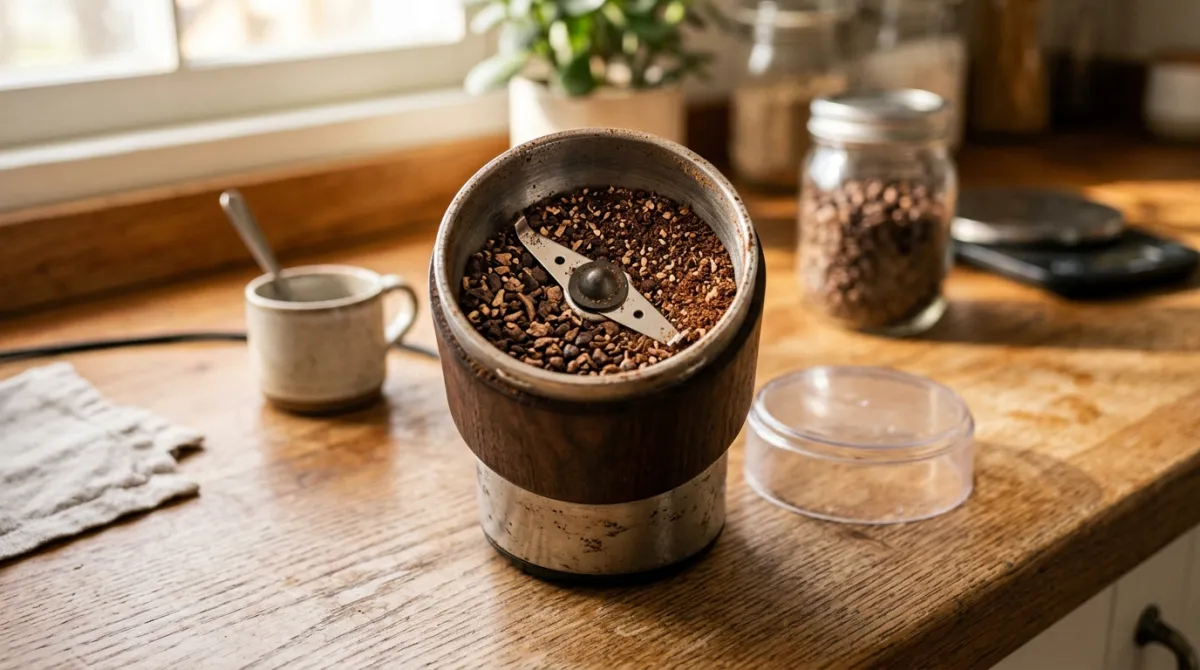
The problem is the mix. You end up with tiny fines alongside large boulders in the same batch. During brewing, the fines over-extract and turn bitter while the boulders under-extract and taste sour. Your cup carries both flaws at once, which is a frustrating flavor to fix.
Most people blame their beans or their brewer for a muddy cup, but the real culprit is usually the blade grinder scattering particle sizes. No brewing technique fully corrects for grounds that range from powder to gravel. The heat is another issue: fast spinning blades warm the grounds, which can dull delicate aromatics before the water ever touches them. If you’re stuck wondering why your coffee tastes off, the grinder is the first place I’d look.
Burr vs blade grinder: full comparison table
The practical gap between these two tools shows up in five areas: grind consistency, control, taste, price, and noise. Below is a side-by-side view drawn from years of using both. The short version? Burrs win on almost every quality metric, while blades win only on upfront cost and simplicity.
| Factor | Burr grinder | Blade grinder |
|---|---|---|
| Grind consistency | Uniform particles, even extraction | Mixed fines and boulders, uneven |
| Control | Precise, repeatable settings | Crude, based only on timing |
| Taste | Balanced, clean, sweet | Bitter and sour at once |
| Price | Higher upfront investment | Lower cost, budget-friendly |
| Noise | Generally lower, steady grind | Loud, high-pitched chopping |
Notice that control column. With a burr grinder you change one setting and get a predictable result. With a blade, your only lever is how long you hold the button, which never produces the same grind twice.
Flat vs conical burrs: what’s the difference?
Once you commit to burrs, you’ll face a second choice: flat or conical. Both crush beans to a uniform size, so either one beats a blade decisively. The differences between them are subtle and matter mostly to experienced brewers chasing specific flavor profiles.
Conical burrs
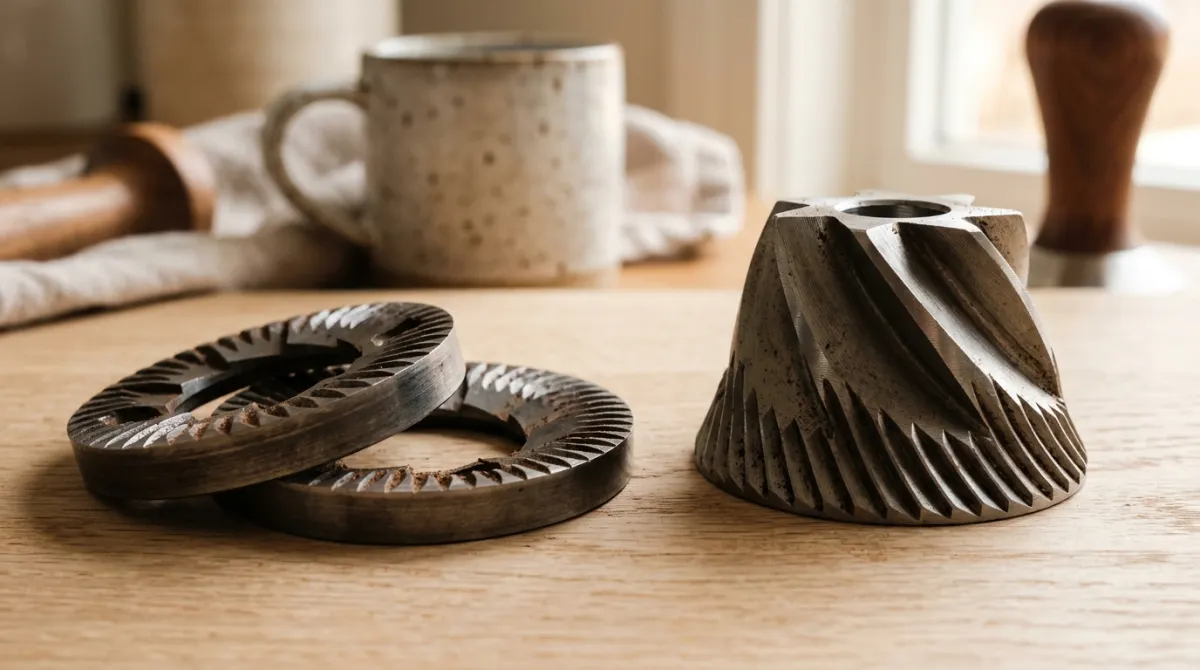
Conical burrs use a cone-shaped inner burr that sits inside a ringed outer burr. Beans fall through the gap by gravity, which tends to keep the setup quieter and often more affordable. Many home grinders use conical burrs because they’re compact and forgiving in daily use.
Flat burrs
Flat burrs use two parallel ring-shaped burrs facing each other, and beans get flung through by centrifugal force. Fans argue flat burrs produce a very tight, uniform particle spread that some tasters prefer for clarity. They can cost more and run a little louder.
Honestly, for most home brewers this choice matters far less than the marketing suggests. A well-built conical grinder and a well-built flat grinder both crush unevenness out of your cup. Spend your energy on grind setting and freshness first, then worry about matching grind size to your brewer.
Which grinder should you buy?
For anyone who cares about how their coffee tastes, buy a burr grinder. It’s the single biggest upgrade for cup quality, full stop. A blade grinder makes sense only in narrow cases: a tight budget, occasional brewing, or grinding spices instead of coffee.
If you drink espresso, a burr grinder isn’t optional. Espresso demands a fine, precise, repeatable grind that a blade simply can’t deliver. For pour-over, French press, and drip, burrs still give you cleaner, sweeter results and let you adjust when something tastes off.
I’ve handed friends the same beans they’d been “disappointed” by, ground fresh on a modest burr grinder, and watched their faces change. The beans were never the problem. The grinder was. Getting your grounds right also lets your recipe work, so nail your grind before fussing over your coffee-to-water ratio.
Frequently asked questions
Is a burr grinder really worth the extra money?
Yes, in my experience it’s the best money you can spend on home coffee. Burr grinders crush beans to a uniform size, which fixes the uneven extraction that makes cheap coffee taste harsh. Even an entry-level burr grinder noticeably outperforms a blade, and the improvement shows up in every single cup you brew.
Can I make good espresso with a blade grinder?
No, a blade grinder can’t produce espresso reliably. Espresso needs a fine, precise, and repeatable grind, but blades chop unevenly and give you no exact setting. The mixed fines and boulders cause channeling and inconsistent shots. For espresso, a burr grinder with fine, adjustable control is genuinely essential, not just preferable.
Why does my blade-ground coffee taste bitter and sour?
Blade grinders create both tiny fines and large boulders in the same batch. The fines over-extract and turn bitter, while the boulders under-extract and taste sour. So you experience both flaws at once. A burr grinder solves this by making every particle a similar size, which produces even, balanced extraction instead.
Are conical or flat burrs better for home brewing?
For most home brewers, either works beautifully, and both crush far more evenly than any blade. Conical burrs tend to be quieter and more affordable, while flat burrs offer a very tight particle spread some tasters prefer. The difference is subtle, so prioritize a solid grinder over the burr shape itself.
Whichever path you choose, remember that the grinder shapes your cup more than almost anything else on the counter. Start with fresh beans, crush them evenly with burrs, dial in your setting, and the rest of your brewing falls into place. I’ve spent a decade proving this to myself one morning at a time, and it holds up. Ready to keep improving? Explore more brewing guides and refine your routine one detail at a time.
Keep brewing
Dial in your next cup with Brew Better Co.
Tested ratios, methods, and gear notes from a real home kitchen. New guides added regularly.
Explore all guides