espresso drinks
How to Make Espresso Without a Machine (4 Methods)
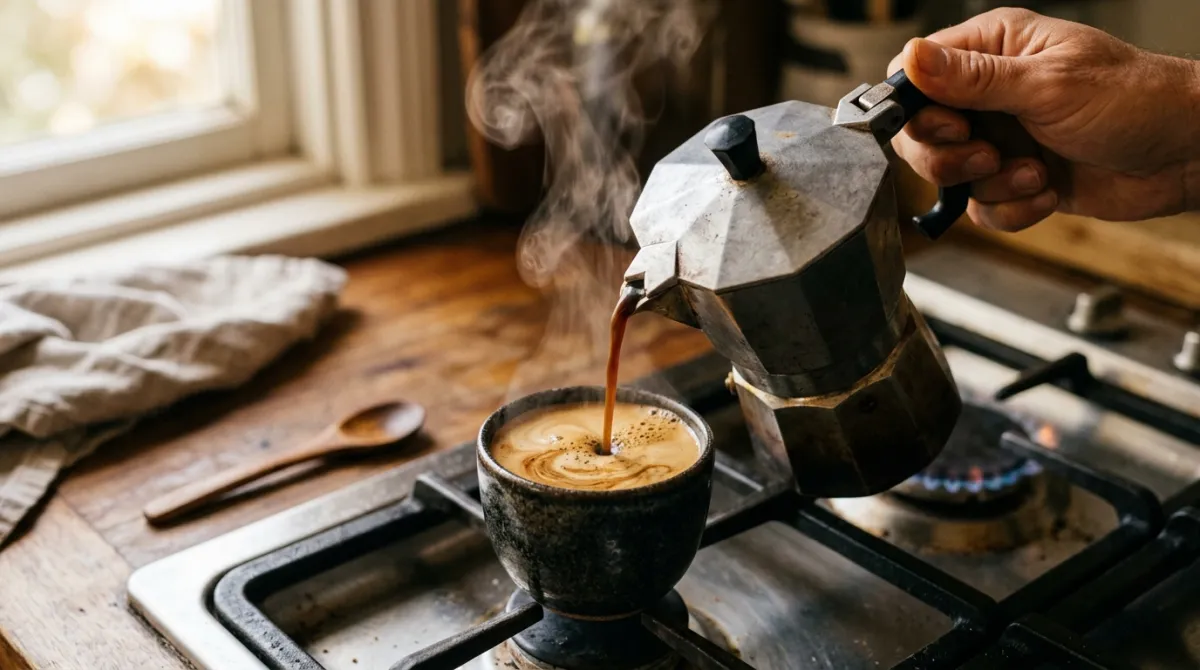
You can brew strong, espresso-style coffee without a machine using a moka pot, an AeroPress, or a similar manual brewer, though it comes with one honest caveat. True espresso needs roughly 9 bar of pressure to build that thick crema and syrupy body, and most no-machine methods do not get there. What you can make at home is a bold, concentrated shot that tastes close and works beautifully in milk drinks. I’ve leaned on these methods for years when I travel or when my grinder outpaces my budget, and each one has a sweet spot worth knowing.
Key Takeaways
- No stovetop or manual brewer hits 9 bar, so you get espresso-style coffee, not literal espresso.
- A moka pot uses steam pressure near 1.5 bar for the boldest, closest result on a stove.
- An AeroPress with a fine grind and a high coffee-to-water ratio makes a rich concentrate fast.
- A hand-pump or lever device gets closest to real crema and true espresso pressure.
- Grind and ratio matter more than gear: dial those in first.
Can you really make espresso without a machine?
Not literal espresso, but a very close cousin. Real espresso is defined by pressure: about 9 bar forces hot water through a compact puck of finely ground coffee in 25 to 30 seconds. That pressure emulsifies oils and creates crema. No stovetop pot or hand press reaches 9 bar on its own, so what you brew is honestly an espresso-style shot: concentrated, intense, and lower in crema.
That distinction matters if you’re chasing a café-perfect result. In my experience, though, the gap shrinks fast once you nail grind size and ratio. A well-made moka pot shot layered into steamed milk fools most people at the breakfast table. If you want the theory behind concentration, the espresso ratio guide breaks down why less water means more punch.
How do you make espresso in a moka pot?
The moka pot is my top pick for stovetop espresso-style coffee because it actually builds pressure. As water boils in the base, steam pushes it up through the coffee bed at around 1.5 bar. That is nowhere near 9 bar, but it is enough for a thick, bold shot with real intensity.
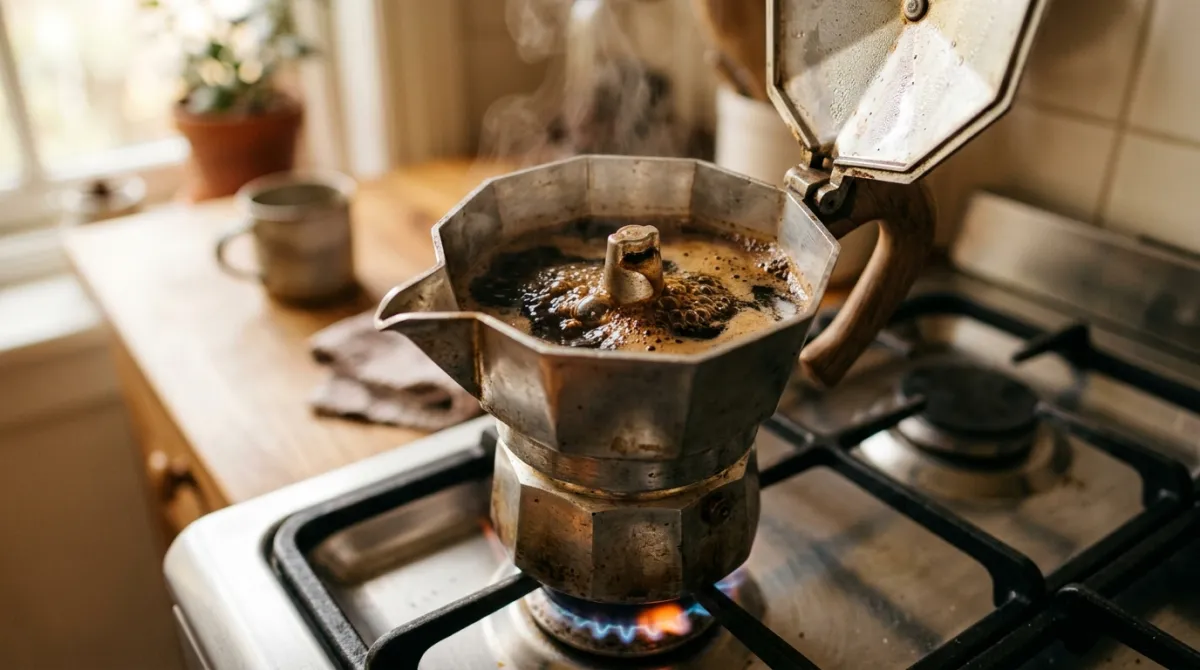
Here’s my routine. Fill the bottom chamber with hot water up to the safety valve, no higher. Grind slightly finer than table salt, a touch coarser than true espresso, so the pot does not choke or hiss violently. Fill the filter basket level and do not tamp it. Assemble, then set it on medium-low heat with the lid open.
Pull it off the moment you hear that gurgling, sputtering sound. That gurgle means water is spent and steam is coming through, which scorches the shot. I run mine to a warm, mellow ratio and stop early. For exact numbers, the moka pot ratio guide covers grams of coffee per cup size.
One warning from hard-won mistakes: never walk away from a moka pot. It goes from perfect to bitter in about ten seconds.
How do you make espresso in an AeroPress?
The AeroPress is the most flexible no-machine option and my travel default. It cannot hit espresso pressure by hand, but you press manually, which gives you a surprising amount of control over strength and body. The trick is treating it as a concentrate maker, not a full-cup brewer.
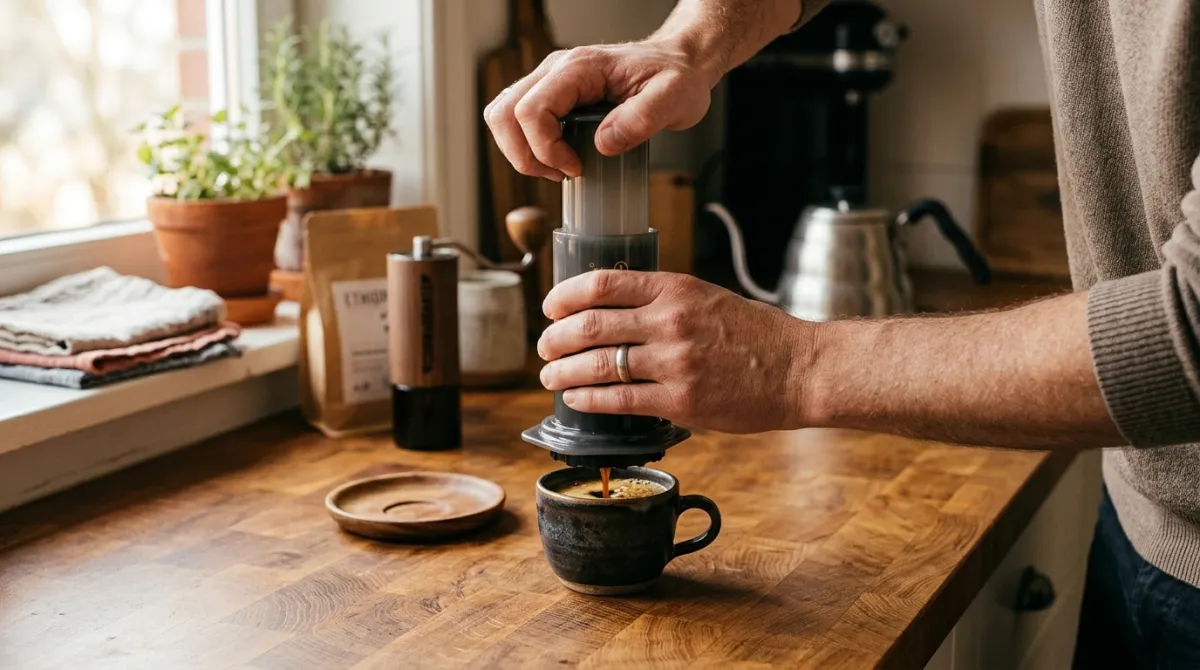
Use a fine grind, close to what you would use for real espresso, and load more coffee with less water. I go heavy: think a doubled dose against a short pour, around a third of the water you’d use for a normal AeroPress cup. Bloom for ten seconds, stir, then press slowly and steadily over 30 to 40 seconds. Resistance is good. It means you are extracting a dense shot.
The result is thick and punchy, ideal as a base for a flat white or an iced latte. You will not get much crema, but the body holds up in milk. If you want a standard-strength brew instead, my full AeroPress recipe walks through the lighter approach.
One upgrade worth mentioning: a metal filter or a dedicated pressure attachment stiffens the plunge and edges you closer to a true shot. Even so, be realistic about crema; the what is crema explainer shows why pressure, not just fine coffee, creates it.
Can a French press make espresso-style coffee?
A French press can make a strong, bold cup, but it is the least espresso-like of these methods. There is no pressure at all. It’s full-immersion steeping, so you get body and richness without the concentrated intensity or crema of a pressurized shot. I reach for it when I want strength but do not need a true espresso texture.
To push it toward espresso territory, change the ratio, not just the timing. Use roughly twice the coffee you normally would for the same water, and grind a bit finer than the usual coarse press grind. Steep for four minutes, break the crust, then press slowly. Decant right away so it does not keep extracting and turn bitter.
What you end up with is a heavy, syrupy coffee that works as a rough substitute in milk drinks. It’s my honest least favorite for imitating espresso, but it’s forgiving and hard to mess up. If a French press is all you have on a rented kitchen counter, it will absolutely get the job done.
What about a manual or handheld espresso maker?
If you want the closest thing to real espresso without a plug-in machine, a hand-pump or lever device is the answer. These are the only no-machine tools that can reach or approach 9 bar, because you supply the pressure yourself through a piston or a hand pump. That is why they can produce genuine crema.
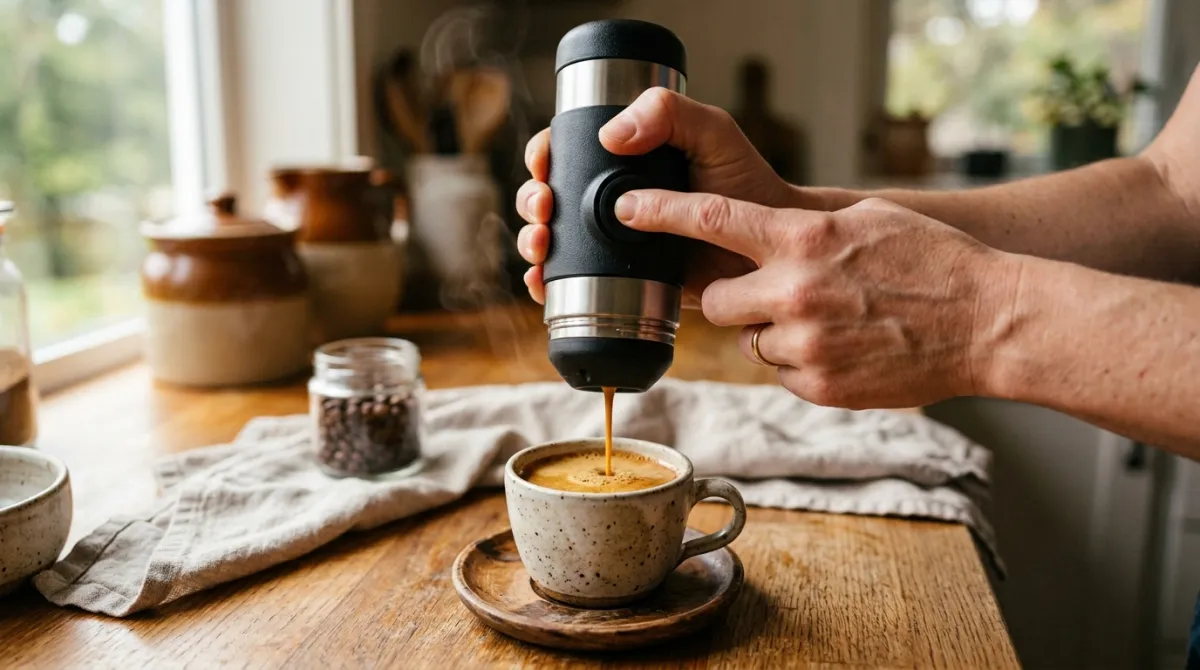
I keep a small hand-pump espresso maker in my travel bag, and the difference is obvious. You dose finely ground coffee into a portafilter-style basket, tamp it, add hot water, then pump. The physical effort builds real pressure against the puck, which is exactly what stovetop pots cannot do. Grind fine and tamp firmly, or the pressure escapes and the shot runs weak.
These devices cost more than a moka pot and take practice to dial in. But if crema and a true espresso profile matter to you, this is the category to buy. Everything else on this list is espresso-style; this one can be the real thing when you get the grind right.
Which no-machine method should you choose?
Pick based on what you’re chasing. For the boldest everyday stovetop shot, the moka pot wins on convenience and consistency. For travel and control, the AeroPress is unbeatable. For genuine crema and the closest thing to true espresso, a hand-pump or lever maker earns its price. The French press is the fallback when it’s all you’ve got.
Grind and ratio decide everything here, more than the gear itself. In my experience, a cheap moka pot with a good grinder beats an expensive brewer with stale, badly ground beans every time. Dial in a fine-ish grind and a concentrated ratio first, then match the method to your morning.
Frequently asked questions
Does no-machine espresso have crema?
Mostly no. Crema forms when high pressure, around 9 bar, emulsifies coffee oils and dissolved gases. Moka pots, AeroPresses, and French presses do not reach that pressure, so they produce little to no crema. Only a hand-pump or lever espresso maker generates enough pressure to build genuine crema on top of your shot.
What grind do I need for stovetop espresso?
Grind slightly finer than table salt for a moka pot, a touch coarser than true espresso. Too fine and the pot chokes or hisses and scorches the coffee. For an AeroPress concentrate, go finer, close to real espresso grind, since you press it by hand and want more resistance during the plunge.
Is moka pot coffee the same as espresso?
No, but it’s the closest stovetop match. A moka pot brews at roughly 1.5 bar of steam pressure, far below the 9 bar that defines real espresso. The shot is bold, concentrated, and espresso-style, and it works well in milk drinks, but it lacks the crema and syrupy body of a true machine-pulled espresso.
Can I use pre-ground coffee for these methods?
You can, but freshly ground beans taste noticeably better, especially for concentrated shots. Pre-ground espresso works in a moka pot in a pinch. For an AeroPress concentrate you want a fine, fresh grind for proper resistance and extraction. If you buy pre-ground, choose an espresso grind and use it quickly before it goes stale.
Making espresso without a machine is completely doable once you accept the honest trade-off: you’re brewing a strong, espresso-style shot, not a 9-bar café pull, unless you use a hand-pump maker. Start with the moka pot or AeroPress, focus on grind and ratio, and you’ll be pulling bold shots for milk drinks in no time. For more techniques and recipes, browse my more brewing guides.
Keep brewing
Dial in your next cup with Brew Better Co.
Tested ratios, methods, and gear notes from a real home kitchen. New guides added regularly.
Explore all guides