methods
How to Make Turkish Coffee: A Home Barista's Guide
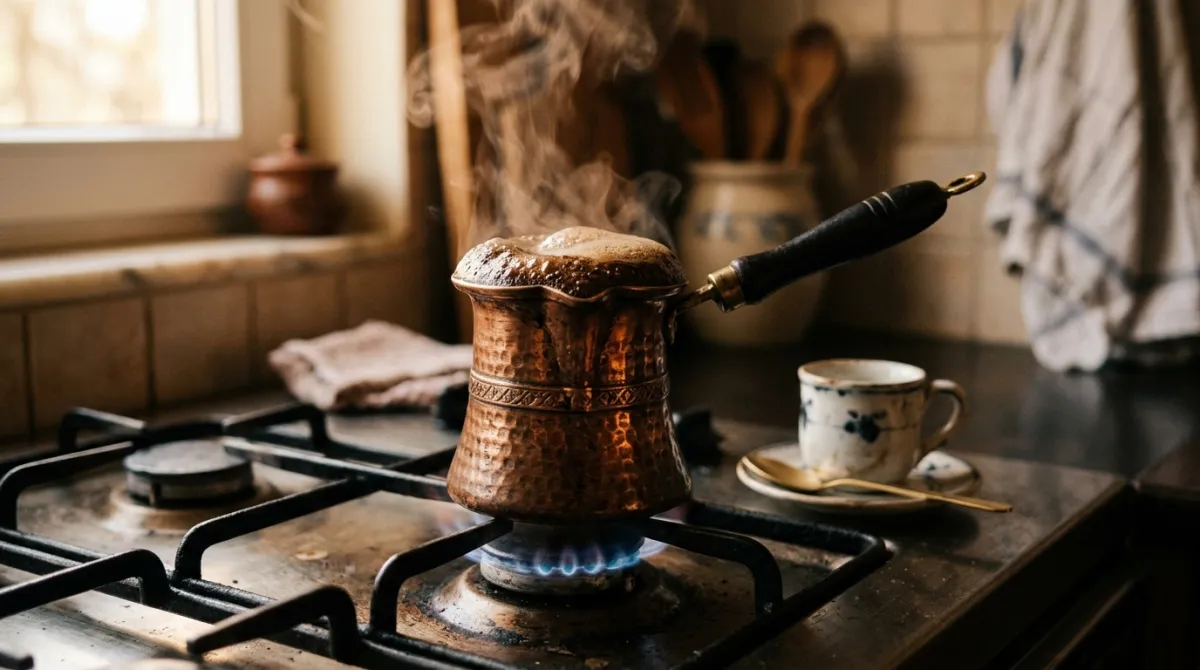
How to make Turkish coffee, in brief: you simmer extra-fine, powder-like coffee in a small pot called a cezve, then pull it off the heat the moment the foam rises, before it ever boils. The grounds go into the cup with the liquid, so nothing gets filtered out.
I have been brewing this way most mornings for years, and it is still the method I reach for when I want the most concentrated, aromatic cup my kitchen can produce. It rewards patience over gear.
Key Takeaways
- Grind extra-fine, finer than espresso, so the coffee feels like flour between your fingers.
- Use roughly 1 tablespoon (about 7 g) of coffee per 2 to 3 oz (60 to 90 mL) of cold water.
- Add sugar before you brew, never after, since the cup is unfiltered.
- Heat slowly and never boil; lift the cezve the instant the foam climbs the sides.
- Let the grounds settle for a minute before you sip.
What is Turkish coffee and how does it differ from other methods?
Turkish coffee is one of the oldest surviving brewing methods, prepared unfiltered in a small long-handled pot called a cezve or ibrik. Unlike a percolator or drip machine, nothing separates the grounds from the liquid. You drink the coffee and its sediment together, which gives the cup its famously thick body.
The defining traits are the grind and the heat. The coffee is milled to a powder finer than espresso, and it is warmed slowly rather than boiled. Compared with pressure methods, there is no crema in the espresso sense. Instead you chase a soft layer of foam called kaymak.
If you already brew with pressure or percolation, this will feel refreshingly analog. There is no pump, no paper, no basket. Just heat, water, and very fine coffee. For a contrast in filtration, compare it with how a percolator recirculates water through a basket of coarse grounds.
What grind size does Turkish coffee need?
Turkish coffee needs the finest grind in all of coffee, a texture closer to powdered sugar or flour than to table salt. It should not feel gritty at all. This is finer than espresso, which is already fine, so most home grinders struggle to reach it without a dedicated setting.
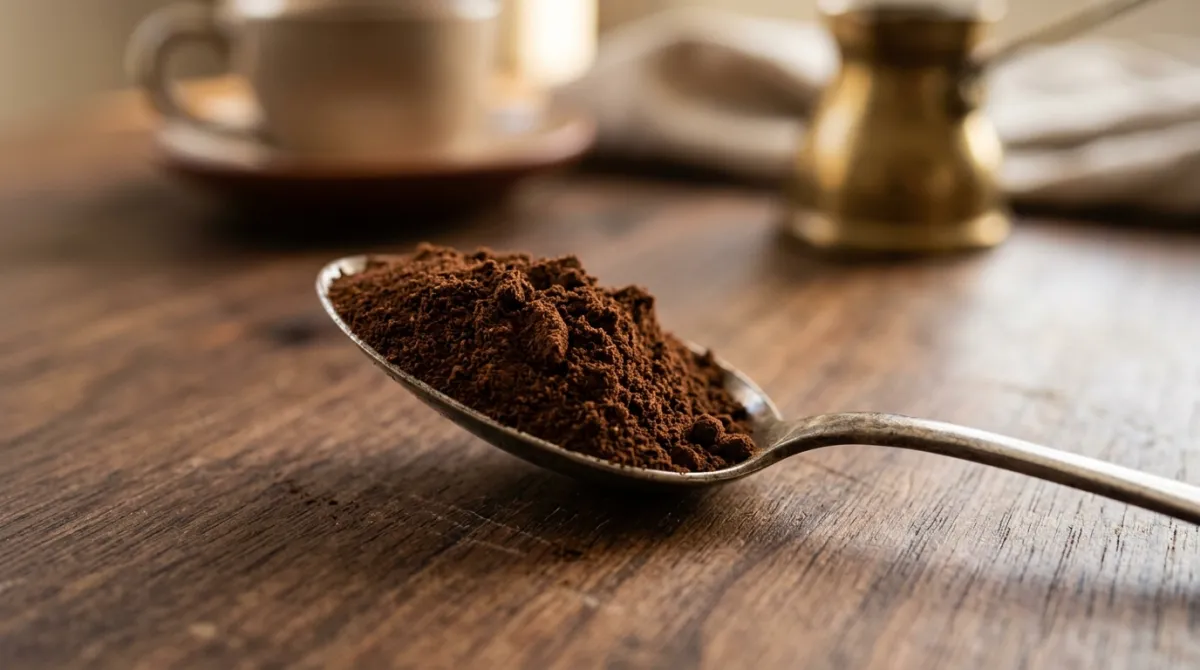
Here is the practical problem. Many blade grinders and even some burr grinders cannot produce a true Turkish grind. In my experience, a hand grinder marketed for Turkish coffee, or a purpose-built electric mill, saves a lot of frustration. If you buy pre-ground Turkish coffee, you sidestep the issue entirely.
Why does it matter so much? The fine powder is what lets the coffee extract fully during a short, gentle brew, and it is what creates that heavy, velvety body. Too coarse and the cup tastes thin and watery.
A useful reference point I share with friends: if your espresso grind looks like caster sugar, Turkish should look like icing sugar. For a reminder of where espresso sits on that scale, see this guide to grind size for espresso. Turkish lives one clear step finer.
What is the right coffee-to-water ratio?
The classic ratio is about 1 tablespoon of coffee, roughly 7 g, per 2 to 3 oz (60 to 90 mL) of cold water, which is one demitasse cup. If you are brewing two cups, double both the coffee and the water and measure the water using the actual cups you will serve in.
Measuring by the cup matters here more than with most methods, because the cezve is sized to the serving. I fill each demitasse with cold water, pour it into the pot, and that tells me exactly how much I need. Then I add one heaping teaspoon of coffee per cup.
Sugar, if you want it, goes in now. Turkish coffee is traditionally ordered by sweetness: plain, medium, or sweet. Because the drink is never stirred after it foams, sugar added at the table will not dissolve properly. Add it cold, at the start, and stir before heating.
I have found that erring slightly strong, a genuinely heaping spoon rather than a level one, gives the best foam and body. A stingy dose produces a flat, disappointing cup. If ratios are new to you, the fundamentals in this coffee-to-water ratio guide transfer well, and the concentrated approach shares DNA with a tight moka pot ratio.
How do you make Turkish coffee step by step?
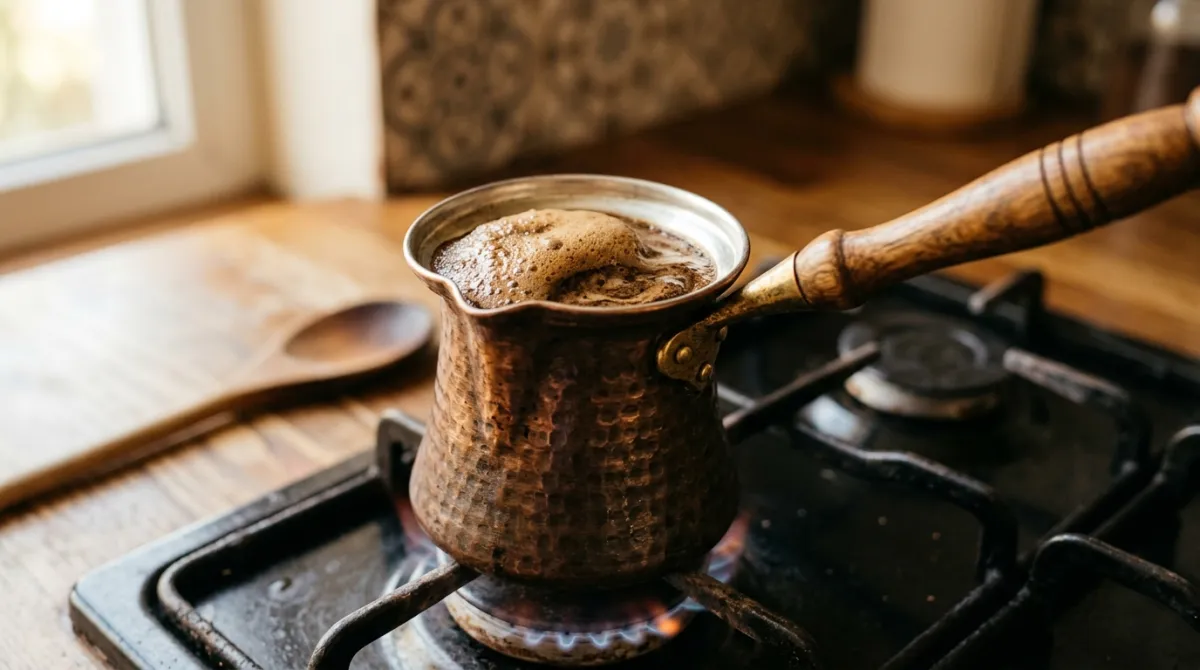
Making Turkish coffee takes about four minutes of attentive, unhurried heating. The single rule that governs the whole process is simple: do not let it boil. You are aiming for a slow rise of foam, which you interrupt at the last second. Rush the heat and you scorch the coffee and lose the kaymak.
Step 1: Measure and combine
Add cold water to the cezve using your demitasse as the measure. Spoon in one heaping teaspoon of extra-fine coffee per cup, and add sugar now if you want it. Do not stir yet. Let the coffee float on the surface for a moment.
Step 2: Stir once, then heat low
Stir gently until the coffee and any sugar are mixed in, then set the cezve over low heat. Low and slow is the whole game. I keep the burner well below medium so the pot takes two to three minutes to develop.
Step 3: Watch for the foam
As it warms, a ring of dark foam forms and starts to climb the sides. This is the moment that matters. Do not walk away. When the foam rises toward the rim, lift the cezve off the heat immediately, before it breaks into a rolling boil.
Step 4: Optionally return for more foam
For a thicker head, spoon a little foam into each cup, then return the pot to the heat once or twice, pulling it each time the foam rises again. Never let it boil over. Boiling destroys the foam and turns the cup bitter.
Step 5: Pour and let it settle
Pour slowly into the demitasse, foam and all. Then wait. Give it a minute or two for the fine grounds to sink to the bottom. That settled layer of sludge stays in the cup; you sip the clear coffee above it.
How do you serve and drink it?
Turkish coffee is served in a small demitasse, grounds included, often alongside a glass of water and something sweet like Turkish delight. The water cleanses your palate first so you taste the coffee clearly. The sweet is a traditional counterpoint to the intense, unsweetened-by-default brew.

Sip slowly and stop before the bottom. The last inch or so is thick sediment, and drinking it is unpleasant and gritty. Letting the cup rest for a minute or two after pouring is what makes clean sipping possible, so build that pause into your ritual.
One habit that took me a while to learn: resist the urge to stir the cup at the table. Stirring lifts the settled grounds back into suspension and ruins the texture. Pour, wait, sip. That is the rhythm.
What mistakes should you avoid?
The most common mistakes are boiling the coffee, using too coarse a grind, and rushing the heat. Any one of these will flatten the foam and muddy the flavor. Turkish coffee is forgiving of cheap equipment but unforgiving of impatience, which is why I treat the four minutes as a small meditation.
Watch the heat above all. If the surface breaks into a full boil, you have gone too far, and the delicate foam collapses. A second frequent error is adding sugar after brewing, which leaves it undissolved because you cannot stir the settled cup. Add it cold, at the start.
I would argue the cezve size matters more than most beginners expect. A pot that is too large for a single cup leaves the coffee too shallow to foam well. Match the pot roughly to the volume you are brewing, and the whole process gets easier.
Frequently asked questions
Can I make Turkish coffee without a cezve?
You can improvise with a very small saucepan, but results suffer. The cezve’s narrow neck and wide base concentrate the foam and control the rise, which is central to the method. A tiny pot with a pouring lip is the closest substitute. In my experience, a proper cezve is inexpensive and worth buying once you enjoy the ritual.
What coffee beans work best?
Traditionally a medium roast is used, though roast is personal. What matters far more is the grind, which must be extra-fine and powder-like. Any fresh, decent bean ground to that fineness will make a good cup. I lean toward a medium roast for its balance of sweetness and body, but a darker roast also suits the intense style well.
Why won’t my Turkish coffee foam?
Weak foam usually means one of three things: the grind is too coarse, the heat is too high, or the dose is too low. Foam builds slowly over gentle heat, so a fast boil never develops it. Use a genuinely heaping spoon of very fine coffee and keep the burner low. Pulling the pot before it boils preserves whatever foam has formed.
Is Turkish coffee stronger than espresso?
By volume it tastes intensely strong because it is unfiltered and concentrated, but a single demitasse holds less caffeine than a double espresso in most cases. The perception of strength comes from the thick body and the sediment you drink alongside the liquid. It is a small, potent cup meant to be sipped slowly, not thrown back.
Turkish coffee turned me into a more patient brewer, and that patience improved every other method I use. Start with a fine grind, a heaping spoon, cold water, and low heat, then trust yourself to pull the pot before it boils. Once the rhythm clicks, it becomes one of the simplest and most rewarding cups you can make at home. For more ideas, browse our more brewing guides.
Keep brewing
Dial in your next cup with Brew Better Co.
Tested ratios, methods, and gear notes from a real home kitchen. New guides added regularly.
Explore all guides