methods
How to Make Vietnamese Coffee at Home
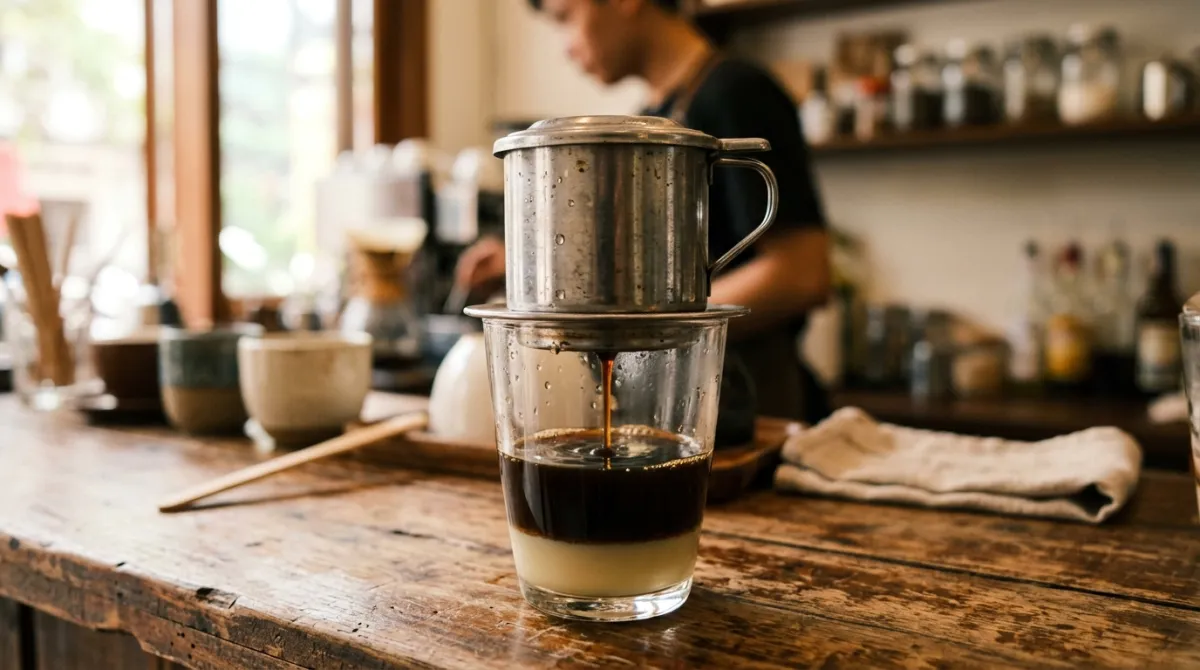
How you make Vietnamese coffee, in brief: strong dark-roast coffee dripped slowly through a small metal phin filter over a layer of sweetened condensed milk, then stirred and served hot or poured over ice. You don’t need an espresso machine or any fancy gear. The phin does all the work while you wait. I’ve been brewing this most mornings for years, and the ritual of watching it drip is half the pleasure. Below I’ll walk you through the exact grind, ratio, and timing I use for both the hot version (cà phê sữa nóng) and the iced version (cà phê sữa đá).
Key Takeaways
- Vietnamese coffee is dark-roast coffee dripped through a phin filter over sweetened condensed milk.
- Use a medium-coarse grind, traditionally robusta-heavy for extra strength and body.
- The full drip takes roughly 4 to 5 minutes; rushing it thins the flavor.
- Rough ratio: 2 to 3 tbsp coffee per phin, plus 2 to 3 tbsp condensed milk to taste.
- Serve hot as cà phê sữa nóng, or over ice as cà phê sữa đá.
What is Vietnamese coffee?
Vietnamese coffee is a brewing style, not a single drink. It uses a small metal drip filter called a phin, set over a cup or glass. The magic comes from pairing intensely strong, dark-roasted coffee with sweetened condensed milk. That milk replaces both sugar and fresh dairy, giving you a thick, dessert-like cup.
The coffee itself is traditionally robusta-heavy. Robusta beans carry nearly double the caffeine of arabica and taste bolder, almost chocolatey and bitter. That punch is exactly what stands up to all that sweet milk. In my experience, a lighter arabica-only blend gets swallowed by the condensed milk and tastes flat.
Want the shortest possible explanation? Strong coffee, sweet milk, slow drip. Everything else is just detail.
What equipment and ingredients do you need?
The whole point of Vietnamese coffee is how little you need. No pump, no pressure, no machine. Just a phin filter, coffee, hot water, and a can of sweetened condensed milk. It’s one of the cheapest ways to make a genuinely rich coffee at home.
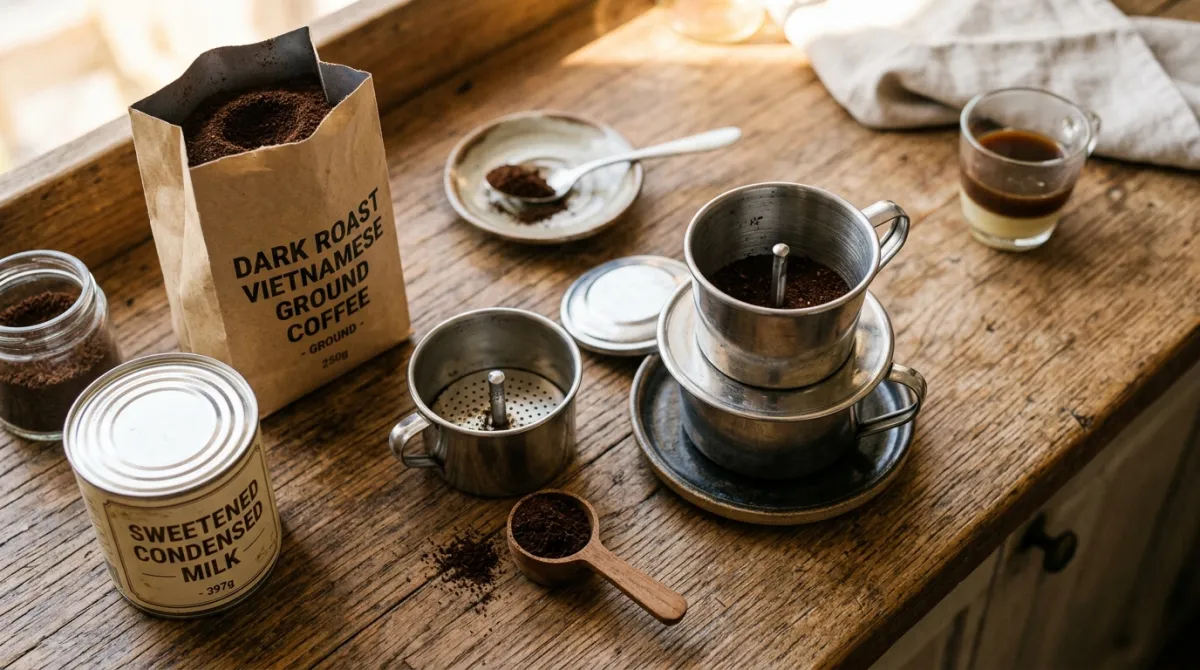
The phin filter
A phin is a small stacked metal filter with four parts: a base plate with holes, a brewing chamber, a perforated press (the gravity insert that sits on the grounds), and a lid. Most phins are aluminum or stainless steel. Stainless holds heat a little better and won’t dent, so it’s what I’d buy if you’re starting fresh.
Coffee, milk, and water
Reach for a dark roast. Traditional Vietnamese blends lean robusta, but a dark-roast arabica or an arabica-robusta mix works well too. If you’re unsure why roast level matters so much here, my breakdown of light roast vs dark roast explains how darker beans hold up against sweet milk. Grind medium-coarse, roughly like coarse sea salt. Too fine and the water stalls; too coarse and it rushes through weak. You’ll also want sweetened condensed milk (not evaporated milk, they’re different) and water just off the boil.
How do you make hot Vietnamese coffee (cà phê sữa nóng)?
Cà phê sữa nóng is the classic hot cup, and it’s the best place to learn the phin. The steps below are the exact routine I follow every morning. Take your time on the bloom and the drip; those two moments decide whether the cup tastes syrupy and deep or thin and sour.
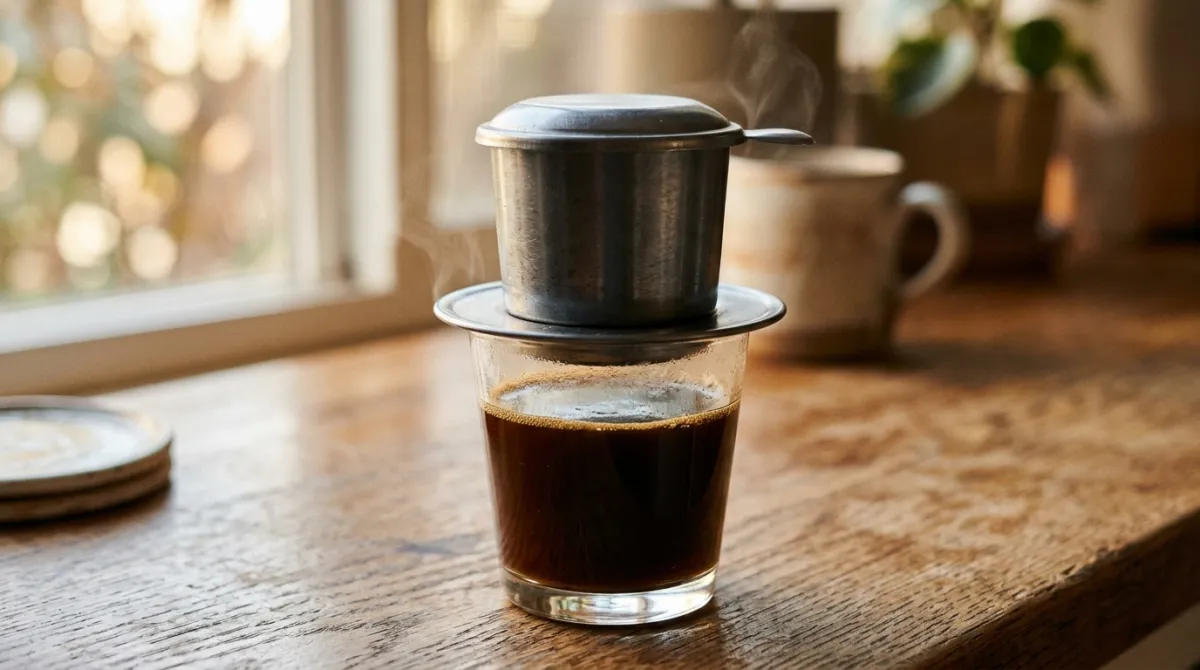
Step by step with a phin
- Add the milk. Spoon 2 to 3 tablespoons of sweetened condensed milk into your cup. Set the phin base on top.
- Add the coffee. Put 2 to 3 tablespoons (about 10 to 15 grams) of medium-coarse dark-roast grounds into the phin chamber. Give it a gentle shake to level.
- Insert the press. Lower the perforated press onto the grounds and rest it there. Don’t crank it down hard; light contact is enough.
- Bloom. Pour a small splash of hot water, maybe a tablespoon, just to wet the grounds. Wait about 30 seconds while they swell and release gas.
- Fill and drip. Pour the rest of the water, roughly 3 to 4 ounces, to near the top. Cap with the lid and let it drip. A good drip takes about 4 to 5 minutes.
- Stir and serve. Lift off the phin, stir the coffee into the milk until fully combined, and drink it hot.
If the water blasts through in under two minutes, your grind is too coarse or the press is too loose. If nothing drips, the grind’s too fine. Adjust one thing at a time.
For dialing in strength across other methods, my coffee-to-water ratio guide covers the same balancing logic.
How do you make iced Vietnamese coffee (cà phê sữa đá)?
Cà phê sữa đá is the iced version, and honestly it’s what most people fall in love with. The method is nearly identical: you just brew a touch stronger, then pour the finished coffee over a tall glass of ice. Vietnam’s climate made this the default order, and once you’ve had it on a hot afternoon you’ll understand why.
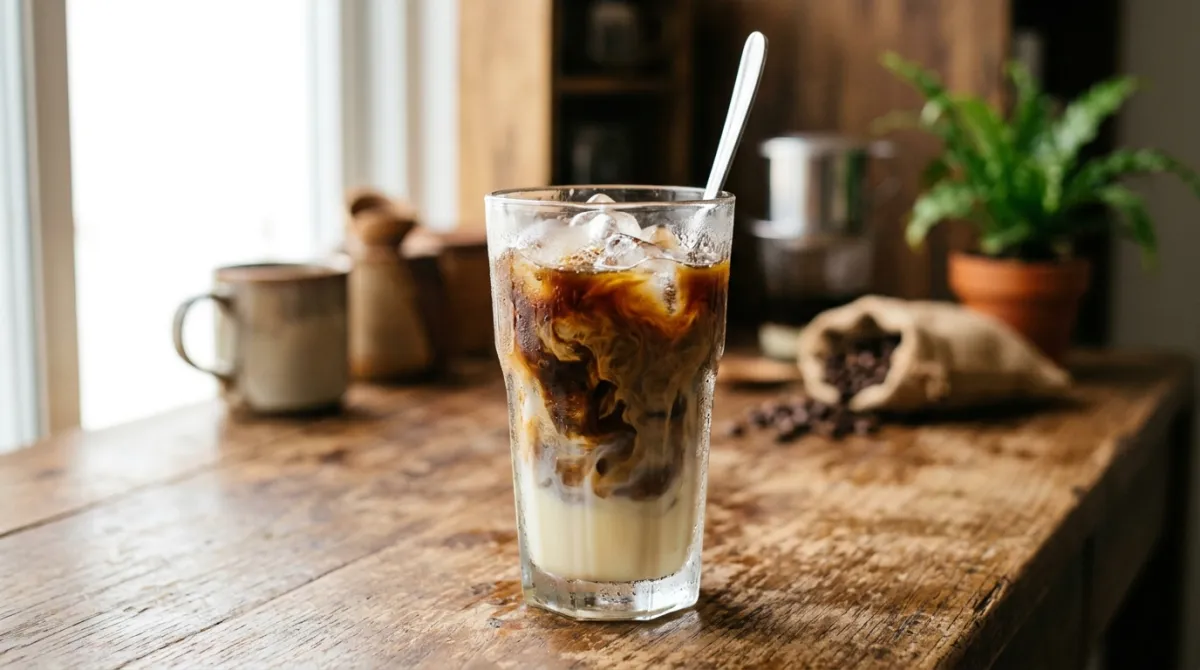
Brew exactly as above, but consider using a little extra coffee or slightly less water so the cup can survive melting ice without going watery. Stir the hot coffee and condensed milk together first, while it’s still warm, so the milk dissolves fully. Then fill a glass with ice and pour the sweet coffee over the top. Stir again and drink it cold.
One habit I’ve picked up: brew the coffee ahead and chill it before it ever touches ice. That keeps the ice from melting on contact and diluting everything. If you want a deeper walkthrough of chilling techniques, my iced coffee at home guide breaks down the trade-offs.
How can you fix common problems and adjust the recipe?
Most Vietnamese coffee problems trace back to grind and timing. When my cup tastes sour or watery, the drip almost always finished too fast, meaning under-extraction. When it tastes harsh and ashy, the drip crawled and over-extracted. Getting the grind medium-coarse fixes the majority of bad cups.
Here’s how I troubleshoot the usual issues:
- Drips too fast, tastes weak: grind finer, or press the insert down a little more firmly.
- Won’t drip at all: grind coarser, or loosen the press so it isn’t packing the bed.
- Too bitter: you may be using too much coffee or water that’s fully boiling. Let the kettle rest 30 seconds off boil.
- Too sweet or too bland: condensed milk is entirely to taste, so start with 2 tablespoons and adjust the next cup.
You can scale the whole thing up with a larger phin, though I find single-serve phins the most reliable. The principle mirrors other pressure-free methods: control the grind, control the ratio, control the time. If you like tinkering with those variables, my moka pot ratio guide applies the same thinking to a stovetop brewer.
Frequently asked questions
Can I make Vietnamese coffee without a phin?
Yes, though the phin gives the most authentic result. In a pinch, brew a very strong, dark cup using a French press or moka pot, then stir it into sweetened condensed milk and serve hot or over ice. The drink is defined by the strong-coffee-plus-condensed-milk pairing more than by the filter itself, so any concentrated brew works.
What kind of coffee is best for Vietnamese coffee?
A dark roast, traditionally robusta-heavy, works best. Robusta brings a bold, bitter, chocolatey punch and extra caffeine that stands up to sweet condensed milk. A dark-roast arabica or an arabica-robusta blend also works well. Avoid light roasts here; in my experience their bright, delicate flavors get completely buried under the milk.
Why is my Vietnamese coffee dripping too fast or too slow?
Grind size and press pressure control the drip. A drip finishing under two minutes usually means the grind is too coarse or the press sits too loose, giving a weak cup. If nothing drips, the grind is too fine or packed too tight. Aim for a medium-coarse grind and a 4 to 5 minute total drip.
Can I use regular milk instead of condensed milk?
You can, but it changes the drink entirely. Sweetened condensed milk provides both the sweetness and the thick, creamy body that define Vietnamese coffee. Regular milk makes a thinner, less sweet cup closer to a café latte. If you want the traditional taste and texture, stick with sweetened condensed milk and adjust the amount to your liking.
Final thoughts
Vietnamese coffee rewards patience more than equipment. Once you’ve got the grind medium-coarse and the drip running four to five minutes, the rest is just tuning the milk to your taste. Start with the hot cup to learn the phin, then move to cà phê sữa đá when the weather turns. It’s become my go-to when I want something rich without hauling out the espresso machine. Keep a can of condensed milk on hand and a phin in the drawer, and you’re set. For more methods and ratios to try next, browse more brewing guides.
Keep brewing
Dial in your next cup with Brew Better Co.
Tested ratios, methods, and gear notes from a real home kitchen. New guides added regularly.
Explore all guides