cold brew
Nitro Cold Brew: What It Is and How to Make It

Nitro cold brew is cold brew coffee infused with nitrogen gas, which gives it a creamy body, a cascading pour, and a naturally sweeter taste without any added sugar. It’s usually poured from a tap, served cold, and enjoyed straight, no ice, no milk.
I’ve been brewing cold coffee at home for over a decade, and nitro was the drink that finally got me to buy new gear. The texture alone won me over.
Key Takeaways
- Nitro cold brew is regular cold brew charged with nitrogen, not carbon dioxide.
- Nitrogen creates a thick, cascading foam and a smoother, sweeter flavor.
- It’s typically served on tap, cold, unsweetened, and without ice.
- At home you can use a dedicated nitro maker or a whipped-cream dispenser.
- Caffeine content stays roughly in line with the cold brew you started with.
What is nitro cold brew?
Nitro cold brew starts life as ordinary cold brew, then gets charged with nitrogen gas under pressure. That single step changes everything about how the coffee feels in your mouth. The nitrogen forms tiny bubbles that give the drink a velvety, almost milkshake-like body without any dairy at all.
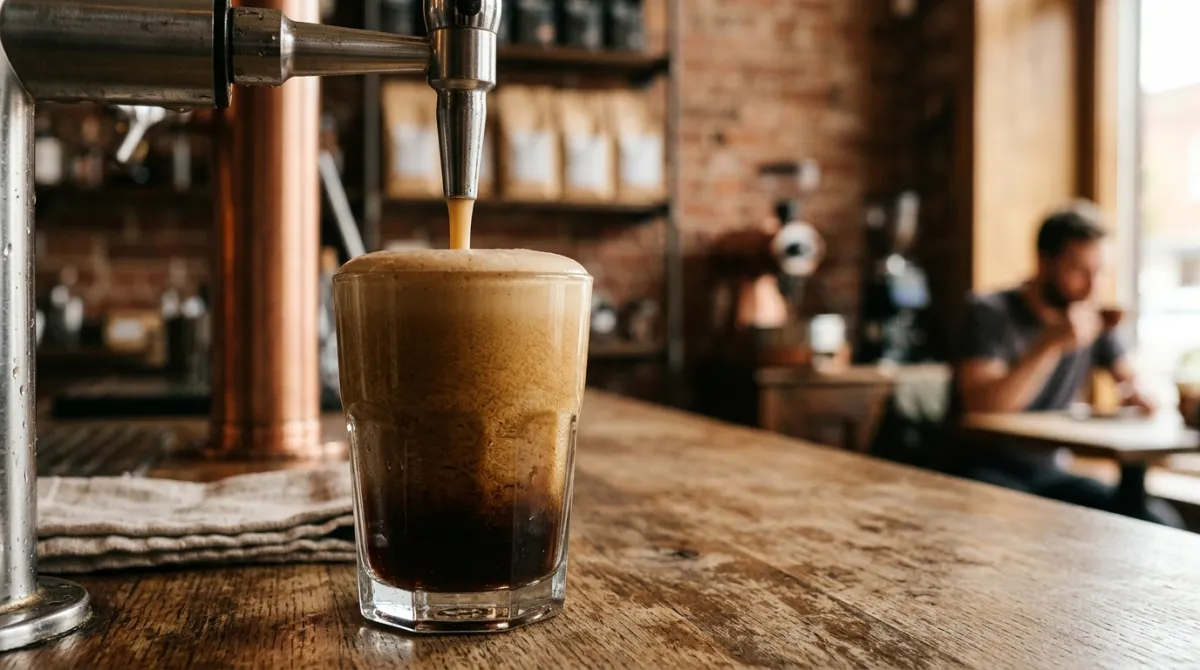
Here’s the part that surprised me most. Nitrogen barely dissolves in water, so instead of the sharp fizz you get from carbonated drinks, you get a soft, billowing cascade. Pour it into a glass and you’ll watch a wave of tan micro-bubbles roll and settle, much like a stout beer.
People often assume nitro tastes “sweeter” because of added syrup. It isn’t. The perceived sweetness comes from the creamy texture and the way nitrogen rounds off cold brew’s naturally low acidity. Your tongue reads smoothness as sweetness.
If you’re new to cold coffee entirely, it helps to start with the basics in our guide to how to make cold brew coffee before you add gas to the mix.
How is nitro different from regular cold brew?
The base coffee is identical, but the finish is worlds apart. Regular cold brew is smooth and flat in texture, poured over ice, and often cut with milk or water. Nitro takes that same concentrate and adds nitrogen, which transforms a simple iced drink into something with structure and foam.

Texture is the headline difference. Regular cold brew pours like iced tea. Nitro pours like a soft cloud, with a lasting head that clings to the glass. I’ve noticed guests take a photo of nitro every single time. Nobody photographs a plain glass of cold brew.
Serving style differs too. You drink nitro cold, straight from the tap or dispenser, no ice. Ice would water down that carefully built body and flatten the cascade. If you want the full nitro experience, skip the cubes.
When I first switched, I kept adding ice out of habit and wondered why the foam collapsed so fast. Once I chilled the glass instead, the head held for minutes. Cold glass, no ice, that’s the trick.
Curious how the two stack up on strength? See our breakdown of caffeine in cold brew for the details.
How is nitro cold brew made?
Commercial nitro cold brew is made by forcing nitrogen gas into cold brew concentrate, then dispensing it through a pressurized tap with a restrictor plate. That plate is the small metal disc with tiny holes, and it’s what breaks the flow into millions of micro-bubbles as the coffee pours.
The process runs in three basic stages. First, baristas brew a batch of standard cold brew by steeping coarse grounds in cold water for 12 to 24 hours. Second, they load that concentrate into a keg and charge it with pressurized nitrogen. Third, they push it through the nitro tap.
The role of the tap
The tap does more heavy lifting than most people realize. Without the restrictor plate, you’d just get flat coffee with dissolved gas. The plate agitates the liquid on its way out, releasing the nitrogen into that signature cascading foam. No plate, no cascade.
That’s the whole reason cafés invest in dedicated nitro hardware. The nitrogen supplies the creamy body, but the tap is what turns a still keg of coffee into the theatrical, tumbling pour people line up for.
Can you make nitro cold brew at home?
Yes, and you have two realistic options. The first is a dedicated nitro cold brew maker, a countertop or handheld device built to infuse coffee with nitrogen. The second is a whipped-cream dispenser paired with gas chargers, which is the popular budget hack among home brewers.
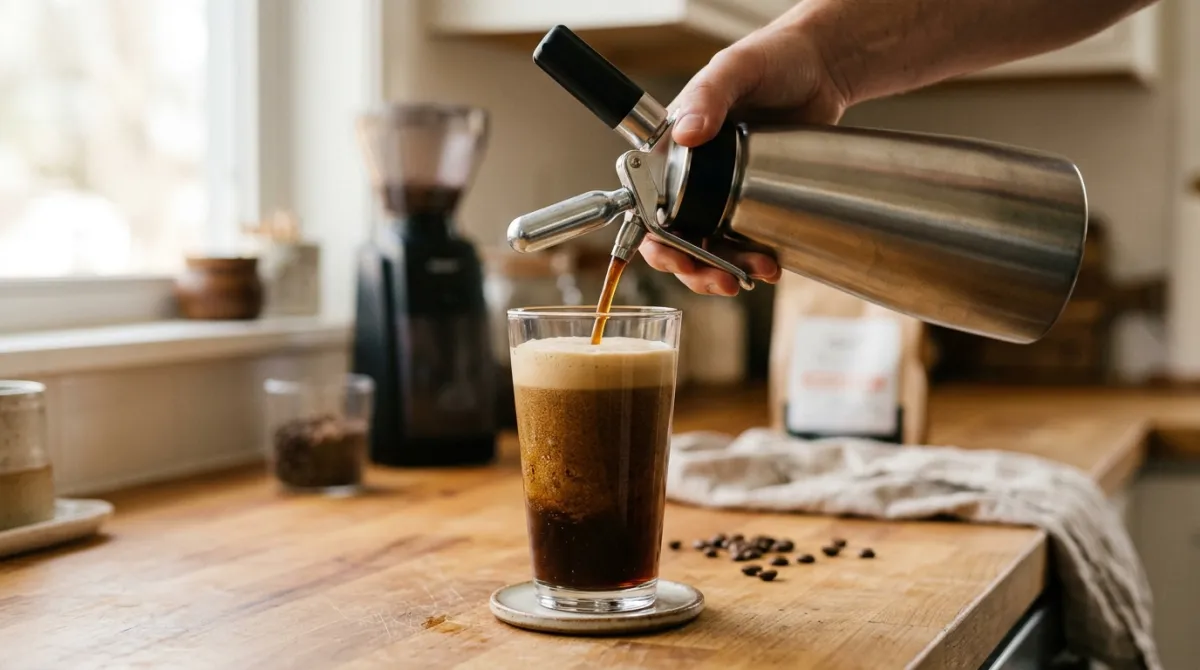
Both approaches follow the same logic: make good cold brew first, then add gas. No amount of nitrogen rescues weak or bitter coffee, so start with a concentrate you actually enjoy. I dial in my base recipe before I ever reach for a charger.
One honest caveat worth flagging. Home whipped-cream dispensers use N2O chargers (nitrous oxide), while commercial systems use pure N2 (nitrogen). N2O still creates a lovely cascade and creamy body, so it’s the common home workaround, but it isn’t chemically identical to café nitro. Manage your expectations and you’ll be delighted.
My first “nitro” pour at home came from a $40 whipped-cream dispenser. Was it exactly like my local café? No. Was it creamy, foamy, and genuinely fun to drink? Absolutely, and it cost a fraction of a tap system.
How to make nitro cold brew step by step
Making nitro at home takes about 15 minutes of active work once your cold brew is ready. The steps below use a whipped-cream dispenser, the most accessible method, but a dedicated nitro maker follows nearly the same flow with its own charging mechanism.
Step 1: Brew a strong cold brew base
Steep coarse-ground coffee in cold water for 12 to 24 hours, then filter it well. Aim for a concentrate rather than a ready-to-drink strength, since nitrogen and chilling will soften the intensity. Our cold brew coffee ratio guide walks through the exact proportions I use.
Step 2: Chill everything
Pour your filtered concentrate into the dispenser, then chill the whole unit. Cold liquid holds gas far better than warm liquid, so this step directly affects your foam. I leave mine in the fridge for at least an hour first.
Step 3: Charge with nitrogen
Insert an N2O charger, screw it in until you hear the gas release, then shake the dispenser firmly for 30 seconds. Some brewers add a second charger for a denser head. Don’t overfill the dispenser, since the gas needs headroom to work.
Step 4: Pour and watch the cascade
Hold your chilled glass at an angle and dispense in one steady motion. You’ll see the tan cascade roll down and settle into a creamy cap. Serve it right away, cold, with no ice, and drink it while the foam is fresh.
Nail those four steps and you’ve reproduced most of the café magic in your own kitchen. The single biggest variable is temperature, so keep both the concentrate and the glass genuinely cold from start to finish.
Does nitro cold brew have more caffeine?
Nitro cold brew has roughly the same caffeine as the cold brew it’s made from, because nitrogen changes texture, not chemistry. The gas adds body and foam, but it doesn’t add caffeine. If your base concentrate is strong, your nitro will be strong too.
That said, nitro is often served in a smaller pour and undiluted, with no ice or water knocking it back. So an individual glass can feel more potent than a tall iced cold brew, even when the underlying coffee is similar. Serving size matters more than the gas.
The “nitro has more caffeine” myth mostly comes from serving format, not brewing. A concentrated, ice-free pour simply delivers more coffee per sip. Water it down and the difference largely disappears.
How long your batch stays good is a separate question. Check how long cold brew lasts before you brew a big batch for the week.
Frequently asked questions
Is nitro cold brew stronger than regular cold brew?
Not inherently. Nitro uses the same coffee base as regular cold brew, so caffeine depends on your brew strength, not the nitrogen. Nitro often tastes stronger because it’s served undiluted and without ice. Dilute a regular cold brew the same way and the gap mostly vanishes.
Why does nitro cold brew taste sweeter?
Nitro tastes sweeter mainly because of texture, not sugar. The nitrogen creates a creamy, velvety body that your tongue interprets as sweetness. It also softens cold brew’s already low acidity, rounding out any sharp edges. Most cafés serve nitro completely unsweetened, and it still tastes smooth and mellow.
Can I use a regular soda maker for nitro cold brew?
No, and this trips people up. Soda makers use carbon dioxide, which dissolves easily and produces fizzy carbonation. Nitro needs nitrogen, which barely dissolves and creates that soft cascade instead. For home nitro, use a dedicated nitro maker or a whipped-cream dispenser with nitrogen-style chargers.
Should I add ice to nitro cold brew?
Skip the ice. Nitro is built to be served cold and undiluted, and ice waters down the creamy body while collapsing the foam faster. Instead, chill your glass in the freezer for a few minutes before pouring. A cold glass keeps that signature cascade intact far longer.
Nitro cold brew turned into my favorite summer pour, and honestly it’s easier to make at home than most people expect. Start with a cold brew you already love, chill everything thoroughly, add nitrogen, and pour into a frosty glass. The creamy cascade does the rest. Once you’ve nailed the technique, experiment with different beans and roast levels to find your ideal profile. For more recipes, ratios, and brewing methods, browse our more brewing guides.
Keep brewing
Dial in your next cup with Brew Better Co.
Tested ratios, methods, and gear notes from a real home kitchen. New guides added regularly.
Explore all guides